

 30-Day Money Back Guarantee

If your legs burn halfway through a hard climb and your sprint fades before the line, more miles are not always the answer. Strength training cycling performance is one of the clearest examples of doing less volume and getting more out of your body. Done right, it builds force, sharpens power transfer, and helps you hold form when the ride gets brutal.
Cyclists used to treat the weight room like a risk. Too much mass. Too much soreness. Too much interference with riding. That thinking is old. Serious riders now understand that stronger athletes usually become better athletes, especially when the goal is to produce more power without falling apart under fatigue.
Why strength training cycling performance actually improves
Cycling looks smooth, but it is still force production repeated thousands of times. Every pedal stroke asks your hips, quads, glutes, hamstrings, and core to create force, stabilize your body, and keep that force directed into the crank instead of leaking through bad mechanics. If those systems are weak, you compensate. If you compensate long enough, power drops and discomfort climbs.
Strength training improves cycling performance because it raises your ceiling. When your max strength goes up, each pedal stroke becomes a smaller percentage of what you are capable of producing. That matters on long climbs, repeated attacks, and late-race surges when everyone is fighting fatigue. The stronger rider can keep applying force with better control.
There is also the issue of efficiency. A stronger trunk and hips give you a better platform to drive from. You waste less movement. Your upper body stays quieter. Your knees track better. On the bike, small inefficiencies add up fast.
Then there is durability, which most athletes ignore until they lose it. Heavy riding blocks, high cadence work, and interval sessions can beat up your joints and connective tissue. Smart lifting helps reinforce the structures that keep you training consistently. That does not mean strength work makes you injury-proof. It means it can make you harder to break.
The biggest myth - lifting makes cyclists slow
This fear usually comes from endurance athletes picturing bodybuilding-style training and carrying unnecessary mass uphill. That is not what most cyclists need. The goal is not to train like a physique competitor. The goal is to improve force production, joint integrity, and resilience with just enough volume to create adaptation.
If you are adding endless accessory work, chasing a pump five days a week, and eating in a big surplus, yes, body weight can climb fast. But a well-built strength program for cyclists is usually low to moderate in volume, focused on compound lifts, and paired with enough riding to keep the engine specific.
For many riders, especially recreational and competitive amateurs, the bigger problem is being under-muscled and underprepared for hard efforts. They have aerobic fitness, but no real strength reserve. That shows up when the group ride surges, the grade kicks up, or fatigue starts changing mechanics.
What exercises matter most
The best gym work for cyclists is not flashy. It is brutally basic and effective.
Squats and split squats
These build lower-body force and expose side-to-side weakness. Front squats, back squats, goblet squats, and Bulgarian split squats can all work. Which version is best depends on your mobility, training age, and how beat up you are from riding. Split squats deserve special attention because cycling is repetitive and bilateral on paper, but plenty of riders still carry asymmetries that show up under load.
Deadlift patterns and hinges
Romanian deadlifts, trap bar deadlifts, and hip hinges build the posterior chain that many cyclists neglect. If your glutes and hamstrings are weak, your quads tend to take over. That can limit power and make hard efforts feel worse than they should. Hinge work helps restore balance and gives you more force from the hips.
Step-ups and single-leg work
Single-leg strength matters because strong riders need to control rotation, not just push hard. Step-ups, reverse lunges, and single-leg RDLs teach balance, coordination, and hip stability. They also carry over well to climbing strength and out-of-saddle control.
Core training that resists motion
Cyclists do not need endless crunches. They need a core that can lock things down while the legs work hard. Think planks, dead bugs, Pallof presses, carries, and controlled anti-rotation work. A stable trunk helps transfer force and hold position longer.
How to program strength training without killing your rides
This is where most people get it wrong. The issue is rarely lifting itself. The issue is bad timing, too much volume, or trying to progress everything at once.
For most cyclists, two gym sessions per week is enough to make real progress. Beginners may even do well with one hard session and one lighter session. During the off-season or general prep phase, you can push strength a little harder. During race season or a high-volume riding block, gym work should stay in the program, but the dose usually drops.
A practical setup looks like this: one lower-body focused session built around a squat and hinge, and one session built around unilateral work, posterior chain, and core. If you also want upper-body training, keep it efficient. You do not need marathon sessions that wreck recovery.
Heavy strength work usually fits best after a hard ride day or on the same day as intervals, not right before your key bike sessions. Grouping hard stress together often leaves more room for true recovery. If you lift heavy the day before threshold work or a long climbing ride, expect the legs to feel flat.
This is where discipline matters. More is not better. Better is better.
Strength vs power for cyclists
Strength and power are connected, but they are not the same. Strength is your ability to produce force. Power is how fast you can express it. Cyclists need both, but the order matters.
Build strength first. Then use that base to improve force application at speed. Once a rider has decent technical skill in the gym, explosive work can make sense in smaller doses. That might include jump squats, kettlebell swings, or low-volume box jumps. The key is quality. If the movement is slow and sloppy, it is not power training anymore.
Not every cyclist needs a deep menu of explosive lifts. A road rider focused on endurance events may get more value from improving maximal strength and staying fresh for bike-specific intensity. A criterium rider or mountain biker may have more reason to include power-focused work. It depends on the demands of the event.
Common mistakes that waste progress
The first mistake is lifting like a bodybuilder when your actual goal is better riding. There is nothing wrong with hypertrophy work, but if every session is high reps to failure, your legs may stay too cooked to ride well.
The second mistake is changing the program every week. Strength gains come from repeated exposure to quality movements and steady progression. You do not need novelty. You need intent.
The third mistake is ignoring recovery. Hard rides, hard lifts, poor sleep, low calories, and no mobility work is a fast way to feel stale. If your performance is dropping in both the gym and on the bike, the answer may be fewer total stressors, not more motivation.
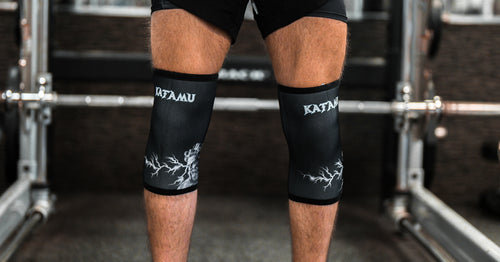
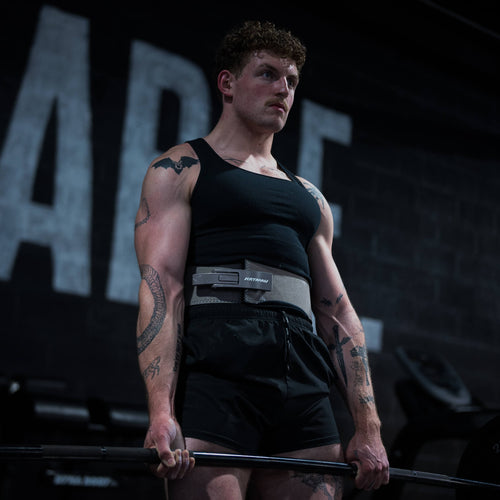
The fourth mistake is having no support where it counts. Heavy lower-body training asks a lot from your joints and trunk. Quality knee sleeves, wrist support when needed, and gear that helps you stay locked in can make a difference in comfort and confidence, especially when the goal is to train hard without wasted motion. That is the kind of detail serious athletes pay attention to.
Who benefits most from strength training cycling performance work
Almost every cyclist can benefit, but not in the same way. Newer riders often see the fastest return because they have so much room to improve basic strength and coordination. Time-crunched riders also benefit because strength work can raise physical capacity without adding endless hours on the bike.
Older athletes often get major value from resistance training because it helps preserve muscle, connective tissue health, and force output that tends to fade with age. Competitive riders benefit too, but their programming has to be tighter. When your riding load is already high, the gym should support performance, not compete with it.
If you are deep in race season, chasing every strength PR may not be smart. If you are in the base phase, that is a different story. Context decides the dose.
What results should you expect
Do not expect the weight room to magically replace structured riding. It will not. The bike still teaches the bike. But if your program is smart, you can expect better sprint pop, improved climbing strength, more stability under fatigue, and a stronger feeling through the pedals. Many riders also notice fewer overuse issues once weak links are addressed.
The biggest change is often not flashy. It is the ability to keep producing when everyone else starts fading. That is what strength gives you - more available force, more control, and more durability when the effort gets ugly.
Train the engine, but do not ignore the chassis. The strongest version of your riding is usually built with a barbell somewhere in the plan.
