 30-Day Money Back Guarantee

Heavy squats expose weak gear fast. If your knees feel unstable at the bottom, your sleeves slide mid-set, or the material loses pop after a few sessions, you notice it immediately. That is where a real 7mm knee sleeves review matters - not hype, not recycled specs, just what this thickness actually does when the weight gets serious.
For strength athletes, 7mm sleeves sit in the sweet spot between protection and performance. They are thick enough to give real compression and warmth, but not so bulky that every leg session feels restricted. The catch is that not every 7mm sleeve performs the same. The difference comes down to neoprene density, seam quality, fit profile, and how the sleeve behaves under repeated heavy loading.
What a 7mm knee sleeves review should actually cover
A lot of reviews stop at first impressions. That is not enough. A solid 7mm knee sleeves review needs to answer a more useful question: do these sleeves keep showing up when your training gets ugly?
That means looking at rebound out of the hole, joint warmth across long sessions, comfort during accessories, and whether they hold shape after weeks of hard use. Good sleeves should feel tight without cutting circulation, supportive without folding behind the knee, and durable enough to survive being pulled on and off several times a week.
For powerlifting, 7mm sleeves are usually the go-to because they offer the most support allowed in many non-wrap settings. For bodybuilding or general strength work, they can still make sense, but only if you want more structure on heavy compounds. If your training is mostly high-rep machine work, a thinner sleeve may feel better.
How 7mm sleeves feel under load
The first thing most lifters notice is compression. A true 7mm sleeve should lock in around the knee with enough pressure to make the joint feel more stable before the bar even leaves the rack. That compression also helps create warmth, which many lifters like for squats, lunges, hack squats, and leg press.
Then there is rebound. This gets overstated sometimes, but it is real. A quality 7mm sleeve can give you a subtle spring out of the bottom position, especially on squats. It will not replace strong quads, clean technique, or smart programming. What it can do is make the movement feel tighter and more confident when the load climbs.
That confidence matters. Serious training is physical, but it is also mental. When your gear feels locked in, you attack the set differently.
Support versus mobility
This is where trade-offs show up. The same thickness that makes 7mm sleeves great for max effort work can make them feel like overkill for dynamic sessions or higher-volume training. If you are hitting deep squats for sets of ten, then moving into walking lunges and split squats, some 7mm sleeves can start to feel stiff.
That does not mean they are wrong. It means your use case matters. Lifters focused on heavy strength days usually love the extra structure. Lifters who want one sleeve for every lower-body movement sometimes prefer something less aggressive.
Fit is everything
Bad fit ruins even premium sleeves. Too loose, and you lose compression, warmth, and stability. Too tight, and you get pinching, numbness, or a fight every time you put them on.
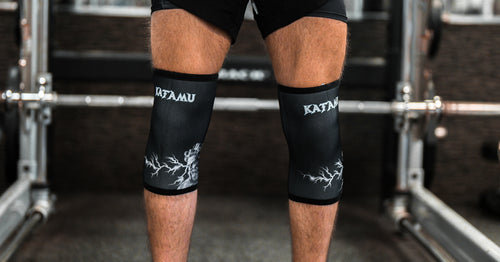
The best 7mm sleeves feel almost uncomfortably snug when new, but not painful. Once they are on, they should sit evenly above and below the knee without rolling or bunching. A tapered fit usually feels more athletic because it follows the shape of the leg rather than wearing like a straight tube.
If you are between sizes, the decision depends on how you train. Competitive lifters often size down for maximum compression. That can work, but only if you are willing to deal with a tighter pull-on and a more intense fit. If you want support across longer sessions and mixed training, staying true to size is usually smarter.
What to look for in construction
Thickness alone does not make a sleeve good. Cheap neoprene can still be 7mm and perform badly. What separates a serious sleeve from a throwaway one is density and build quality.
Denser neoprene holds compression longer and feels more supportive under load. Strong stitching matters just as much, especially around the seams where lower-quality sleeves tend to split first. Reinforced seams, clean panel construction, and a consistent inner finish all help with durability.
You also want a surface that does not get slick with sweat or start breaking down early. Lifters put sleeves through a lot - hard stretching, repeated compression, gym bag abuse, and constant friction. If the material starts flattening out fast, the sleeve loses its edge.
Who should wear 7mm knee sleeves
If your training revolves around squats, front squats, hack squats, heavy leg press, or powerlifting prep, 7mm sleeves make a lot of sense. They are built for lifters who want more than just a little warmth. They are for athletes chasing stronger, more stable reps under real load.
They also work well for lifters whose knees feel better when kept warm and compressed. That does not mean sleeves fix pain. They do not. But many experienced lifters feel more comfortable training hard when the joint feels supported.
If you are newer to lifting, the choice depends on your goals. For someone building strength seriously and learning to train heavy, 7mm sleeves can be a solid investment. If your sessions are lighter, more conditioning-focused, or less squat-heavy, they may be more gear than you need right now.
Where 7mm sleeves shine most
The strongest case for them is heavy squat work. This is where rebound, stability, and confidence all matter most. You unrack a challenging weight, brace, and descend knowing your knees feel warm, compressed, and secure.
They also shine in peaking blocks, top sets, and lower-rep strength phases where every bit of stability helps. On those days, a serious sleeve earns its place fast.
For general leg days, results are more mixed. Some lifters wear them through the entire session. Others keep them for primary compounds, then take them off once the workout shifts to accessories. That is usually the smarter move if comfort starts dropping.
Common downsides in any 7mm knee sleeves review
Let us keep it honest. Good 7mm sleeves are not magic, and they are not for everybody.
First, they can feel too stiff for casual training. If your lower-body work is mostly volume, machines, or athletic movement, they may feel restrictive. Second, getting them on and off can be annoying, especially with a tight competition-style fit. Third, heat buildup is real. In long sessions, thick neoprene gets hot.
There is also the price factor. Better sleeves usually cost more because better neoprene and construction cost more. Cheap sleeves can look similar online, but they often lose shape quickly or start separating at the seams. If you train hard year-round, replacing bad gear is more expensive than buying solid gear once.
What separates premium sleeves from generic ones
Premium sleeves usually get the small details right. The fit feels more intentional. The compression is stronger but more even. The material has more snap. The seams look cleaner. And after repeated training, they still feel like performance gear instead of stretched-out accessories.
That difference matters when you are not buying sleeves for occasional use. If you train with intent, your gear needs to match that standard. That is why lifters who care about performance, durability, and a sharper look tend to move away from generic sleeves fast. Brands built around lifting culture, like Katamu, understand that function and identity both matter in the gym.
Final take on 7mm knee sleeves
If your training is heavy, focused, and built around strength, 7mm knee sleeves are usually the right call. They bring real compression, warmth, and support where it counts, especially on squats and other demanding lower-body lifts. The best ones do not just feel tight - they stay consistent, hold their shape, and keep performing after the honeymoon phase is over.
The key is choosing sleeves that match how you actually train. If you want maximum support for serious work, 7mm is hard to beat. If you want one pair for every possible leg movement, be honest about the trade-off. The right gear should make you feel more dialed in, not more distracted. Pick sleeves that can keep up with the standard you bring to the rack.
