
 30-Day Money Back Guarantee

Unlock the full potential of your lifts with the right straps grip, where strength meets security for every rep. This guide is designed to help you master secure lifting techniques using straps grip, enhancing your safety, performance, and long-term progress in the gym.
Inside, you’ll discover the different types of straps, the key benefits, step-by-step grip methods, common mistakes to avoid, advanced tips, and the best gear recommendations for 2026. Are you frustrated by grip strength limits or slipping issues? Learn how proper straps grip can boost your confidence and results, using techniques trusted by elite lifters. Start your journey to safer, stronger lifting with our comprehensive 2026 guide.
Understanding Lifting Straps and Their Role in Grip Security
Lifting with confidence starts with understanding the essentials of straps grip. Whether you are chasing new personal bests or just looking for more control, mastering the basics of straps grip can make a noticeable difference in your lifting journey.
What Are Lifting Straps?
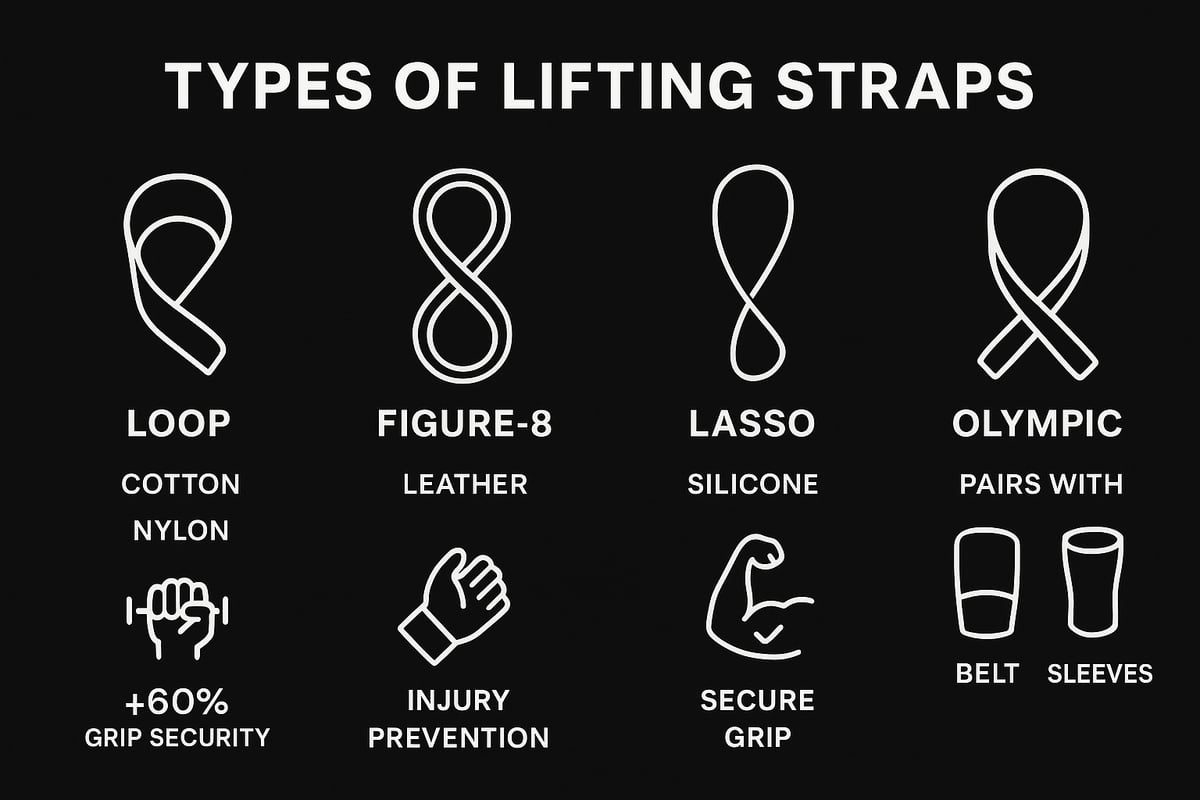
Lifting straps are specialized pieces of gear designed to help lifters maintain a strong, secure grip on weights. They are typically made from materials like cotton, nylon, leather, or silicone, each offering unique benefits for straps grip. The most common strap types include loop straps, figure-8 straps, lasso (adjustable) straps, and Olympic variants.
| Strap Type | Material Options | Best Use Case |
|---|---|---|
| Loop | Cotton, Nylon | Versatile, easy setup |
| Figure-8 | Silicone, Cotton | Heavy deadlifts |
| Lasso | Nylon, Leather | Adjustable, custom fit |
| Olympic | Nylon, Leather | Fast release |
Unlike wrist wraps or hand grips, straps grip is engineered to anchor your hand to the bar, directly addressing grip fatigue. In 2026, modern designs feature silicone-infused grips and antimicrobial fabrics. To see a range of the latest options, check out the best lifting straps collection.
Why Grip Security Matters in Lifting
Grip security is a foundation of safe and effective lifting. When your straps grip is solid, you can focus on the lift itself rather than worrying about slipping or dropping the bar. Did you know up to 30 percent of lifters experience grip failure before reaching true muscle fatigue? This can limit progress and increase the risk of injury.
A secure straps grip not only prevents accidents but also boosts your confidence under heavy loads. It’s especially critical for deadlifts, rows, and pull movements. With the right grip, you can push through sticking points and achieve better progression in your training.
When and Who Should Use Lifting Straps?
Straps grip becomes most useful during heavy pulls, high-rep sets, or any exercise where your grip might give out before your target muscles. Powerlifters, bodybuilders, strongman competitors, and regular gymgoers all benefit from using straps grip in these scenarios.
However, straps grip is not recommended for beginners who are still building natural grip strength or in competitions that restrict their use, like some Olympic lifting events. There’s a common misconception that using straps grip makes your hands weak, but strategic use actually supports long-term strength gains.
How Lifting Straps Integrate with Other Lifting Gear
Straps grip works best when paired with other supportive equipment. Many lifters combine straps grip with lifting belts, knee sleeves, or wrist wraps for comprehensive injury prevention and boosted performance. For example, using straps grip with a lever belt can maximize your deadlift attempts safely.
Brands often offer gear bundles that include straps grip alongside other accessories, making it easy to build a supportive setup. Integrating straps grip with your gear ensures your lifts are both secure and sustainable.
Types of Lifting Straps and Their Unique Grip Advantages
Choosing the right straps grip can make or break your lifting performance. With so many options on the market, understanding each type’s unique benefits is key for maximizing your security and output in the gym. Let’s break down the most popular lifting straps and what sets them apart.
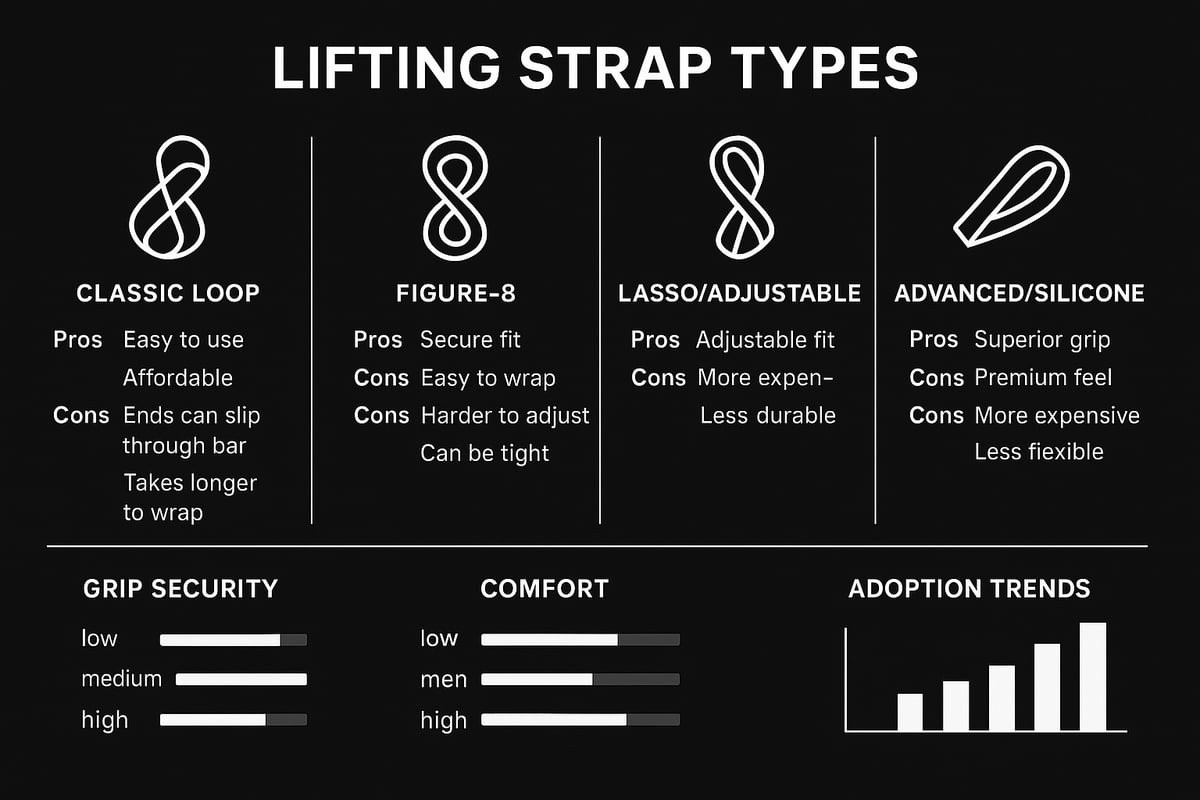
Classic Loop Straps
Classic loop straps are a staple for many lifters. These straps grip the bar by looping around your wrist and then wrapping under and around the bar itself. Made from durable cotton or nylon, they are known for their versatility and ease of use.
The biggest advantage of classic loop straps is their accessibility. They are quick to set up, comfortable, and great for most gym routines. However, their simple design means they may slip under very heavy loads, especially if your hands get sweaty.
Best used for general training and bodybuilding, classic loop straps grip the bar securely for moderate to high-rep work. A popular example is the TuffWraps classic cotton loop strap, which balances comfort and performance for everyday lifters.
Figure-8 Straps
Figure-8 straps grip the bar differently, looping around the wrist and bar twice for unmatched security. This design almost locks your hands to the bar, making them a favorite for heavy deadlifts and strongman events.
The main benefit of figure-8 straps grip is the confidence they provide during maximal lifts. They virtually eliminate the risk of grip failure, but are less versatile for exercises requiring quick release or multiple grip changes. The setup can also be slower compared to other straps.
Powerlifters and strongman athletes often choose figure-8 straps for competition settings. For instance, Nordic Training Gear’s silicone grip figure-8 straps are highly rated for their anti-slip features and unmatched holding power.
Lasso (Adjustable) Straps
Lasso straps grip the bar with a unique adjustable loop, letting you customize the fit for your hand size and the bar’s diameter. These straps are typically made from tough nylon, offering both security and flexibility.
The main advantage of lasso straps grip is their adaptability. You can tighten or loosen the strap as needed, making them ideal for a wide range of lifts, including Olympic movements and mixed training routines. However, they do have a slight learning curve for beginners due to the setup process.
Current gym markets offer adjustable nylon straps that cater to lifters looking for both comfort and a personalized grip. Once mastered, these straps grip the bar tightly and help support a variety of exercises.
Advanced Grip Technologies in 2026
Innovation in straps grip technology has exploded in 2026. Many brands now offer silicone-infused or textured straps, bringing anti-slip coatings and ergonomic padding to the forefront. These upgrades mean even better grip retention and reduced hand fatigue.
Recent data shows a spike in the adoption of silicone grip straps grip across all lifting communities. Modern straps are compared to older models for grip retention, and the difference is clear—today’s advanced materials provide superior security and hygiene. Eco-friendly and antimicrobial options are also emerging as top trends.
For more insight on the latest gear and recommendations, check out the Top gym accessories for 2026 to see what’s new in straps grip innovation.
Step-by-Step: Mastering Secure Straps Grip for Maximum Performance
Unlocking the full potential of your lifts begins with mastering each phase of the straps grip process. Every step, from selection to care, plays a crucial role in ensuring your grip is both strong and secure. Let’s break down the journey into six actionable steps, each designed to build your confidence and performance.
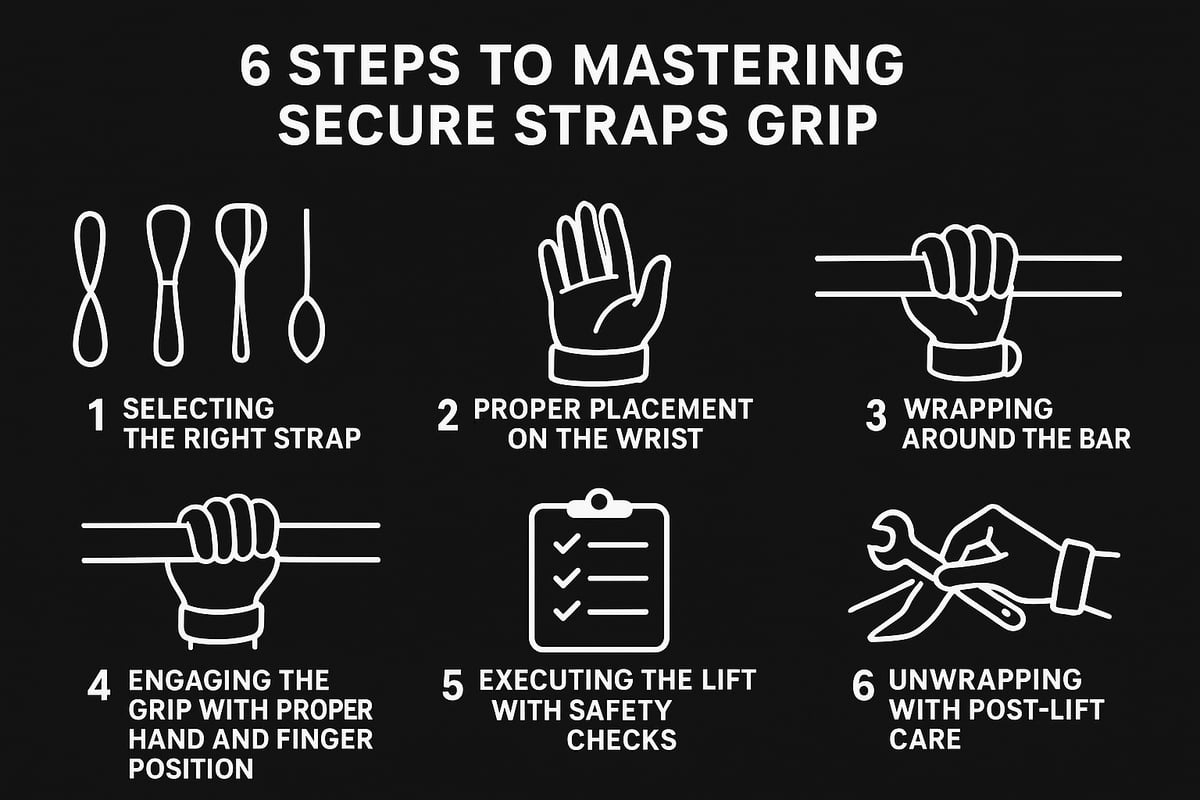
Step 1: Selecting the Right Strap for Your Lift
Choosing the right strap sets the foundation for effective straps grip. Consider the type of lift you’ll perform—deadlifts, rows, or pull-ups each benefit from different strap designs. Figure-8 straps offer unmatched security for maximum deadlifts, while classic loops are ideal for high-rep rows.
Material matters, too. Cotton is comfortable for volume work, while silicone-enhanced straps provide extra grip for heavier loads. Ensure your straps fit snugly and can be adjusted to match your hand size for optimal comfort.
Test various options to see which style supports your straps grip best. The right choice maximizes both safety and performance.
Step 2: Proper Strap Placement and Wrist Positioning
Correct placement is essential for a reliable straps grip. Align the strap with the center of your wrist joint, ensuring it sits flat and comfortably against your skin. This alignment helps distribute the load evenly and prevents painful pressure points.
Avoid common mistakes like letting the strap ride too high or low on your wrist, as this can reduce support and compromise grip security. Visualize your hand and wrist forming a straight line, with the strap acting as a stable anchor.
Practice positioning your straps grip without any weight first. This builds muscle memory and ensures you’re confident when it’s time to lift heavy.
Step 3: Wrapping the Strap Around the Bar
How you wrap the strap is just as important as the type you choose. Thread the end of the strap under and over the bar, pulling it tight to remove any slack. Ensure the strap lays flat, without twists, for consistent tension and comfort.
Different straps grip techniques exist for various designs. For example, lasso straps require looping and pulling snug, while classic loops simply wrap and tighten. Avoid leaving the wrap too loose, as this can cause slippage or uneven pressure.
Think of your straps grip as an extension of your hand, seamlessly connecting you to the bar for every rep.
Step 4: Engaging the Grip—Hand and Finger Position
Once the strap is secured, close your hand firmly over both the strap and the bar. Your thumb should wrap around the bar, locking in the straps grip and reinforcing stability. Maintain gentle but firm finger tension, avoiding excessive squeeze that can cause fatigue.
Keep your wrist in a neutral alignment to reduce strain and maximize power. Advanced lifters may pair the straps grip with a hook grip for even more security. Research highlights that proper grip technique can reduce hand fatigue by up to 25% and enhance grip security during heavy lifts, as shown in Ergogenic Effects of Lifting Straps on Deadlift Exercise.
Mastering this phase ensures your straps grip delivers maximum support and efficiency.
Step 5: Lifting Execution and Strap Safety Checks
Before lifting, run through a quick checklist: is the straps grip tight, comfortable, and aligned? Monitor the straps for any shifting or loosening during your set. If you notice movement, pause to readjust and secure your grip.
Stay aware of the condition of your straps grip throughout the lift. Look for signs of fraying, stretching, or discomfort. Prioritizing safety means you’re always ready to release the straps quickly if needed.
This ongoing attention to detail keeps your straps grip reliable, so you can focus entirely on your performance.
Step 6: Unwrapping and Post-Lift Care
After your set, release your grip and unwrap the straps carefully from the bar. Take a moment to inspect your straps grip for any wear or damage—frayed edges or stretched material can compromise future security.
Clean your straps regularly, especially if they’re silicone or have textured surfaces. Air dry them to prevent odor and maintain grip quality. With proper care, your straps grip can last two to three years, supporting countless workouts.
Consistent maintenance ensures your straps grip stays reliable, safe, and ready for your next session.
Common Mistakes and How to Avoid Them with Straps Grip
Using straps grip can elevate your training, but common missteps can limit your progress or even cause setbacks. Let’s break down the most frequent errors lifters make with straps grip and how to sidestep them for safer, stronger lifts.
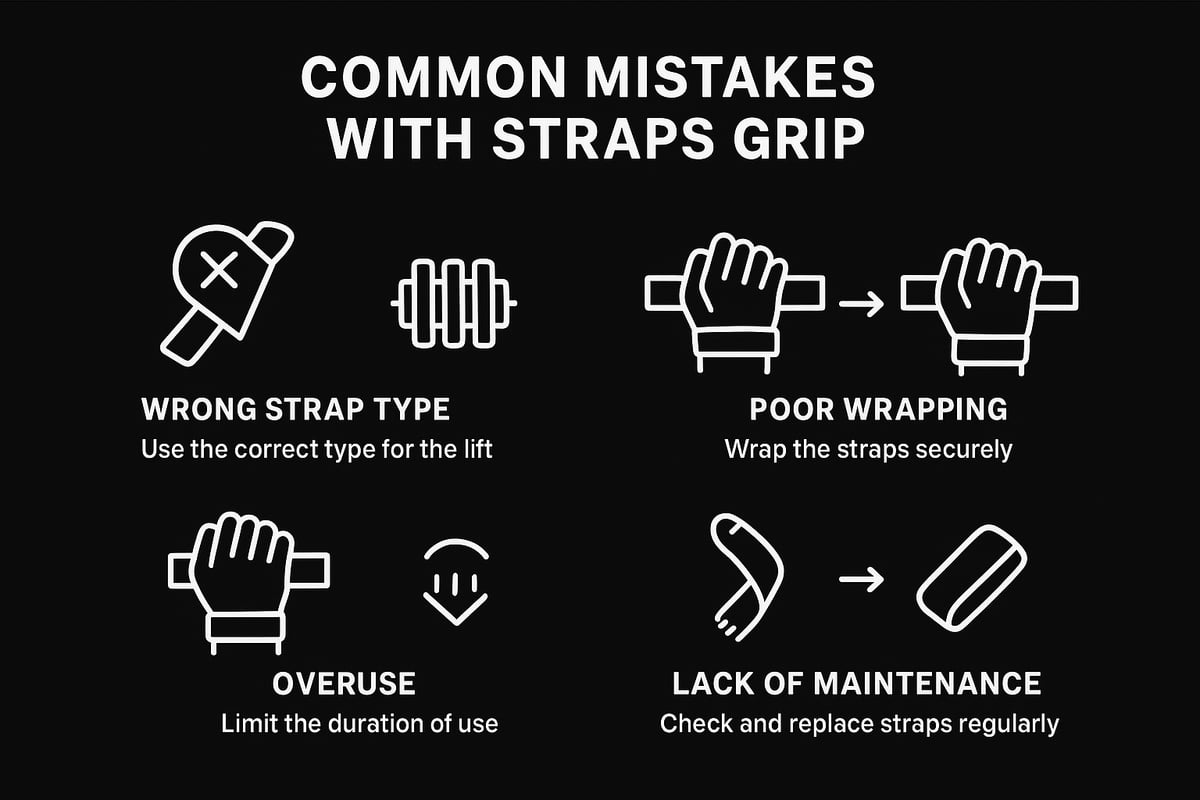
Incorrect Strap Selection for Exercise
Choosing the wrong straps grip for your workout can hinder both comfort and safety. For example, using basic loop straps grip for a heavy deadlift may lead to slipping, while figure-8 straps grip for pull-ups can feel awkward and impede movement.
- Match the strap type to your exercise: use figure-8 for maximal deadlifts, loop for high-rep rows.
- Consider your hand size and the bar diameter.
- Avoid over-reliance on any single strap style.
Beginners sometimes grab advanced straps grip before learning the basics. Instead, start with versatile options and progress as your needs evolve.
Poor Wrapping Technique and Insecure Grip
Even the best straps grip won’t help if you wrap them incorrectly. Loose wraps or twisted straps grip can cause discomfort and increase the risk of the bar slipping mid-lift.
- Always check for even tension and no twists.
- Secure the straps grip so it feels like a natural extension of your hand.
- Practice the wrapping technique without weight to build confidence.
Neglecting proper hand closure over the bar with straps grip is another frequent issue. Double-check your setup before each set to ensure safety and performance.
Overusing Straps and Neglecting Natural Grip Strength
Relying on straps grip for every set can weaken your natural grip over time. Studies show that excessive strap use may decrease raw grip strength, impacting your long-term lifting performance. For example, many powerlifters alternate between strap and strapless sets to maintain grip health.
A recent Effect of Lifting Straps on Deadlift Performance in Females study highlights how straps grip can boost reps and bar velocity, but also emphasizes the importance of balancing strap use with natural grip training.
- Reserve straps grip for heavy pulls or high-rep sets.
- Incorporate grip-specific exercises without straps grip.
- Monitor your grip strength progression regularly.
Ignoring Strap Maintenance and Replacement
Worn-out straps grip can quickly become a safety hazard. Frayed, stretched, or peeling straps grip are more likely to fail during heavy lifts. Regular maintenance is essential for longevity and consistent performance.
- Inspect your straps grip after every session for signs of wear.
- Replace straps grip if you notice significant fraying or loss of grip texture.
- Clean and air-dry your straps grip to prevent odor and breakdown.
With proper care, a quality pair of straps grip can last years, supporting countless safe and strong lifts.
Advanced Tips for Optimizing Straps Grip in 2026
Unlocking the full advantages of straps grip means looking beyond the basics. Advanced lifters and dedicated gymgoers can optimize every rep by refining technique, customizing gear, and staying ahead of the latest lifting trends.
Integrating Straps with Progressive Overload
To get the most from straps grip, use it strategically during progressive overload phases. Many lifters reserve straps for their heaviest working sets or personal best attempts, allowing them to focus on target muscle groups without grip fatigue limiting performance.
Alternating sets with and without straps ensures you maintain raw grip strength. For example, powerlifters often perform warm-up and accessory sets strapless, then switch to straps for maximal pulls. This balance keeps your grip robust while letting you safely overload key lifts.
Research suggests that using straps can alter muscle activation patterns during Olympic lifts. For more on how straps impact your training, check out Use of Lifting Straps Alters Muscle Activation Patterns During Snatch.
Customizing Strap Fit for Hand Size and Comfort
A perfectly fitted straps grip can make a significant difference in both performance and comfort. Adjust loop or lasso lengths so the strap sits snugly without pinching, and experiment with different padding or materials to accommodate sensitive wrists.
Lifters with large hands may prefer extra-long straps, while those with smaller hands often benefit from narrower designs for better control. Try several configurations to discover what feels most natural and secure for your body.
Tips for customizing fit:
- Test different strap widths and lengths
- Add soft padding for wrist protection
- Ensure the strap wraps evenly around the bar
The right fit will help you maintain a firm, confident straps grip throughout every set.
Combining Straps with Other Accessories for Maximum Support
The true power of straps grip comes when combined with other supportive gear. Pairing straps with lever belts, wrist wraps, or chalk can create a stable lifting environment and protect against injury during heavy lifts.
For instance, using silicone grip straps alongside a high-quality belt can dramatically improve pulling capacity in strongman events and heavy deadlifts. If you want to find the best accessories for your setup, browse Weight lifting belt reviews to see which belts pair well with your straps.
Accessory combinations to try:
- Straps + lever belt for maximal stability
- Straps + wrist wraps for wrist protection
- Straps + chalk for enhanced grip security
Experiment with different setups to fine-tune your support system and maximize your straps grip potential.
Staying Updated with 2026 Strap Innovations
The straps grip landscape is evolving rapidly, with new technologies emerging every year. In 2026, eco-friendly materials, antimicrobial coatings, and even smart straps with integrated sensors are making headlines in the lifting community.
Major brands are launching silicone-infused and textured straps that offer superior grip retention and comfort. Keeping an eye on product releases, reading trusted reviews, and joining lifting forums can help you stay ahead of the curve.
Trends to watch in 2026:
- Biodegradable and recycled materials
- Antimicrobial treatments for hygiene
- Smart straps tracking grip force and wear
Adopting the latest innovations ensures your straps grip stays secure, hygienic, and cutting-edge for every workout.
Choosing the Best Lifting Straps for Your Needs in 2026
Selecting the right straps grip for your training can be the difference between plateauing and pushing past your personal bests. With so many new materials and innovative features on the market in 2026, it pays to compare your options carefully. Let’s break down how to choose the perfect straps grip for your needs.
Key Factors in Strap Selection
When evaluating straps grip options, focus on these essentials:
- Material: Choose between cotton, nylon, silicone, or leather. Silicone and nylon offer superior durability.
- Grip Texture: Look for anti-slip properties or textured pads for maximum hold.
- Adjustability: Make sure the straps grip is the right length and width for your hand size.
- Price vs. Performance: Balance your budget with your performance goals.
- Warranty: Trustworthy brands offer solid return policies and warranties.
A well-chosen straps grip supports your style, protects your wrists, and can keep you lifting confidently for years.
Top Strap Brands and Models for 2026
Industry leaders like TuffWraps and Nordic Training Gear are dominating the straps grip market in 2026. Their bestsellers include cotton loop straps and advanced silicone grip models. According to user reviews, Nordic Training Gear boasts a Trustpilot score of 4.8 out of 5, reflecting both comfort and performance.
Silicone grip straps grip models are gaining popularity, especially among lifters who want maximum security during heavy sets. You can find these top-rated products at trusted online retailers or directly from brand websites.
How to Test and Compare Straps Before Buying
Before committing to a new straps grip, try out different types at your local gym or lifting expo. Pay close attention to how the grip feels during pulling movements. Reading user reviews provides real-world feedback on durability and comfort.
Some brands offer trial periods or satisfaction guarantees, allowing you to return straps grip products if they don’t fit your needs. For a deeper dive into grip performance under different lifting conditions, check out this study on gripping force during lifting tasks.
Lifting Straps and Accessory Bundles: Maximizing Value
Buying straps grip as part of a gear bundle is a smart move for both savings and compatibility. Many brands now offer kits that combine straps, belts, sleeves, and gym bags. For example, you can browse complete lifting gear bundles designed to support all aspects of your training.
Bundles help ensure your straps grip works seamlessly with other accessories, streamlining your setup and maximizing value. Building a complete lifting kit is easier than ever in 2026.
Now that you know how to master secure lifting techniques and choose the right straps for your needs, why not put your knowledge into action? Whether you’re hitting a new PR or just want lifting gear that actually lasts, you deserve equipment that feels as good as it looks. At Katamu, we’ve got premium lifting straps, lever belts, and all the accessories to help you train with confidence for years to come. Ready to upgrade your lifting setup and support every rep?
Build your setup
