 30-Day Money Back Guarantee

The squat rack tells the truth fast. If your knees feel cold, unstable, or mentally distracting before your top set, every plate on the bar starts to feel heavier. This knee sleeves review for leg day cuts past the hype and focuses on what actually matters when you are chasing stronger squats, cleaner reps, and harder lower-body sessions.
Knee sleeves are not magic armor. They will not fix poor depth, rushed warm-ups, weak positioning, or a program built on ego. What they can do is keep the joint warm, add compression, and create a more locked-in feeling when the weight gets serious. For lifters who train legs with intent, that can be enough to change the quality of a session.
Knee Sleeves Review for Leg Day: The Real Test
A good knee sleeve earns its place before your heaviest set, not just during it. You should notice three things as your session builds: warmth around the knee, reliable compression without numbness, and a consistent feel from your first squat warm-up to your final set of leg press or lunges.
The biggest win is confidence under load. A quality sleeve gives your knee a supported, compressed feel that can make it easier to focus on bracing, bar path, and driving through the floor. That feeling matters when you are working through heavy squats, high-volume hack squats, or leg days where quads and hamstrings are both getting pushed hard.
But sleeves are not for every lift, every athlete, or every set. If the fit is wrong, they can pinch behind the knee, roll at the top, restrict movement, or turn a clean squat pattern into a fight against your own equipment. The right pair should feel aggressive, not distracting.
What Knee Sleeves Actually Do
Knee sleeves are usually made from neoprene or a similar compression material. Their job is straightforward: maintain warmth, add compression, and give the knee a more supported sensation during training. They are different from knee wraps, which are wound tightly around the joint and can provide more rebound or assistance in certain lifting settings.
For most bodybuilding-focused leg days, sleeves make more practical sense than wraps. You can move from squats to split squats, leg extensions, and hamstring curls without constantly adjusting your gear. They fit the athlete who wants support across a full training session, not a specialized setup for one maximal lift.
That warmth is not just about comfort. Starting a heavy squat session with cold knees can make the early sets feel stiff and disconnected. Sleeves help keep the area warm between sets, especially in colder gyms or during long rest periods. They also create a consistent sensation around the joint, which many experienced lifters value when they are repeating the same movement patterns week after week.
Still, do not mistake a supported feeling for invincibility. Pain that is sharp, sudden, or worsening needs attention beyond gym gear. Knee sleeves are training accessories, not a replacement for medical guidance, intelligent load management, or solid technique.
The Fit Matters More Than the Logo
The best sleeve on paper is useless if it does not fit your leg. Sizing should be based on the brand's measurement guide, usually using the circumference around the knee and sometimes the calf. Do not size down blindly because you think tighter always means better.
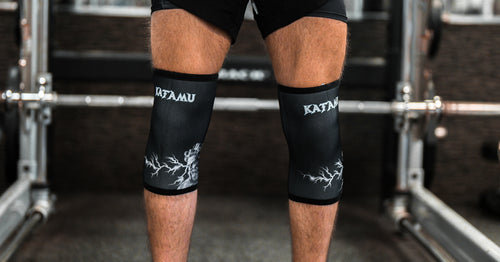
A sleeve should take effort to put on, especially if it is built for heavier lifting. Once it is in place, it should sit centered over the knee joint without folding, bunching, or cutting off circulation. You should be able to hit your normal squat depth and walk between exercises without immediately wanting to rip it off.
There is a difference between firm compression and a bad fit. Firm compression feels secure. A bad fit creates tingling, numbness, sharp pressure, or a deep crease behind the knee that gets worse every set. If you have to constantly pull the sleeves up or down, the size, shape, or material is not working for you.
Your training style also affects fit. Powerlifters often prefer a tighter, stiffer sleeve for heavy squat work. Bodybuilders and general strength athletes may prefer a sleeve with enough structure for compound lifts but enough flexibility for deep range-of-motion work and higher-rep sets. Neither choice is automatically better. It depends on what dominates your leg day.
Stiffness Changes the Experience
Sleeves generally fall into a lighter, more flexible category or a thicker, stiffer category. Lighter sleeves are easier to wear through an entire session. They suit athletes doing high-volume training, athletic movement, machine work, and mixed lower-body programming.
Thicker sleeves feel more substantial under a heavy barbell. They can offer a stronger sense of compression and may feel more confidence-inspiring on hard squat sets. The trade-off is comfort. A very stiff sleeve can be difficult to put on, hot during long workouts, and less enjoyable for movements that require a lot of knee bend.
If your leg day is built around a top squat set followed by back-off volume, a firmer sleeve may be worth it. If your training is mostly controlled hypertrophy work with lots of lunges, leg press, and leg extensions, a more flexible sleeve can be the smarter long-term choice.
Where Sleeves Help Most on Leg Day
Knee sleeves make the most sense on movements where the knee is repeatedly loaded and flexed under meaningful resistance. Squats are the obvious example, but they also have a place during front squats, hack squats, heavy leg press, Bulgarian split squats, and demanding lunge variations.
They can be especially useful when you are training early, lifting in a cold facility, or moving through long rest periods between heavy sets. In those moments, keeping the knees warm and ready can improve the rhythm of the workout.
You do not need to wear them for every exercise. Some lifters put them on only for compound movements, then take them off for isolation work. Others keep them on from warm-up through their final set. Test both approaches. If sleeves make your leg extensions feel restricted or uncomfortable, take them off. Gear should support the session, not become another problem to manage.
A Simple On-Ramp for First-Time Users
Do not wait until a one-rep max attempt to find out how sleeves feel. Wear them during warm-up sets first. Build from an empty bar to moderate weight, then pay attention to whether they stay in place as you reach full depth.
For your first few sessions, use them on your primary squat or press movement only. That gives you a clean comparison between training with sleeves and training without them. Notice your comfort, confidence, mobility, and whether the sleeves change how you approach your setup.
The goal is not to become dependent on equipment. The goal is to find gear that lets you train harder with fewer distractions. That is a meaningful difference when your program demands consistent effort over months, not one viral lift.
Durability Is a Performance Feature
A sleeve that loses shape after a few hard sessions is not premium gear. The material should rebound after use, the stitching should stay intact, and the sleeve should hold its position without sagging or rolling. Cheap sleeves often feel fine at first, then stretch out quickly and stop delivering the compression you bought them for.
Care affects lifespan, too. Turn sleeves inside out after training, let them air dry fully, and follow the wash instructions rather than leaving them balled up in a gym bag for days. Sweat, friction, and repeated stretching are part of the game. Basic care helps your gear stay ready for the next session.
For athletes building a serious kit, knee sleeves should match the standard of the rest of your training setup. Katamu's approach to lifting gear is built around that expectation: performance-driven essentials that look sharp and hold up when training stops being casual.
The Verdict: Buy for Your Training, Not the Trend
The right knee sleeves can make leg day feel more controlled, more confident, and more repeatable. They are most valuable for lifters who squat hard, train frequently, and want warmth and compression without sacrificing their normal movement.
Choose a firmer sleeve if heavy barbell work is the center of your program. Choose a more flexible option if you prioritize volume, mobility, and a full range of lower-body movements. Above all, choose the fit that stays secure without turning every rep into a distraction.
Your next leg day does not need more noise. It needs gear that lets you step under the bar, trust your setup, and put the work where it belongs: into every rep.
