


 30-Day Money Back Guarantee

Most runners chase better splits by adding miles. Then they hit the same wall - sore knees, a fading kick, and pace that disappears when fatigue shows up. That is where strength training running performance stops being a side quest and starts acting like a real advantage.
If you run and lift, you already know the tension. Run too much without enough strength work and your body starts leaking force. Lift too hard without respecting your run volume and your legs feel cooked. The goal is not to train like a powerlifter who jogs or a runner who does random goblet squats. The goal is to build a stronger engine and a tougher chassis so every stride does more.
Why strength training running performance actually improves
Running looks simple, but the demands are brutal. You are repeating single-leg impact thousands of times while trying to hold posture, create force, and stay efficient as fatigue builds. Strength work matters because it improves the raw qualities underneath all of that.
First, stronger muscles produce more force with less relative effort. If your glutes, hamstrings, quads, calves, and trunk can handle more load, each stride costs a little less. That does not mean you suddenly run like a sprinter after a few deadlift sessions. It means your body gets better at putting force into the ground without wasting as much energy.
Second, strength training improves stiffness in the right places. For runners, stiffness is not about feeling tight and beat up. It is about how well your tendons and lower body structures store and release energy. That spring matters. A stronger lower leg and stronger hips can make your stride more efficient, especially when pace picks up.
Third, lifting helps you resist breakdown. Late-race form collapse usually is not just a cardio problem. It is often a strength-endurance problem. When your hips stop stabilizing, your trunk starts rotating harder, your knee track changes, and your stride gets sloppy. Better strength gives you more control when the run gets ugly.
Then there is the injury side. Strength work is not a magic shield, but it can raise your tolerance to training. For runners dealing with recurring shin issues, patellar pain, Achilles irritation, or hamstring flare-ups, the answer is rarely to just stretch more. Often the bigger fix is improving tissue capacity and control.
The biggest mistake runners make in the weight room
They train like they are trying to survive a bootcamp class.
High-rep circuits, random jump variations, and lightweight burnout sets can feel athletic, but they often miss the point. If you want better running performance, your lifting should build force, coordination, and durability. That usually means controlled, progressive resistance training, not just getting sweaty.
The other common mistake is going too hard, too often. A runner does not need six heavy lower-body sessions a week. Most need two well-planned sessions that support the run plan instead of fighting it. More is not better if it wrecks your quality workouts or leaves your calves trashed for days.
Best lifts for strength training running performance
The best exercises are not always the flashiest. Runners need movements that build single-leg strength, hip stability, trunk control, and lower-leg resilience.
Squats and split squats
Squats build global lower-body strength and teach force production through the hips and legs. They are useful, but they are not the only answer. Split squats and rear-foot-elevated split squats often carry even more value for runners because running is a single-leg sport. These variations challenge balance, hip control, and leg strength in a way that transfers well to stride mechanics.
Deadlifts and hinges
Romanian deadlifts, trap-bar deadlifts, and other hinge patterns build the posterior chain - glutes, hamstrings, and spinal stabilizers. That matters for maintaining posture and producing force behind you instead of collapsing at the hip. If your stride looks like you are sitting into every step, you probably need stronger hips and hamstrings.
Step-ups and lunges
These movements train force through one leg while reinforcing coordination. Step-ups can be especially useful for runners because they let you challenge the glutes without as much soreness as some bilateral lifts. Lunges are also effective, but exercise selection depends on the athlete. Some runners thrive on them. Others feel beat up quickly and do better with split squats or step-up variations.
Calf raises and soleus work
This is where many runners leave free performance on the table. Your calves and soleus deal with huge loads during running. Heavy standing calf raises, bent-knee calf work, and controlled isometric holds can build tissue capacity and improve lower-leg stiffness. If you only hit upper legs and ignore the lower leg, your program has a gap.
Core and trunk training
Forget endless crunches. Runners need anti-rotation, anti-extension, and loaded stability. Carries, planks, dead bugs, and cable holds can help you keep your ribcage and pelvis controlled while your limbs do the work. A strong trunk makes it easier to maintain posture when fatigue tries to fold you up.
How often runners should lift
For most runners, two strength sessions per week is the sweet spot. It is enough to drive adaptation without crushing recovery. Newer runners or those in a lower-mileage phase might do well with three sessions, but only if intensity is managed and the work is actually productive.
Timing matters. Put hard lifting on the same day as a hard run or close to it, then protect your easy days. This stacks stress on purpose and leaves more room for recovery. What usually backfires is scattering medium-hard gym work all over the week until nothing feels fresh.
A simple setup might look like this: one heavier session built around squats or deadlifts and one moderate session focused on unilateral work, calves, and trunk control. During race-specific blocks, you may need to trim volume, not eliminate lifting completely. Keeping some strength work in place helps maintain the qualities you built.
Heavy weights will not automatically make you slow
This fear still hangs around, especially with runners who think lifting means adding useless mass. The truth is more specific. Poorly planned hypertrophy work, excessive fatigue, and eating in a surplus big enough to drive major weight gain can shift the equation. Smart strength work is different.
Most runners are not one lifting cycle away from becoming too bulky to race well. What they are much closer to is becoming stronger, more stable, and more efficient. That said, the exact balance depends on your event. A 5K runner, a marathoner, and a hybrid athlete do not need the same dose of heavy work.
If you are deep into a high-mileage phase, your lifting should be concise and intentional. If you are in the off-season or rebuilding after injury, you can push strength development harder. Context always matters.
Strength training running performance for different runner types
A newer runner usually needs broad, basic strength. They benefit from learning movement patterns, building general tissue capacity, and cleaning up obvious weak points. Fancy programming is not the priority.
A competitive distance runner often needs enough strength to improve economy and stay durable without creating soreness that interferes with key sessions. They usually win with low-to-moderate volume, strong exercise selection, and consistent progression over time.
A trail runner may need more emphasis on unilateral stability, eccentric control, and lower-leg durability because terrain adds demands that treadmill miles never will.
A hybrid athlete or lifter who runs for performance has a different challenge. For them, the issue is often managing interference. If you want to hold on to strength numbers while improving run capacity, you need to be disciplined about volume, recovery, and exercise choice. Every session has a cost.
Recovery is part of the plan, not the fine print
If your lifting is good but your recovery is weak, results stall fast. Strength gains happen when training stress is supported by sleep, food, and smart load management. Runners especially undercut themselves by trying to stay too light, eating too little, or treating soreness like proof of a great session.
The best strength program for running performance is one you can recover from while still hitting quality runs. That might mean fewer lifts, lower volume, or choosing movements that build strength without wrecking you. A brutal workout is easy to write. A useful one takes more discipline.
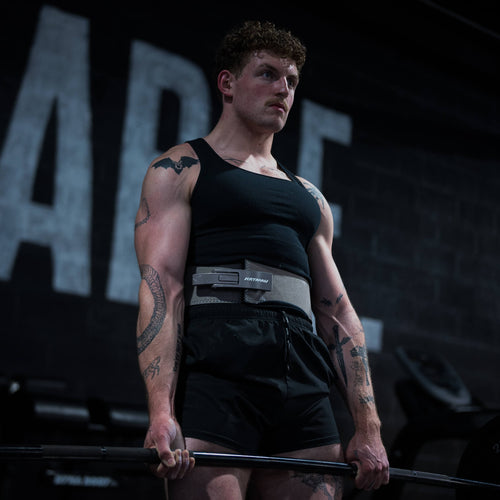
Gear matters here too, especially when you are training seriously and often. Stable footwear for lifting, apparel that moves well under load, and support gear that holds up session after session can make training cleaner and more consistent. That is the difference between looking serious and training serious.
What progress should actually look like
Do not expect every lift PR to instantly show up as a faster race result. The signal is more subtle at first. Your stride feels more stable. Hills stop exposing you. You hold form later into the session. Your legs come back faster after hard workouts. Over time, those small upgrades start compounding.
That is the real case for strength work. It does not replace running. It makes your running hold together under pressure.
If you want stronger splits, stronger finishes, and fewer weak links, treat the weight room like part of your performance system, not an optional add-on. The runners who keep improving are usually not the ones doing more of everything. They are the ones building a body that can actually use the work.
