 30-Day Money Back Guarantee

The bar breaks from the floor before your confidence does. That is the whole point of a good belt. The best lever belts for deadlifts do not just make your setup feel tighter - they give you a more stable brace, cleaner positioning, and less wasted energy when the weight gets serious.
Deadlifts are different from squats, and your belt choice should reflect that. A belt that feels incredible on a heavy squat can feel like a wall against your ribs or hips when you hinge down to pull. That is why the right lever belt for deadlifts usually comes down to a few specific things: width, thickness, stiffness, how the buckle sits, and whether the belt lets you lock in without fighting your start position.
What makes the best lever belts for deadlifts?
A lever belt is built for speed and consistency. Once you set the buckle, you get the same tightness every time. That matters when you want a repeatable brace and do not want to mess with prongs between sets.
For deadlifts, though, not every lever belt feels elite. Some are too stiff for your build. Some dig into the torso at the bottom. Some are technically supportive but make it harder to get into position. The best ones create pressure without forcing you to compromise your start.
A few details matter more than marketing.
Width changes everything
Most serious lifting belts are 4 inches wide all the way around. That is the standard for powerlifting, and for many lifters it works just fine on deadlifts too. But if you have a shorter torso, longer femurs, or a very aggressive hinge, that full width can feel crowded at the bottom.
That does not make 4-inch belts bad. It just means body shape matters. Taller lifters with more room between ribs and hips often handle a 4-inch lever belt easily. Shorter lifters or sumo pullers sometimes prefer a slightly narrower feel, or a belt with edges that break in well and stop feeling like armor plating.
Thickness is support with a trade-off
A 10mm belt is the sweet spot for most lifters. It is supportive, competition-friendly, and usually easier to break in than a 13mm belt. For deadlifts especially, 10mm often gives you enough rigidity to brace hard without making the start position feel cramped.
A 13mm belt is more extreme. Some advanced lifters love the locked-in feel, especially if they are built to tolerate thicker leather and want maximum resistance against the core. Others hate it for pulls because it can feel too stiff off the floor. If deadlifts are your main concern and you are not already sure you love a thick belt, 10mm is usually the smarter move.
Lever quality matters more than people think
A lever belt is only as good as the lever itself. A cheap buckle can flex, loosen, or become annoying to open after heavy sets. A solid lever should close with authority, hold tension under load, and release without a fight.
That sounds basic, but it changes the whole training experience. If you train hard, small annoyances get old fast.
7 best lever belts for deadlifts
1. A 10mm leather lever belt with a stiff but manageable break-in
This is the most balanced option for most lifters. It gives you the support you want on heavy deadlifts without feeling so rigid that you cannot reach your start position. If you are buying one belt to cover pulling, squatting, and general strength work, this is the lane.
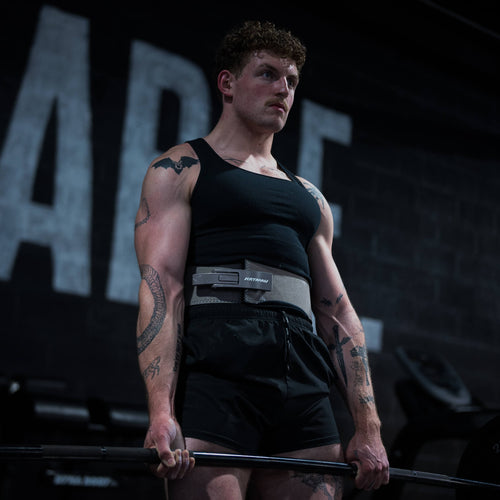
Look for real leather, a secure lever, and clean finishing around the edges. A premium 10mm belt should feel substantial without feeling like a brick. This is where a lot of serious gym athletes land because it performs at a high level and still feels usable week after week.
2. A 13mm lever belt for advanced lifters who want max rigidity
If you already know you like a very stiff belt, 13mm can feel incredible. The brace is aggressive. The feedback against your core is immediate. Under maximal loads, some lifters feel more protected and more powerful with that extra thickness.
The trade-off is obvious. It is less forgiving, harder to break in, and can feel rough on deadlift setup if your torso length or pulling mechanics do not match it well. This is not the automatic best choice. It is the right choice for a specific type of lifter.
3. A lever belt with a tapered or more deadlift-friendly profile
Some lifters simply do better with less bulk near the front. A deadlift-friendly profile can reduce that boxed-in feeling at the bottom and make it easier to wedge into position. If a standard uniform belt keeps jamming into your ribs or hips, this style deserves attention.
The downside is that tapered designs are not always ideal if you want one competition-style belt for everything. They can feel less universal than a straight 4-inch belt.
4. A softer-edged 4-inch lever belt for shorter torsos
This one gets overlooked. Not every deadlift problem comes from width alone. Sometimes the issue is how harsh the belt feels at the edges before it breaks in. A well-made lever belt with slightly more forgiving finishing can make a huge difference for shorter lifters who still want full-width support.
You still get the structure. You just lose some of the feeling that the belt is trying to fold you in half.
5. A competition-style lever belt with a fast-adjust lever system
This works well for lifters who use different tightness settings for squats and deadlifts. Traditional levers are fast once set, but changing them usually takes a screwdriver. A quick-adjust style gives you more flexibility if you want one fit for pulls and another for squats or higher-volume work.
The trade-off is that more moving parts can mean more complexity. Some lifters still prefer the simplicity of a standard lever.
6. A broken-in premium leather belt that molds to your torso
A lot of lifters chase specs and ignore feel. A premium belt that has had time to shape to your body can outperform a stiffer, more expensive option that still feels hostile every time you hinge. For deadlifts, that molded fit matters.
This is one reason quality leather wins. It starts strong, then gets better. A belt that adapts to your setup can give you support without making every rep a battle against the gear itself.
7. A premium all-around lever belt for lifters who want performance and identity
Some belts are built purely as tools. Others feel like part of your training uniform. If you train hard and care how your gear looks as much as how it performs, there is nothing wrong with wanting both. The best lever belts for deadlifts should hold up under load, but they should also match the standard you bring into the gym.
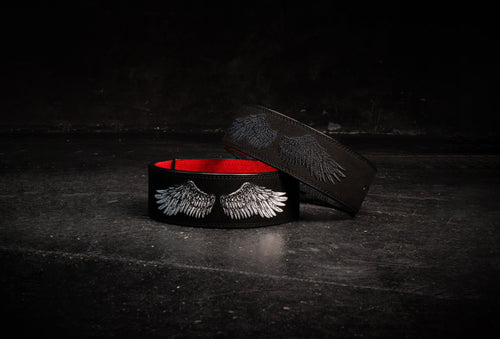
That is where premium design matters. Clean construction, durable materials, sharp detailing, and a belt you actually want to wear can make your setup feel complete. Katamu sits in that lane - serious support, built for hard sessions, without looking like generic gym gear.
How to choose the right lever belt for your deadlift style
If you pull conventional and have a longer torso, a standard 4-inch 10mm lever belt is usually the easiest recommendation. It gives you strong support and tends to interfere less with setup than a thicker belt.
If you pull sumo, your experience may vary more. Some sumo lifters love a standard lever belt because it gives them a huge brace to push into. Others feel crowded at the bottom and want something that breaks in faster or sits a little cleaner against the body.
If you are newer to belts, resist the urge to go as thick and stiff as possible just because it sounds more hardcore. A belt only helps if you can brace into it well and still get to your position. More support is not always more useful.
Common mistakes when buying a deadlift lever belt
The biggest mistake is buying for squats only. A lot of lifters test a belt standing upright, feel how solid it is, and assume that means it will be great for deadlifts. Then they hinge down and realize the belt feels completely different where it actually counts.
The second mistake is getting sizing wrong. A lever belt needs precise fit. Too loose, and you lose the pressure that makes a belt worth wearing. Too tight, and your setup turns into a fight before the pull even starts. Always check your actual waist measurement where you wear the belt, not your jeans size.
The third mistake is underestimating break-in. A quality lever belt can feel stiff at first. That does not mean it is a bad belt. It means you need a few sessions to let the leather start adapting. There is a difference between normal break-in stiffness and a belt that is simply wrong for your body type.
Are lever belts better than prong belts for deadlifts?
For a lot of lifters, yes. Lever belts are faster and more consistent. You get locked in at the same setting every set, and that consistency is valuable when you are trying to build a repeatable deadlift setup.
Prong belts still have one advantage - easier micro-adjustments. If your bodyweight fluctuates, or you like changing tightness often, a prong can be more flexible. But if you know your fit and want speed, structure, and a clean close every time, a lever belt is hard to beat.
The best belt is the one that helps you brace harder without disrupting your pull. If your deadlift setup feels stronger, cleaner, and more confident the second the lever snaps shut, you are wearing the right one. Buy for your build, your pulling style, and the way you actually train - not just the thickest piece of leather on the shelf.
