 30-Day Money Back Guarantee

The bar breaks the floor, your hips and shoulders rise together, and the weight starts to feel real. That is where athletes ask: do lifting belts help deadlifts, or are they just another piece of gym gear? Used well, a belt can help you create a stronger brace and feel more locked in under heavy load. Used poorly, it becomes a false sense of security wrapped around your waist.
A lifting belt is not a shortcut to good technique. It is a tool for amplifying the technique and bracing strength you already have. For serious deadlift training, that distinction matters.
Do Lifting Belts Help Deadlifts?
Yes, lifting belts can help deadlifts, particularly during heavy working sets where maintaining a hard, consistent brace becomes more difficult. The main benefit is not that a belt physically holds your spine in place. It gives your trunk something firm to press against as you breathe and brace.
When you fill your abdomen with air and push outward in every direction, your core creates intra-abdominal pressure. A well-fitted belt gives that pressure a solid boundary. For many lifters, this makes their torso feel more stable, helps them maintain position through the pull, and improves confidence when the bar gets heavy.
That can translate to better performance. If your brace is the weak link in a deadlift, a belt may help you transfer force more efficiently from your legs and hips into the bar. It can also make heavy singles, triples, and high-effort sets feel more repeatable.
But the answer is not “wear a belt and instantly pull more.” Deadlift strength still comes from skill, strong legs, hips, back, grip, and a torso that can stay rigid under load. The belt supports the brace. You still have to create it.
What a Belt Does, and What It Does Not Do
A belt works best when you use a 360-degree brace. Rather than sucking your stomach in, take a controlled breath into your belly, sides, and lower back. Then push that pressure outward against the belt while tightening your trunk as if you are preparing to take a hard body shot.
That pressure can help reduce unwanted movement in the torso during a heavy pull. It may be especially useful for conventional deadlifters who need to resist spinal flexion off the floor, as well as athletes whose positioning starts to break down near maximal weights.
What a belt does not do is fix a rounded start position, weak lats, rushed setup, or poor bar path. It also does not make reckless jumps in weight smart. If you lose your brace, let your hips shoot up, or yank the bar from the floor, the belt cannot clean up the rep for you.
Think of it like premium equipment in any serious setup: it performs at its best when the foundation is already there. A belt should sharpen your training, not cover up problems you need to address.
Who Benefits Most From a Deadlift Belt?
Lifters often get the most from a belt once they are consistently handling challenging loads and have developed a reliable setup. That does not mean you need an elite total or years under the bar. It means you should understand how to hinge, find tension before the pull, and brace deliberately.
A belt can be valuable for powerlifters training heavy competition-style deadlifts, strength athletes pushing top sets, and bodybuilders who use demanding deadlift variations or rack pulls for posterior-chain development. It can also help lifters whose unbelted strength is solid but whose trunk stiffness fades before their legs and back are truly taxed.
Beginners can wear belts too, but they should not depend on them from day one. Early training is the time to learn how your ribs, pelvis, breathing, and core tension work together. Spend plenty of time pulling unbelted with manageable loads. Build the skill first, then use a belt when the weight calls for more support.
There is also a practical middle ground. Many experienced athletes warm up and complete lighter volume without a belt, then put it on for their hardest sets. This keeps unbelted bracing in the program while giving them extra support when intensity rises.
How to Wear a Lifting Belt for Deadlifts
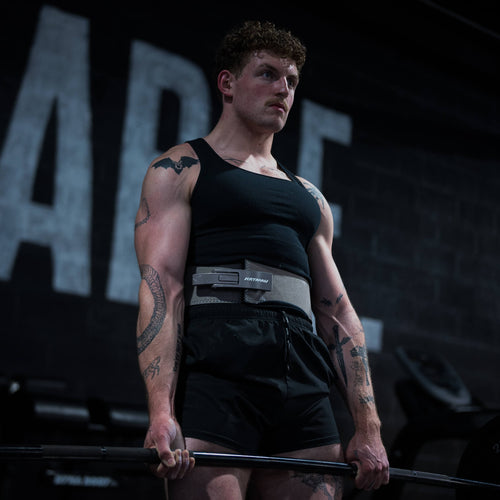
Placement matters. Most lifters wear a deadlift belt around the area between the ribs and hips, but the exact position depends on your torso, your pulling style, and how you set up. A conventional deadlifter may prefer the belt slightly higher or lower than a sumo deadlifter. The right placement is the one that lets you hinge into your start position without the belt jamming into your ribs or pinching hard at the hips.
The belt should be tight enough that you can press firmly into it after taking a breath, but not so tight that you cannot get a deep breath at all. If you have to fight for air before every rep, loosen it one notch. If you can barely feel it when you brace, tighten it.
Before you pull, set your feet, grip the bar, pull the slack out, and lock in your lats. Then breathe into your torso and push outward against the belt. Keep that pressure as you drive through the floor. At the top, finish tall without leaning back and turning the lockout into a lower-back contest.
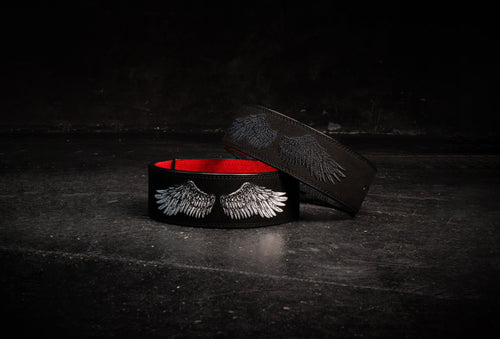
A lever belt is especially useful for lifters who want a consistent, secure fit across heavy sessions. Once adjusted to your preferred setting, it can lock in fast and give you the same dependable tension rep after rep. A quality belt should feel solid under load, not like another thing you have to manage while preparing for a hard pull.
Common Belt Mistakes That Cost You Position
The most common mistake is treating the belt as something to lean against rather than something to brace into. If your stomach relaxes against the belt, you lose the main benefit. Create pressure first, then maintain it.
Another mistake is wearing the belt in the exact same spot for every lift. Squats, conventional deadlifts, sumo deadlifts, and rows can all call for slightly different placement. Test your position with warm-up weight before committing to your heaviest set.
Some lifters also fasten their belt too tightly. More pressure is not always better. You need enough room to take in air and expand your trunk. Finally, do not save all your technique work for beltless days. A belt is part of your performance system, not a replacement for controlled reps and intelligent loading.
Belted vs. Beltless Deadlifts: Use Both With Purpose
Beltless deadlifts have a place in serious training. They force you to own your brace without external feedback and can build confidence in lighter to moderately heavy work. They are useful for technique volume, tempo pulls, paused deadlifts, and periods when you want to focus on total-body control.
Belted deadlifts are often the better choice for high-intensity sets where the goal is strength expression. If you are preparing for a powerlifting meet, testing a heavy single, or building tolerance to hard top sets, using the equipment you plan to rely on makes sense.
The trade-off is simple: going beltless all the time may limit how much productive heavy work you can handle, while wearing a belt for every warm-up set can leave you less practiced at generating a strong brace on your own. The best approach depends on your training goal, recovery, and current skill level.
Try using your belt when the set demands it, not because the number on the plates looks impressive. For one athlete, that might be their final two working sets. For another, it may only be singles above 85 percent of their max. Let bar speed, position, and effort guide the decision.
Make the Belt Earn Its Place
A lifting belt belongs in a serious deadlift setup when it helps you stay tighter, stronger, and more consistent. It should feel like armor you know how to use, not a ritual you perform before every rep.
Build your unbelted brace. Refine your setup. Then, when the bar gets heavy enough to demand more from your trunk, cinch up, take a full breath, and give the lift the discipline it deserves.
