 30-Day Money Back Guarantee

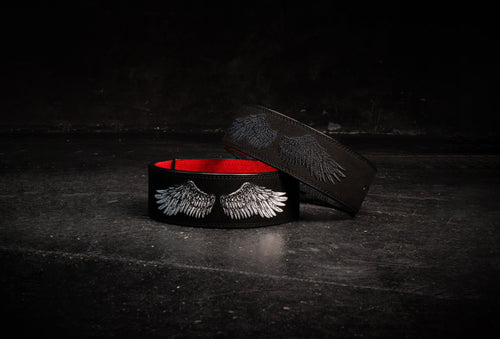
A squat belt should not feel like a costume piece you throw on for your heaviest set. It should give your brace something solid to push against, stay locked in when the bar gets serious, and match the way you actually train. So, what belt thickness for squats makes sense? For most lifters, 10 mm is the sweet spot. It delivers serious support without the long break-in period and extreme rigidity of a 13 mm belt.
That does not make 13 mm wrong. It makes it specialized. The best choice depends on your experience, your build, your squat style, and whether your training is built around powerlifting totals or hard, repeatable gym work.
What Belt Thickness for Squats Is Best?
Belt thickness refers to the thickness of the material, usually leather, not the height of the belt. A thicker belt is generally stiffer and more resistant to bending. When you take a huge breath into your abdomen and brace your core, that stiffness gives you a firmer surface to press against.
The main options are 6 mm, 10 mm, and 13 mm. Each can work for squats, but they create a different training experience.
A 6 mm belt is flexible, comfortable, and easy to break in. It can be a solid choice for newer lifters, athletes who use a belt mainly for moderate working sets, or anyone who wants support without feeling restricted. The trade-off is simple: it will not feel as stable under near-maximal loads as a thicker leather belt.
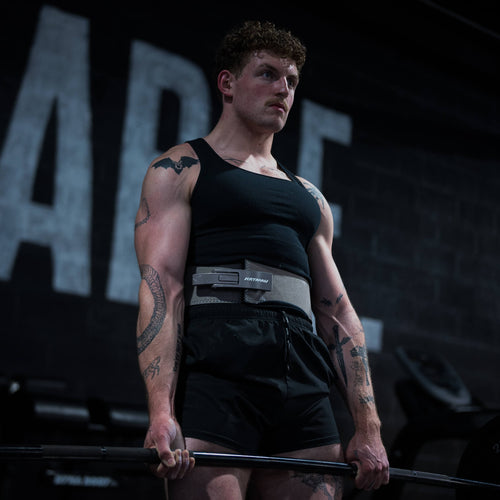
A 10 mm belt is the all-around weapon. It offers enough stiffness for heavy barbell squats, deadlifts, and presses while still molding to your body in a reasonable amount of time. Most serious gym athletes will get everything they need from a quality 10 mm lever belt.
A 13 mm belt is the most rigid option. It is built for lifters who want maximum structure during heavy low-bar squats and competition-style training. That extra thickness can feel incredibly secure once broken in, but it can also dig into the ribs or hips, especially if you have a shorter torso or squat with a lot of depth.
Why Thickness Changes Your Squat Brace
A belt does not create a strong core for you. It helps you use the core strength you have more effectively. Before descending, you breathe deep into your torso, tighten your midsection in every direction, and create intra-abdominal pressure. The belt gives your abdomen a firm boundary to press into.
With a thicker, stiffer belt, that boundary has less give. Many advanced lifters like the feedback because it makes a hard brace easier to feel and repeat under a heavy bar. If your brace is soft, though, a 13 mm belt will not fix it. You may just end up wearing a very expensive, very uncomfortable reminder to brace better.
This is why the thickest option is not automatically the best option. The right belt lets you hit a powerful brace without changing your setup, cutting off your ability to reach depth, or making every rep a fight with the belt itself.
10 mm belts: the best fit for most lifters
If you train squats hard but also use your belt for deadlifts, rows, overhead work, and general strength training, choose 10 mm. It has the structure to support heavy sets of three, five, or one without the board-like feel that can come with 13 mm leather.
It is also the more forgiving choice while you learn where to wear the belt. Some lifters place it evenly around the waist. Others angle it slightly or wear it a little higher or lower depending on their torso and stance. A 10 mm belt adapts to those small adjustments more easily.
For athletes building strength, chasing their first big plate milestones, or training across bodybuilding and powerlifting movements, 10 mm delivers premium support with fewer compromises.
13 mm belts: maximum rigidity, real trade-offs
A 13 mm belt is for the lifter who knows they want a rigid platform. It shines when your squat training is highly specific, your loads are very heavy, and you prefer the locked-in feeling of stiff leather against your brace.
But more stiffness brings more break-in time. A new 13 mm belt may feel awkward, resist your natural movement, and leave pressure points around the bottom of the ribs or top of the hips. This is common, not a sign that the belt is defective. Still, not every lifter needs to force an adaptation to the thickest belt available.
Your torso matters here. Lifters with long torsos often have more room to position a tall, stiff belt comfortably. Shorter lifters may find that a rigid 13 mm belt crowds their torso in the hole, particularly in a high-bar squat or an Olympic-style deep squat.
If you compete, check your federation's current equipment rules before buying. Many powerlifting organizations set maximum dimensions for belt thickness and width, and approved equipment requirements can vary. A belt that feels elite in training is only useful on the platform if it is permitted there.
6 mm belts: flexible support for lighter or mixed training
A 6 mm belt is not a weak choice. It is a less aggressive one. Its flexibility can work well for lifters who prioritize comfort, move through a lot of exercises in one session, or do not need a hard leather wall for maximal attempts.
It is also a practical option for younger athletes still learning their positions under load. The goal is not to become dependent on equipment. Build a strong brace first, then use the belt to reinforce it when the working weight demands more stability.
That said, if your squat sessions regularly include heavy compounds and progressive overload is the mission, many lifters outgrow 6 mm quickly. A 10 mm belt usually gives you more room to progress.
Thickness Is Only Half the Belt Decision
Do not choose based on thickness alone. Belt width, closure style, material, and fit can matter just as much once you are under the bar.
For squats, a 4-inch belt is the standard for good reason. A uniform 4-inch width gives broad support around the trunk and works well for traditional powerlifting-style squats. Some lifters with shorter torsos prefer a narrower belt because it leaves more clearance between their ribs and hips. A belt that pinches at the bottom of every rep is not the right fit, no matter how premium the leather feels.
Lever belts are a strong choice when you want a consistent, secure setup. Once adjusted, a lever closes fast and gives you the same tension set after set. Prong belts offer more micro-adjustments, which can help if your waist measurement changes through a workout or across a bulk and cut. Neither closure makes a belt inherently better for squats. The better choice is the one you can position, tighten, and trust every time.
Material changes the feel too. Quality leather provides the stiff, durable support most strength athletes expect from a squat belt. Softer materials can be more comfortable on day one, but may not provide the same firm feedback when you are bracing for a challenging single.
How to Know Your Belt Is Too Thick or Too Thin
Your belt is too thick if it consistently prevents you from reaching depth, painfully jams into your ribs or hips, or feels so rigid that you cannot establish a natural brace. Give a new belt time to break in and test different positions first. If the problem persists, the belt may not match your build or squat mechanics.
Your belt may be too thin if it folds, shifts, or feels unstable as your squat gets heavy. You should feel supported when you brace, not like you are pressing into a soft layer that disappears under pressure.
Do not judge a belt on your first session. Wear it for warm-up sets, then progressively heavier work. Experiment with placement and tightness. You should be able to take a full breath and brace hard, but not feel like you are fighting for air before you even unrack the bar.
The Smart Pick for Your Next Squat Cycle
Choose a 10 mm belt if you want one dependable belt for heavy squats and the rest of your strength training. Choose 13 mm if you are an experienced lifter, train close to your limit often, and specifically want maximum rigidity. Choose 6 mm if comfort, flexibility, and lighter mixed training are your priorities.
Katamu lifting belts are made for athletes who expect their gear to hold its shape when training turns up. Pick the thickness that supports your strongest brace, then earn the confidence that comes from repeating clean, controlled reps under a heavy bar.
