

 30-Day Money Back Guarantee

A bigger squat is great. A bigger squat that makes you faster off the floor, more explosive on the field, and more stable under pressure is better. That is the real answer to what is performance strength training - it is strength work built for carryover, not just numbers.
Performance strength training is a style of training that develops force production in a way that improves real athletic output. That can mean sprint speed, jump height, change of direction, bar speed, work capacity, positional control, or resilience under heavy load. Instead of training strength in isolation, it connects strength to movement quality, power, coordination, and recovery.
For serious lifters, this matters because strong does not always mean capable in every context. You can build a massive deadlift and still move poorly. You can chase pump work for months and never get more explosive. You can stack volume without improving the one thing you actually care about - performance. That gap is where performance strength training lives.
What is performance strength training really trying to improve?
At its core, performance strength training asks a simple question: what should your strength do for you?
If you are a powerlifter, it might mean producing more force with cleaner technique and better bracing so you can peak harder and stay healthier. If you are a field or court athlete, it might mean turning lower-body strength into sprint mechanics, jumping power, and better deceleration. If you are a bodybuilder who still wants to move like an athlete, it might mean keeping muscle while improving output, control, and joint integrity.
So yes, muscle can be part of it. Max strength can be part of it too. But they are not the full mission. The goal is usable strength - strength that transfers.
That transfer is what separates performance work from basic gym training. Traditional lifting might stop at getting stronger in a handful of lifts. Performance training goes further. It looks at how that strength shows up when fatigue hits, when speed matters, when positions get messy, and when your body has to stabilize under demand.
The difference between performance training and regular strength training
Regular strength training often focuses on progressive overload in familiar patterns. Add weight, add reps, improve technique, repeat. That model works, especially for beginners and intermediates. It is still the foundation.
Performance strength training uses that same foundation, but the programming gets more intentional. Exercise selection, tempo, rest periods, movement pairing, and weekly structure are chosen based on outcome, not just fatigue or muscle soreness.
For example, a regular lower-body day might include squats, leg press, lunges, and hamstring curls. A performance-focused lower-body day might pair heavy squats with jumps, add unilateral work for stability, include posterior chain work for sprint carryover, and manage volume so output stays high instead of grinding every set into the floor.
That does not mean performance training is always flashy. It usually is not. A lot of it looks like disciplined basics done with purpose. Heavy compounds, explosive accessories, single-leg work, trunk stability, and structured recovery. The difference is in why they are there.
The main qualities performance strength training develops
The first is force production. This is your ability to create high levels of tension against resistance. Heavy squats, deadlifts, presses, rows, and pulls all help here when programmed well.
The second is rate of force development, which is how fast you can produce force. This matters for jumping, sprinting, Olympic lift variations, dynamic effort work, med ball throws, and plyometrics. You may be strong enough to move a heavy load, but if you produce force too slowly, your athletic output still stalls.
The third is movement efficiency. That means owning positions, staying stable, and producing force without leaking energy. This is where bracing, joint control, unilateral work, and technical precision matter. You do not need to train like a rehab patient forever, but if your body cannot hold strong positions, power gets wasted.
The fourth is durability. Performance is not just what you can do fresh. It is what you can repeat while staying healthy enough to keep training. Tendon capacity, trunk stability, grip strength, and recovery tolerance all count. A strong athlete who is always beat up is not actually performing at a high level.
What a performance strength program usually includes
A good program usually starts with a primary strength lift. That could be a squat, bench, deadlift, overhead press, trap bar pull, or another major compound. This is where you build the raw material.
After that, many programs layer in explosive work. Jumps, throws, cleans, speed pulls, or dynamic box squats can fit here depending on your training age and goals. The point is not to do random athletic-looking drills. The point is to train force fast.
Accessory work still matters, but it is selected with more intent. Hamstrings, glutes, upper back, trunk, and shoulders often get plenty of attention because they support output and protect position. Unilateral work like split squats, step-ups, and single-leg RDLs is common because sports and real movement are not perfectly symmetrical.
Conditioning may be included too, but it depends on the athlete. If your sport or goal needs repeated effort, your program should reflect that. If max strength and recovery are the current priority, conditioning volume may stay lower. This is one of those areas where it depends.
Who should use performance strength training?
Not just athletes with a jersey.
If you compete in powerlifting, strongman, Olympic lifting, CrossFit, football, basketball, wrestling, martial arts, or field sports, the case is obvious. But performance strength training also makes sense for anyone who wants their gym work to mean more than muscle fatigue and mirror progress.
It is especially valuable for intermediate and advanced lifters who have already built a base. Once beginner gains slow down, just doing more sets of the same lifts is not always the answer. You need sharper programming, better movement quality, and a clearer reason behind each phase.
That said, beginners do not need a highly complex system. They need consistency, solid technique, and enough basic strength work to earn the right to specialize later. Performance training is powerful, but only if it matches your level.
Common mistakes people make
One mistake is confusing performance with chaos. Tossing together sled pushes, box jumps, kettlebell circuits, bands, and battle ropes does not automatically create a performance program. If there is no progression and no reason behind the pieces, it is just noise.
Another mistake is skipping maximal strength. Some lifters get so focused on speed and athletic drills that they never build enough force capacity to make those drills matter. Power has a strength base. Without it, you are trying to move fast with a weak engine.
The opposite mistake happens too. Some athletes get brutally strong in slow lifts but never train speed, elasticity, or change of direction. They become impressive in controlled gym settings and limited everywhere else.
Recovery is another weak point. Performance training asks more from your nervous system, connective tissue, and movement quality than pump-focused sessions usually do. If sleep, food, stress management, and smart equipment are ignored, progress fades fast.
Gear matters when the load gets serious
When training is built around output, your setup matters. The goal is not to rely on gear to replace strength. The goal is to support better performance when intensity rises.
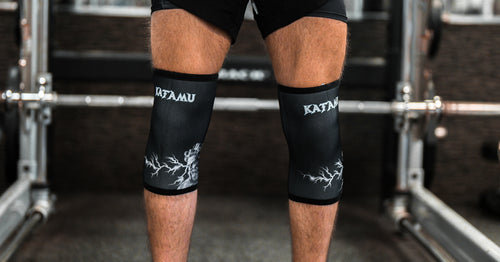
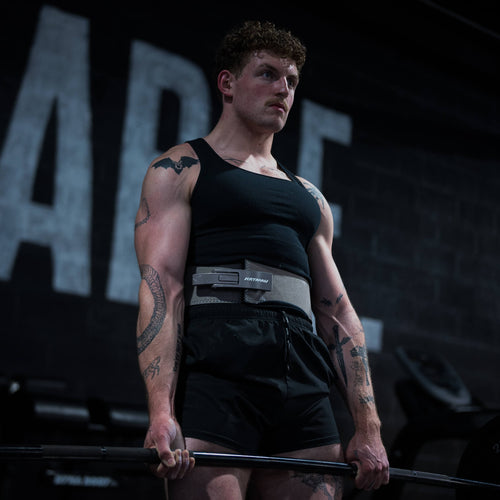
A quality lever belt can improve bracing and trunk stability on heavy squats, presses, and pulls. Knee sleeves can add warmth, compression, and confidence during high-volume lower-body work. Wrist wraps can help create a stronger stacked position for pressing. Straps can make posterior chain work more productive when grip is the limiter, not the target.
That is especially true in hard training blocks where you are pushing force production without wanting small weak links to compromise the session. Good gear does not make you strong. It helps strong training stay sharp, repeatable, and durable. That is why serious lifters pay attention to it.
How to know if your training is actually performance-based
Ask yourself a few hard questions. Is your program built around a specific outcome? Are you measuring more than pump and exhaustion? Are your lifts improving in a way that changes your speed, power, control, or resilience? Are you training qualities that carry over, or are you just collecting exercises?
If your sessions have structure, progression, and a clear reason behind the methods, you are on the right track. If every day feels random, crushed, and disconnected from your goal, probably not.
Performance strength training is not reserved for elite athletes in private facilities. It is for anyone who wants strength with a purpose. If you train hard, care about output, and want your work to show up beyond the rack, that standard fits you.
Train for numbers if numbers matter. Train for size if size is the goal. But if you want strength that performs when it counts, build the kind that moves with you, supports you under pressure, and keeps showing up rep after rep.
