 30-Day Money Back Guarantee

The difference between a belt that feels locked in and one that gets dumped in your gym bag usually comes down to a few details most lifters miss. If you are trying to figure out how to choose lever belt options that actually match your training, start with this: the best belt is not the stiffest, most expensive, or most hyped. It is the one that fits your body, your lifts, and the way you train week after week.
A lever belt is built for serious support. Once it is set correctly, you get a fast, consistent closure every time. That is why powerlifters love it, and why more general gym athletes are switching from prong belts when their training gets heavier. But a lever belt only feels elite when the size, thickness, width, and buckle quality are right. Get those wrong, and even a premium belt can feel awkward.
How to choose lever belt without wasting money
Most buying mistakes happen because lifters shop by appearance first and fit second. A belt can look aggressive, feel premium in hand, and still be the wrong pick for your torso length or lifting style.
Start with sizing. Do not assume your pants size tells the full story. Lever belts are sized around your waist measurement where the belt actually sits, which is usually around your navel or slightly above it depending on your build and how you brace. Measure that area relaxed, then again while bracing lightly. If you are between sizes, the smarter choice depends on your current phase.
If you are bulking, want room for heavier bracing, or prefer wearing the belt a little higher on some lifts, sizing up can make sense. If you are cutting or you know you like a tighter, more locked-in feel, staying closer to the lower end of a size range usually works better. The goal is adjustment room in both directions, not being maxed out on day one.
Lever belt size matters more than lifters think
A lever belt does not adjust as quickly as a prong belt between sets. That is the trade-off. You get speed and consistency once it is dialed in, but changing the fit usually means unscrewing and resetting the lever position.
That means sizing has to be more deliberate. If your bodyweight swings a lot through the year, or you share your belt with someone else, a lever belt can be less convenient than a prong model. But if your training is structured and your bodyweight is relatively stable, the lever system feels unbeatable when it is set right.
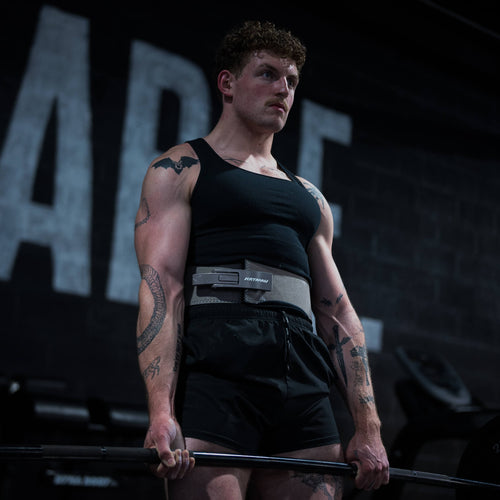
A properly sized lever belt should let you brace hard without feeling like the belt is crushing your ribs or floating around your midsection. You want firm contact all the way around, enough pressure to push into, and no dead space that makes the belt feel sloppy.
Pick the right thickness for your training
Thickness changes how a belt feels almost immediately. For most lifters, the decision comes down to 10mm or 13mm.
A 10mm lever belt is the more versatile option. It gives strong support, breaks in more easily, and tends to work better for general strength training, bodybuilding, and powerlifting athletes who want security without feeling boxed in. If you squat, bench, deadlift, and also hit accessory work in the same session, 10mm usually feels more usable across the board.
A 13mm lever belt is stiffer and more rigid. That extra stiffness can feel incredible for heavy squats and for advanced lifters who want maximum support under serious loads. But there is a trade-off. It can feel harsher to break in, less forgiving on deadlifts, and less comfortable if you have a shorter torso or you move through a wider range of exercises.
If you are newer to belts, train across multiple styles, or want one belt that handles almost everything, 10mm is the safer choice. If you are a dedicated powerlifter chasing the heaviest possible numbers and you already know you like a very rigid belt, 13mm may be worth it.
Width is simple until your torso says otherwise
Most lever belts are 4 inches wide all the way around. That is the standard for a reason. It creates a consistent surface to brace against and works well for squats, bench, and deadlifts for a lot of lifters.
But standard does not mean universal. If you have a shorter torso, larger rib cage, or hips that sit high, a 4-inch belt can dig into you badly, especially on deadlifts. If the belt jams into your ribs at the top and your hips at the bottom, your bracing will suffer no matter how premium the leather is.
Some lifters force themselves into a belt width that looks more hardcore instead of choosing what lets them move well. That is a mistake. A belt should help you create pressure, not fight your setup. If your body type clashes with a wide, stiff belt, comfort is not a luxury issue. It is a performance issue.
Material and build quality separate premium from disposable
A lever belt takes abuse. It gets cinched hard, loaded with sweat, dropped on platforms, shoved into bags, and used under max effort. Cheap construction does not hide for long.
Look for solid leather or high-grade treated materials that keep their structure over time. The belt should feel dense and supportive, not flimsy or overly padded. Too much softness can feel comfortable at first, but it often means less long-term stability when the weights get heavy.
The lever itself matters just as much. A low-quality buckle can loosen, shift, or fail when you least want it to. A good lever should feel secure, close cleanly, and stay consistent under repeated use. This is one of those places where cutting corners usually costs more later.
Stitching, edge finishing, and screw security are smaller details, but they tell you a lot. Premium gear looks sharp, but more importantly, it holds up when training gets ugly.
Match the belt to the way you actually lift
This is where a lot of people overbuy. They choose a belt for their ideal training self, not their real sessions.
If your focus is powerlifting and your training revolves around squat, bench, and deadlift, a lever belt makes a lot of sense. The fast on-off system is efficient, and the stable fit is perfect when your work sets are heavy and repeatable.
If you do mixed training with circuits, Olympic lifts, athletic work, or frequent changes in belt tightness between movements, a lever belt can feel less flexible. In that case, a prong belt may be more practical. That does not make a lever belt worse. It just means it is designed for a certain type of training rhythm.
For bodybuilders and general lifters, it depends on exercise selection. If you mainly belt up for compound presses, rows, squats, and machine work with serious loads, a lever belt can still be a strong choice. If you want one-second adjustments every few minutes, the trade-off may annoy you.
How to choose lever belt for powerlifting vs gym training
For powerlifting, prioritize a competition-legal width, strong lever hardware, and a thickness that matches your experience. Most lifters will be best served by a 10mm or 13mm, 4-inch belt with a secure lever and true sizing.
For general gym training, versatility matters more. A 10mm option is usually easier to live with. It gives enough support for heavy compounds without feeling overbuilt for everything else. That balance matters if you are not only stepping under a barbell to hit singles.
Fit should feel aggressive, not distracting
The right belt will feel tight. That is the point. But there is a difference between tight support and bad fit.
When you wear a lever belt correctly, you should be able to breathe into your stomach and obliques, create pressure, and feel more stable through the lift. You should not feel like the belt is forcing you out of position or making it impossible to set up.
A common mistake is setting the belt too tight because it feels more serious. If you cannot brace properly into it, you lose the benefit. Another mistake is wearing it too loose because a true lifting fit feels unfamiliar at first. The sweet spot is where the belt gives you something solid to push against while still letting you own your position.
That fit can also vary by lift. Some lifters set the belt slightly higher for squats and lower for deadlifts. With a lever system, that kind of frequent change is less convenient, so know your preferences before you buy.
The smart buy is the one you will keep using
A lever belt should feel like part of your system, not a random accessory you regret after two sessions. Choose the size from actual waist measurements, not jeans. Pick thickness based on training reality, not ego. Respect your torso shape. Pay attention to lever quality. And be honest about whether your workouts favor fast consistency or constant adjustment.
If you train hard, your gear should meet that standard. A well-chosen lever belt does more than support a heavy set. It sharpens your setup, builds confidence under the bar, and makes every brace feel more deliberate. That is the kind of upgrade you notice long after the first wear, and it is exactly why serious lifters keep reaching for it.
