 30-Day Money Back Guarantee

When the bar gets heavy, small details start to matter. Stance, bracing, depth, tempo - and yes, gear. So, do knee sleeves help squats? For a lot of lifters, yes. They can make squats feel more stable, keep the knees warm, improve confidence under load, and add a subtle performance edge. But they are not magic, and they will not fix bad mechanics, weak quads, or rushed programming.
That is the real answer most lifters need. Knee sleeves can absolutely earn a spot in your kit, especially if you squat hard and often. The key is knowing what they actually do, what they do not do, and when wearing them makes sense.
Do knee sleeves help squats or just feel supportive?
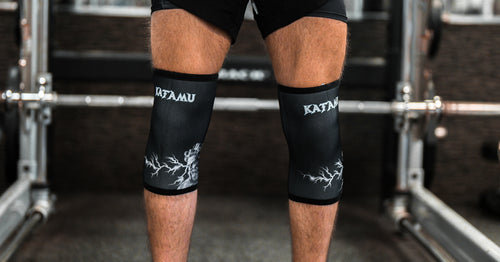
They do both. The support is real, but it is not the same kind of support you get from a knee wrap or a rigid brace. Knee sleeves are usually made from compressive material, often neoprene, and their biggest immediate effect is warmth. Warmer joints tend to feel better, move more smoothly, and stay more comfortable through repeated sets.
That warmth matters more than some lifters realize. Cold knees can feel stiff, especially early in a session or during high-volume work. Sleeves help keep the joint area primed so you are not fighting that sluggish feeling every set.
Compression is the second piece. A good sleeve creates a hugged, locked-in feel around the knee. That does not mean it physically takes over the lift, but it can improve body awareness. You feel where your knees are tracking, and that can make your squat feel cleaner and more controlled.
There is also a rebound effect, though lifters sometimes overstate it. A snug sleeve can give a little pop out of the bottom, especially with heavier attempts. It is not going to turn a mediocre squat into a monster PR overnight, but in strength training, small advantages count.
What knee sleeves actually help with
The biggest benefit is consistency. If your knees feel better from warm-ups through top sets, your movement usually looks better too. Sleeves can reduce that distracted, irritated feeling some lifters get when training heavy multiple times per week.
They are especially useful for lifters who deal with mild knee discomfort during squats, lunges, split squats, or leg press. Not injury treatment - just that familiar training ache that shows up when volume climbs. In that case, sleeves often help by keeping the area warm and compressed, which makes training more tolerable.
They also help psychologically. That matters. Heavy squats are physical, but they are also about confidence. If putting on sleeves helps you attack the set instead of second-guessing your knees, that has value. Serious training is not only about raw tissue capacity. It is also about being mentally ready to move with intent.
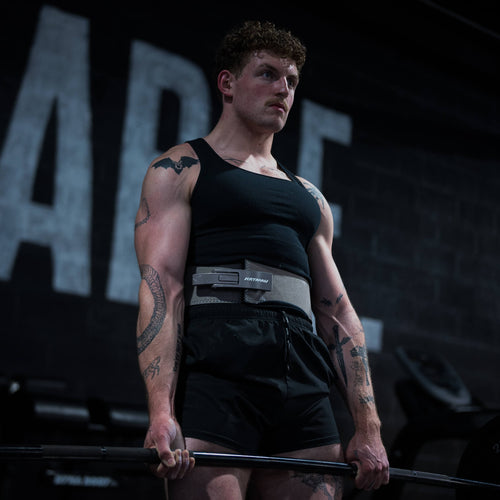
For powerlifters and strength-focused athletes, sleeves can be part of a repeatable setup. Belt on. Sleeves up. Head locked in. That ritual has a performance effect because it signals go time.
They can improve comfort under heavy load
A lot of lifters first notice the difference not on max day, but on sets of five, six, or eight. The sleeves make the session feel smoother. Less irritation. Less stiffness between sets. Better rhythm.
They can offer a slight carryover in performance
That carryover is usually modest, but real. Depending on the fit, material, and the lifter, sleeves may help you feel stronger in the hole or more stable as you reverse the movement. For competitive lifters, even a slight edge is worth paying attention to.
What knee sleeves do not do
They do not replace technique. If your knees cave because your glutes are not doing their job, or your squat folds because your brace is weak, sleeves are not solving that. They can make a flawed squat feel a little better, which sometimes hides the actual issue.
They also do not make you bulletproof. If your knee pain is sharp, persistent, or getting worse, sleeves are not the answer. That is where you step back, adjust training, and get real clarity on what is going on.
And they do not need to be worn by every lifter in every phase. If you are doing light technique work or rebuilding movement quality, training without sleeves can help you stay honest about how your body is moving and feeling.
Do knee sleeves help squats for beginners?
Sometimes, but not always in the way beginners expect.
If you are new to squatting, the biggest wins still come from learning how to brace, control depth, and build strength through good positions. Sleeves are not a shortcut to that. A beginner who buys great gear but squats with loose mechanics is still a beginner with loose mechanics.
That said, sleeves can help newer lifters who train in colder gyms, feel discomfort as they build volume, or want a more secure feel on leg day. They can make the learning phase more comfortable. The mistake is thinking comfort and correction are the same thing.
For newer athletes, sleeves should support training, not distract from the basics. If your squat only feels okay when you are fully geared up, that is a sign to look closer at the movement itself.
Who benefits most from knee sleeves?
Intermediate and advanced lifters usually get the most out of them because they are handling enough load and enough volume for the benefits to show up clearly. If you squat heavy once or twice a week, push hard on leg accessories, or prep for powerlifting, sleeves make more sense.
They also fit athletes who care about performance without wanting the aggressive feel of wraps. Wraps can add more rebound, but they are less practical for general training and take more effort to use correctly. Sleeves are simpler. Pull them on and train.
Bodybuilders can benefit too, especially during high-volume lower body sessions where joint comfort matters. If your goal is quality work across multiple hard sets, anything that helps you stay locked in without changing your movement too much can be worth it.
Fit matters more than most people think
A knee sleeve only helps if it fits correctly. Too loose, and you are basically wearing a warm sock. Too tight, and you might spend more energy wrestling it on than focusing on the lift.
A good fit feels compressive and secure without cutting off movement or making depth feel unnatural. You want support, not panic. Most lifters prefer a snug competition-style fit for heavy days and a slightly less aggressive fit for regular training.
Thickness matters too. Thicker sleeves usually feel more supportive and offer more rebound, while thinner sleeves feel less restrictive and may work better for general gym use. The best choice depends on how you train. If your focus is serious strength work, you will probably want more structure. If you want all-around comfort for mixed sessions, moderate compression may be the better move.
When you should wear them
You do not need sleeves for every warm-up set with an empty bar. A lot of lifters put them on as the weight climbs, especially once the knees start taking real load. Others wear them from the beginning to keep the joint warm through the entire session.
Both approaches can work. If your knees feel stiff early, start with them on. If you like moving more freely at lighter weights, save them for work sets.
It also depends on the training block. During heavy strength phases, sleeves often become part of every squat session. During off-season or technique-focused blocks, you might use them less often. Smart gear use is still about context.
Are knee sleeves worth it for squats?
If you squat seriously, they usually are. Not because they are flashy, and not because they guarantee more weight on the bar, but because they improve the training experience in ways that matter over time. Better warmth. Better comfort. Better confidence. Sometimes a little more performance.
That combination adds up. Strength is built over months of hard sessions, not one dramatic set. If sleeves help you train hard with more consistency, they are doing their job.
The strongest take is this: use them as a tool, not a crutch. Let them support the work, not replace it. Build strong legs, clean mechanics, and disciplined programming first. Then use the gear that helps you show up sharper when it counts.
For lifters who train with intent, that is the standard. And if your setup matters to you - performance, durability, and how you carry yourself under the bar - quality knee sleeves are not just extra gear. They are part of the uniform. Katamu gets that.
The best equipment does not do the lift for you. It helps you own it when the weight gets real.
