 30-Day Money Back Guarantee

You feel it before the bar even leaves the rack. If your belt shifts, your knees feel unstable, or your wrists start barking under heavy volume, the lift is already compromised. A solid powerlifting accessories guide is not about buying more gear for the sake of it. It is about choosing the pieces that actually make training stronger, safer, and more consistent.
A lot of lifters get this wrong in both directions. Some train raw forever and treat every accessory like a crutch. Others load up on every piece of gear they see and still wonder why their setup feels off. The truth sits in the middle. The right accessories sharpen performance. The wrong ones distract you, change your mechanics, or collect dust in your gym bag.
Powerlifting accessories guide: what matters most
The first question is not what looks hardest. It is what helps your training right now. If you are building your first serious setup, start with the accessories that directly affect bracing, joint support, and bar control. In most cases, that means a belt, knee sleeves, and wrist wraps before anything else.
Those three cover the lifts that matter most. A belt helps create pressure and reinforces your brace on squats and deadlifts. Knee sleeves keep the joint warm, improve confidence at the bottom, and can make heavy volume more manageable. Wrist wraps give you a more stable hand and wrist position on bench and front rack work. None of them will replace technique, but each can help you express strength with less energy leakage.
After that, your choices get more personal. Straps can be useful for deadlift variations, rows, and high-fatigue pulling work, even if you compete without them. Compression shirts and training apparel matter more than a lot of people admit, especially if you train hard, sweat hard, and want gear that stays locked in instead of becoming a distraction between sets.
The belt is the foundation
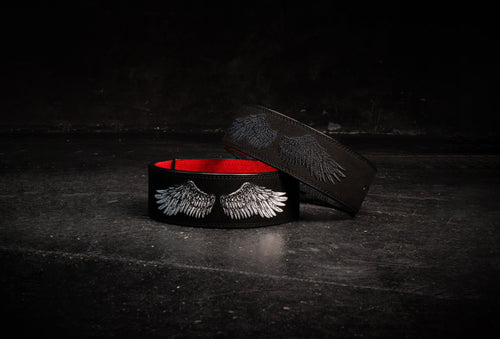
If you buy one serious accessory first, make it a lifting belt. For powerlifting, that usually means a stiff belt with enough structure to push against under heavy load. A flimsy belt might feel comfortable on day one, but once the weight climbs, it stops doing the job.
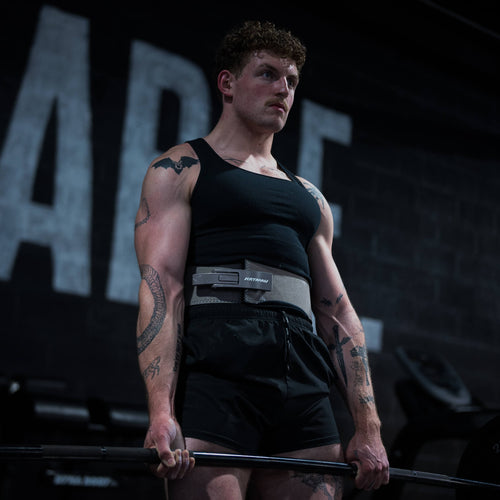
The key is understanding what the belt actually does. It does not hold your spine together. It gives your core something to brace into. That extra pressure can improve torso rigidity and help you stay more stable through the squat and deadlift. For many lifters, it also creates a stronger mental cue. Tight belt, big breath, hard brace, move the weight.
Fit matters more than hype. If the belt digs into your ribs on every deadlift setup or feels impossible to position consistently, it is not the right match for your build. Lever belts are popular because they are fast to lock in and easy to keep consistent from session to session. The trade-off is that they are less adjustable on the fly than a prong setup. If your bodyweight fluctuates or you like changing tightness between lifts, that matters.
A premium belt should feel like equipment, not costume. It needs to break in over time, hold its shape, and stay reliable under repeated heavy sessions.
Knee sleeves are support, not magic
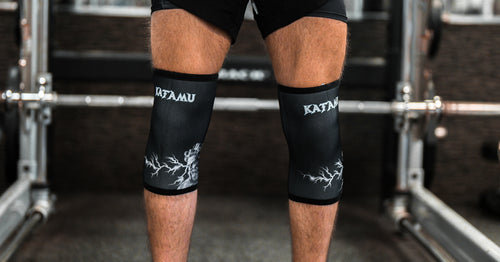
Knee sleeves have become standard for a reason. They keep the joint warm, create a more secure feeling in the hole, and can reduce that beat-up feeling during heavy squat blocks. For lifters training multiple lower-body sessions a week, that alone can be worth it.
But there is still a difference between useful support and chasing fake carryover. Some lifters expect sleeves to add huge pounds to their squat. That is usually not the point. Their real value is consistency. Warm knees tend to move better. Supported knees often feel better. And when your joints feel good, you train harder with less hesitation.
Sizing is where people sabotage themselves. Too loose, and the sleeves do almost nothing. Too tight, and you spend half the session fighting to get them on while your legs go numb. Competitive preferences vary, especially depending on federation rules and how aggressive you want the fit. For most lifters, the best sleeve is the one you will actually wear through full training sessions without hating every minute.
Wrist wraps can clean up your bench fast
If your wrists bend back hard on bench press, or your front rack feels unstable, wrist wraps are one of the easiest upgrades you can make. They help keep the wrist in a stronger stacked position so force transfers more cleanly into the bar.
That matters most on heavy benching, close-grip work, and high-volume pressing. It can also help if your wrists are irritated from repeated training. The wrap is not fixing poor bar placement in the hand, but it can support a better position once you learn it.
There is some preference involved here. Stiffer wraps usually give more support but feel more restrictive. Softer wraps are easier to tolerate in longer sessions but may not feel locked in enough near max effort. If you only wrap for your top sets, you can get away with a more aggressive feel. If you keep them on through a lot of accessories, comfort starts to matter more.
Straps are a training tool, not a weakness
This one still gets people emotional. If you pull in a federation that bans straps in competition, should you use them in training? Sometimes, yes.
A powerlifting accessories guide should be honest about the trade-off. If your grip is always the limiting factor, straps can hide a weakness you need to address. But if your goal is to overload your posterior chain, survive a brutal block of Romanian deadlifts, or keep your upper back working hard on rows, straps can be the smarter call. They let the target muscles stay the target instead of ending the set because your hands gave out first.
The best approach is simple. Train your competition grip on your main deadlift work. Use straps selectively on secondary pulling when they help you get more productive volume. That keeps your grip honest without letting it bottleneck everything.
Apparel matters more than beginners think
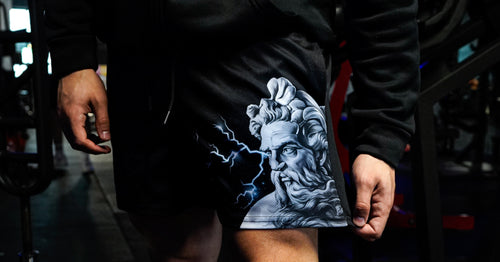
Serious lifters care about function first, but function includes what you wear. Compression tops, training shorts, and hoodies are not just aesthetic add-ons if they hold up under hard sessions and move the way they should.
Bad apparel distracts you. It rides up on bench, bunches in the hip crease on squats, or feels soaked and heavy halfway through the workout. Good training apparel disappears. It supports the session, fits clean, and still looks sharp when the gym turns into part of your identity, not just a place you visit.
That is where premium gym brands separate themselves from generic fitness wear. Durability matters. Fit matters. So does style. Lifters do not want gear that performs well but looks dead on arrival. They want equipment and apparel that match the intensity they bring to training.
Build your setup by training level
If you are newer to powerlifting, keep your first kit tight. A belt, knee sleeves, and wrist wraps will cover most of what you need. That setup supports your main lifts without overcomplicating the process.
If you are intermediate and your training is more structured, add straps for accessory pulling and consider a better gym bag or backup lever hardware if you train often or travel to meets. At this stage, convenience starts to matter because small friction points add up over months of work.
If you are advanced, your accessories should reflect your training style, recovery demands, and competition plans. You may want multiple wraps with different stiffness, sleeves with different fits, or dedicated training apparel for long sessions. The deeper you get into the sport, the more details start to matter - but only if they solve real problems.
Don’t buy gear that fights your lifting style
The biggest mistake is buying based on image instead of use. Stiff gear is not automatically better. More support is not always more performance. Some lifters need a belt that locks them in hard. Others need one they can position quickly between movements. Some love ultra-tight sleeves. Others squat better with a little less compression and more freedom.
This is where honest self-assessment beats trend chasing. Look at the lifts that break down, the joints that get irritated, and the points in training where confidence drops. Buy for those moments.
A clean accessories setup should make you feel more dialed in, not more dependent. When the bar gets heavy, you want every piece of gear working with you. That means support you can trust, durability you do not question, and style that still feels like you when the session gets serious.
If you are building that setup now, keep it simple and ruthless. Choose the gear that earns its place under the bar, then train hard enough to make it matter.
