 30-Day Money Back Guarantee

Heavy squats have a way of exposing every weak link. One rep feels smooth, the next rep makes your knees feel stiff, shaky, or just not as locked in as the rest of your body. That is usually when people start asking, what do knee sleeves do - and whether they are just another gym accessory or a piece of gear that actually changes how you train.
The short answer is this: knee sleeves help keep the joint warm, add a sense of compression and support, and make heavy lower-body training feel more stable and more confident. They are not magic. They do not replace strong technique, smart programming, or healthy knees. But for serious lifters, they can absolutely improve how a session feels under load.
What do knee sleeves do, exactly?
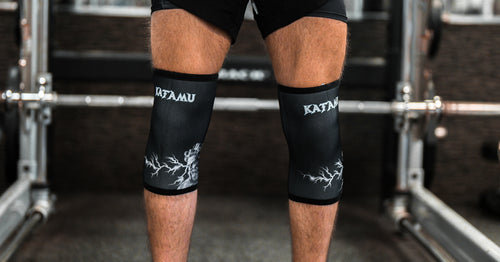
Knee sleeves wrap the knee joint in compressive material, usually neoprene, to create warmth and a snug, supportive feel. That sounds simple, but the effect matters once the weight gets serious.
The first thing most lifters notice is warmth. Warm joints usually move better than cold ones, especially early in a session or during long rest periods between heavy sets. Sleeves help retain heat around the knee, which can make squats, lunges, leg presses, and Olympic lifts feel less stiff.
The second thing is compression. A well-fitted sleeve gives the knee a secure, held-together feeling. It does not brace the knee the way a rigid medical support would, but it can make the joint feel more controlled during the descent and drive out of the hole. For lifters chasing consistency, that matters.
The third benefit is body awareness. Sleeves increase proprioception, which is the body’s sense of where a joint is in space. In practical terms, that can help you feel your knee position better during heavy reps. Better awareness can lead to cleaner movement, especially when fatigue starts to blur technique.
The real benefits of knee sleeves in training
A lot of gym gear gets oversold. Knee sleeves are useful, but the value is in how they improve training feel, not in fake promises.
For strength athletes, sleeves often make squatting feel more secure. That extra security can help you commit to the movement instead of thinking about knee discomfort on every rep. If you are distracted by irritation or stiffness, performance usually drops. If the joint feels stable and warm, you can focus on bracing, depth, and bar path.
There is also a comfort factor that gets overlooked. High-volume leg sessions can be brutal on the knees even when your form is solid. Sleeves can reduce that beat-up feeling during repeated bending under load. They are especially popular for back squats, front squats, hack squats, split squats, and any session with a lot of knee flexion.
Some lifters also feel a slight rebound effect at the bottom of a squat, especially with thicker sleeves. That does not mean the sleeve is doing the lift for you. It means the material stores a bit of tension as the knee bends, which may help you feel stronger coming out of the bottom. The effect varies by fit, thickness, and the exercise itself, but it is real enough that competitive lifters pay attention to it.
Then there is confidence. This matters more than people admit. When the bar is loaded heavy, confidence changes execution. If sleeves help you feel more locked in, more aggressive, and more prepared to attack the set, they are doing part of their job.
What knee sleeves do not do
This is where some honesty helps.
Knee sleeves do not fix bad squat mechanics. If your knees cave because your positioning is off, your setup is rushed, or your glutes are not controlling the movement, sleeves will not solve that. They might make the lift feel better, but they are not a substitute for technique work.
They also do not make you bulletproof. If you are training recklessly, jumping load too fast, or ignoring pain that needs real attention, sleeves will not protect you from the consequences. They are support gear, not armor.
And despite the hype you sometimes hear, knee sleeves are not the same as knee wraps. Wraps are tighter, more aggressive, and designed to provide a much stronger rebound for maximal lifting. Sleeves are more versatile and easier to use for regular training. For most gym athletes, that makes sleeves the better everyday choice.
Who should wear knee sleeves?
Knee sleeves make the most sense for lifters who train lower body hard and often. If you squat heavy, pull sumo, do Olympic lifts, or run serious leg volume, there is a good chance you will notice the difference.
They are especially useful for powerlifters and strength-focused gym athletes who want more consistency under heavy loads. Bodybuilders can benefit too, particularly during high-volume quad work where the knees take repeated stress. Even general gym lifters may like sleeves if their knees get cranky during colder sessions or after long workdays spent sitting.
That said, not everyone needs them right away. If you are brand new to lifting, your first priorities should be learning movement patterns, building strength, and developing control. Gear should support the process, not distract from it. Once the weights get heavier and the demand on your joints climbs, sleeves start making more sense.
When knee sleeves help most
The biggest payoff usually shows up in hard lower-body sessions. Heavy squat days are the obvious example, but they are not the only one.
Sleeves are useful when you are handling near-maximal loads, pushing volume, or training in conditions where your knees cool down between sets. They can also help during long sessions where your joints tend to feel worse as fatigue builds.
A lot of lifters keep sleeves off for warmups, then put them on as the weight climbs. Others wear them for the whole session once they know they will be doing a lot of knee-dominant work. There is no perfect rule. The right answer depends on how your knees feel, how you train, and what kind of support you want from your gear.
How tight should knee sleeves be?
Fit changes everything.
A sleeve should feel snug and compressive without cutting off circulation or turning every set into a fight just to get the thing on. If it slides around, bunches behind the knee, or feels loose once you start moving, it is probably too big. If your lower leg goes numb or you cannot bend your knee naturally between sets, it is probably too small.
Some lifters prefer a very tight competition-style fit for maximal squats. Others want a slightly easier fit for mixed training, bodybuilding work, or longer sessions. Neither is wrong. It depends on whether your priority is maximum support feel or day-to-day comfort.
Thickness matters too. Thicker sleeves generally feel more supportive and may give more rebound, but they can also feel hotter and more restrictive. Thinner sleeves are easier to move in, though they may offer less of that locked-in effect. The best choice comes down to your training style, not just what looks toughest.
Are knee sleeves worth it?
If your training is casual and your lower-body work is light, maybe not yet. But if you take leg training seriously, knee sleeves are one of the more practical pieces of lifting gear you can add.
They sit in that sweet spot between performance and comfort. You are not buying them because they look hardcore, even though a strong pair definitely adds to the presence. You are buying them because they can make heavy sessions feel better, cleaner, and more repeatable. That is valuable when progress depends on stacking good sessions week after week.
The key is having the right expectations. Sleeves can support your performance, not replace the work behind it. They help most when your technique is already solid, your programming makes sense, and you want gear that matches the intensity of how you train.
What do knee sleeves do for serious lifters?
For serious lifters, knee sleeves do four things well: they keep the joint warm, add compression, improve movement awareness, and increase confidence under load. That combination is why they have become standard gear in strength training instead of a passing trend.
The best training equipment is not flashy for the sake of it. It earns its place because it helps you show up stronger and more prepared when the session gets real. That is exactly where knee sleeves belong.
If your squats are getting heavier, your volume is climbing, or your knees need more support than a bare joint can give, sleeves are not a shortcut. They are a smart upgrade. And in a sport built on small edges, smart upgrades add up.
