 30-Day Money Back Guarantee

Your first lifting belt should make heavy sets feel more controlled, not turn every warm-up into a fight with stiff leather and a buckle you cannot set. A smart beginner belt choice comes down to how you train, how you brace, and whether the belt earns its place in your gym bag session after session.
A belt is not a shortcut around technique. It is a tool that gives your trunk something firm to brace against. When you inhale, expand your midsection, and create pressure through your core, the belt can help you stay tighter under demanding loads. That matters on squats, deadlifts, overhead presses, and other compound lifts where position breaks down fast when fatigue hits.
The goal is simple: buy a belt you can learn on, trust under load, and keep using as your numbers climb.
Beginner Belt Choice Starts With Your Training
Before comparing buckles, ask what you actually do in the gym. A powerlifter who spends most of the week squatting and pulling has different needs than a bodybuilder training hard hypertrophy sets, or a general strength athlete mixing barbells, machines, and conditioning.
If your training centers on heavy barbell work, a full-width leather lifting belt is often the strongest starting point. It provides a consistent surface around your torso, which makes bracing easier to repeat. If you move through a wide range of exercises, prefer higher-rep training, or want less restriction while seated and bending, a slightly thinner or more flexible belt may feel better.
Do not buy the most aggressive belt just because it looks battle-ready. A very stiff, thick belt can be excellent for maximal lifts, but it may feel uncomfortable if you are new to bracing or have a shorter torso. The best first belt is the one that supports hard training without distracting you from the lift itself.
Choose Width Before You Choose Style
For most lifters, a 4-inch belt is the standard. It gives broad, even support around the lower back and abdomen and works especially well for squats and deadlifts. That uniform width is why many serious strength athletes keep one in rotation for years.
Still, standard does not mean automatic. If you have a shorter torso, a 4-inch belt may dig into your ribs at the bottom of a squat or pinch your hips when you pull from the floor. A 3-inch belt, or a belt with a tapered shape, can give you more room to move. You trade some contact area for comfort, but a belt you can brace into correctly beats one that constantly gets in the way.
Try to picture your bottom squat position and deadlift setup. There should be enough space between your ribs and hips for the belt to sit firmly without being crushed between them. This is one of those details that no hype photo can answer for you.
Uniform vs. Tapered Belts
A uniform belt stays the same width all the way around. It is the classic strength-focused option because it gives your abs, obliques, and lower back a stable surface to press against. For dedicated squat and deadlift training, this is usually the strongest choice.
A tapered belt is wider in the back and narrower in the front. Some lifters find it more comfortable, particularly during movements that require more bending or when using machines. The trade-off is a smaller bracing surface in front, where many lifters feel the belt most during heavy reps.
For a first serious belt, uniform width is the safer bet if barbell strength is your priority. Go tapered only if you already know a full-width front panel does not suit your build or your training style.
Thickness: Enough Support Without the Fight
Most leather lifting belts land around 7 mm, 10 mm, or 13 mm thick. Thickness affects how rigid the belt feels, how much it resists folding, and how long it takes to break in.
A 7 mm belt is flexible and approachable. It can be a solid choice for newer lifters, general gym training, and athletes who want support without a long break-in period. It will still feel far more substantial than a soft department-store belt.
A 10 mm belt is the sweet spot for many serious lifters. It is stiff enough to handle heavy work, durable enough for years of training, and usually manageable once you spend a few sessions getting used to it. If you are unsure where to start and plan to train barbell lifts consistently, 10 mm is hard to beat.
A 13 mm belt is built for lifters who want maximum rigidity. It can feel incredibly secure under very heavy squats and pulls, but it is not automatically better for a beginner. It takes longer to break in, can be less forgiving around the torso, and may be excessive if you are still learning to create a strong 360-degree brace.
The right thickness is not a toughness test. Choose the level of stiffness that helps you train with conviction and clean positions.
Lever or Prong for Your First Belt?
This decision is mostly about convenience, adjustability, and personal preference. Both systems can lock a quality belt down securely when they are built well.
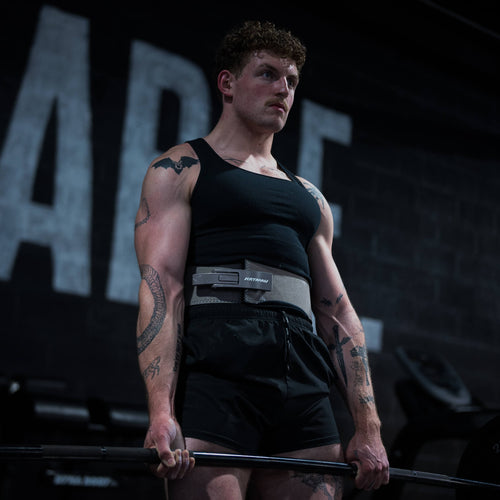
A lever belt closes fast. Set it to your preferred hole, pull it tight, and snap the lever shut. That speed is a real advantage when you are moving between warm-up and working sets, training on a busy gym floor, or simply want a consistent fit every time. Lever belts also have a sharp, clean profile that fits a premium lifting setup.
The downside is that changing the size setting takes more effort than moving a prong one hole. If your waist changes significantly between a bulk and a cut, or you like noticeably different tightness for squats versus deadlifts, you may need to adjust the lever hardware.
A single-prong belt is straightforward and highly adjustable. You can move one hole tighter or looser in seconds, which makes it useful for lifters whose fit preferences change across movements. It may take a little longer to buckle, but there is no complicated system to learn.
A double-prong belt offers a classic look and a secure feel, but it takes more effort to fasten and remove. For most beginners, a lever or single-prong closure offers the better balance of speed and simplicity.
Get the Fit Right, Not Brutal
Your belt should be tight enough that you can push your abdomen, sides, and lower back into it when you brace. It should not be cinched so hard that you cannot take a full breath before the rep.
Measure around your midsection where you plan to wear the belt, usually around the navel rather than at your pants size. Pant sizes are unreliable because brands measure differently, and many lifters wear belts above or below the waist depending on the movement. Use the belt maker's sizing chart and choose a size that places you near the middle of its adjustment range.
That middle range matters. You want room to tighten the belt as you learn your preferred fit, plus room to loosen it when you need to. A belt that only fits on the very first or final hole gives you nowhere to go.
For most lifts, wear the belt at a height that lets you expand into it without interfering with your setup. Some athletes wear it slightly higher for squats and lower for deadlifts. Experiment during submaximal sets before deciding where it belongs for you.
When to Wear a Lifting Belt
You do not need a belt for every exercise or every set. Learn to brace without one during lighter work. Build control through your warm-ups. Then use the belt when the load, effort, or fatigue makes added trunk support useful.
Many lifters put it on for their top squat and deadlift sets, challenging overhead presses, and demanding compound movements. You may leave it off for rows, curls, machines, and lighter volume work, depending on your goals and comfort. There is no prize for wearing a belt while tying your shoes.
More importantly, do not expect a belt to fix a rounded back, loose setup, or rushed breathing. Set your position, take a deep breath into your torso, brace hard in every direction, and move with intent. The belt amplifies that discipline. It does not replace it.
Build a Setup You Want to Train In
Your first belt becomes part of your ritual: shoes tied, playlist on, warm-up complete, then the click of a lever or pull of a prong before the set that counts. Choose one that matches the work you are ready to put in, not a random accessory you will outgrow after a month.
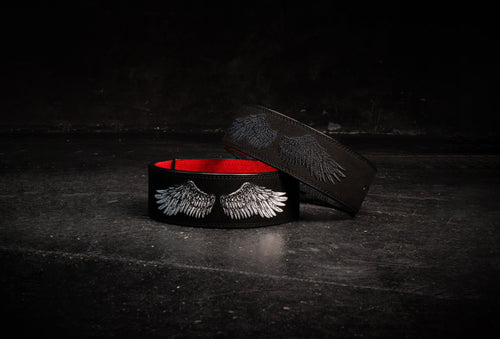
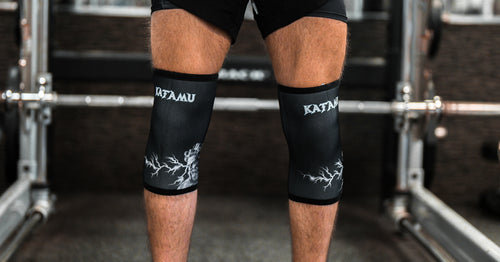
Katamu-style lifting gear belongs in that space where performance and identity meet. But the real standard is simpler: your belt should feel durable, fit your body, and give you confidence to attack hard reps with a stronger brace.
Start with the movement. Learn the brace. Then choose the belt that makes you want to load the bar again tomorrow.
