 30-Day Money Back Guarantee

You feel it the second the bar gets heavy - your knees need to feel locked in, not exposed. That’s why learning how to wear knee sleeves matters. Put them on wrong, and they slide, pinch, bunch behind the knee, or give you less support when the set actually counts.
Knee sleeves are simple gear, but there’s still a right way to use them. Fit, position, and timing all change how much support and comfort you get under load. If you squat, leg press, lunge, or train with real intensity, small adjustments make a big difference.
How to wear knee sleeves the right way
The goal is straightforward. You want the sleeve centered over the knee joint, tight enough to feel secure, but not so tight that your foot goes numb or your range of motion gets wrecked before the first rep.
Start by turning the sleeve partially inside out, especially if it’s thick or very snug. Slide your foot through, pull the sleeve up to your lower shin, then work the upper section over your knee in stages instead of trying to yank the whole thing up at once. Once it’s on, the center seam or middle of the sleeve should sit directly over your kneecap.
From there, smooth out any folds. The material should lie flat above and below the knee. If it’s twisted or bunched in the back, it will feel worse as soon as you hit depth.
A properly worn knee sleeve should feel compressive and supportive. It should not feel loose, and it also should not feel like a tourniquet. There’s a difference between pressure that makes you feel stable and pressure that cuts off movement.
Where the sleeve should sit
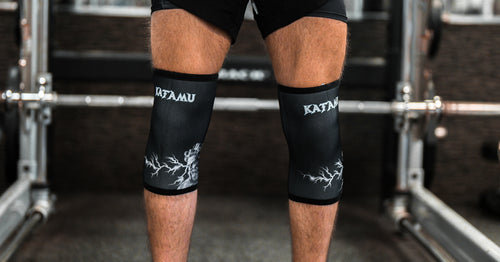
Your knee sleeve should cover the full knee joint, with equal material above and below the kneecap in most cases. If it rides too low, you lose support on the top of the joint. If it sits too high, the kneecap can feel less contained and the sleeve may roll down during reps.
For most lifters, the best position is centered and symmetrical. Some athletes prefer to pull the sleeve slightly higher if they want more compression above the joint, especially during squats. That can work, but the shift should be minor. If you need a dramatic adjustment just to make the sleeve feel useful, the sizing is probably off.
How tight should knee sleeves be?
This is where most people get it wrong. They assume tighter always means better. It doesn’t.
A knee sleeve should be hard to put on if it’s meant for heavy lifting, but once it’s on, you should still be able to move through your warm-ups without fighting the gear more than the weight. You want a firm, compressed feel that gives you feedback and support. You do not want sharp pinching, tingling, or a cold lower leg after a few minutes.
If you can slide it on with almost no effort and it shifts during bodyweight squats, it’s too loose. If putting it on feels like a ten-minute battle and you can’t bend your knee normally, it’s too tight for practical training. Some lifters intentionally size down for a more aggressive fit on peak days, but that’s not the best move for everyone, especially if your sessions include a lot of volume, accessory work, or movement changes.
When to wear knee sleeves in a workout
You do not need knee sleeves for every minute of lower body training. Most serious lifters use them when the session gets demanding.
For many athletes, that means putting them on before working sets of squats, front squats, hack squats, heavy leg press, split squats, or Olympic lift variations. If your knees feel better with compression during warm-ups, wear them earlier. If you only want support near top sets, keep them off until the load climbs.
There’s no rule saying they must stay on for the full session. In fact, taking them off between movements can be the better call if you’re overheating, losing comfort, or doing exercises where you do not need as much joint compression.
Should you wear them for every leg exercise?
It depends on the exercise and the reason you wear them.
For heavy compounds, knee sleeves usually make the most sense because they add warmth, compression, and a more secure feel at the joint. For lighter accessory work like leg extensions or hamstring curls, some lifters skip them completely. Others keep them on if their knees tend to feel better staying warm.
If your training is built around performance, not just comfort, save the sleeves for the work that justifies them. Gear should support the lift, not become a crutch for every machine in the gym.
Common mistakes when wearing knee sleeves
The first mistake is wearing the wrong size and then blaming the product category. Good sleeves should feel supportive, not random. If they slide down, bunch behind the knee, or leave too much open space around the joint, the fit is off.
The second mistake is positioning them too low. A lot of lifters pull them up fast and never check where the center lands. If the kneecap is not properly covered, the support will feel uneven.
The third mistake is leaving wrinkles in the material. Creases create pressure points fast, especially in deeper knee flexion. Before your first set, smooth the sleeve out fully.
Another common issue is wearing them too early and for too long. Knee sleeves trap heat. That’s part of why they work. But if they stay on through the entire session, plus cardio, plus hanging around between sets, they can become uncomfortable and sweaty enough to shift.
And finally, some lifters expect knee sleeves to fix pain automatically. They can help you feel more stable and supported, but they do not replace smart programming, solid movement, or recovery.
How to tell if your knee sleeves are working
A good sleeve usually shows itself in a few ways. Your knees feel warmer. The joint feels more secure at the bottom of a squat. Reps feel more consistent, especially as the sets get heavier. You may also notice better confidence under the bar, which matters more than people admit.
That said, sleeves are not magic. If your squat mechanics are off, your ankles are restricted, or your knees are irritated from too much volume, sleeves may help you train more comfortably, but they are not the entire answer.
Think of them as performance support. They help you stay locked in when the training gets serious. That’s the value.
How to wear knee sleeves for squats
Squats are where most lifters care the most about knee sleeve setup. For this lift, wear them centered over the knee with a snug, compression-heavy fit that stays in place through your descent and drive out of the hole.
Before your top sets, do a few warm-up reps and pay attention to how they feel at depth. If the sleeve pinches sharply in the back of the knee, pull it down slightly and smooth it out again. If it feels like it’s drifting, reset it before the heavier sets start. A small adjustment before the bar gets serious is better than fighting your gear during the rep.
If you use a belt too, make sure your full setup works together. Your belt should brace your trunk. Your sleeves should support the knee joint. Different tools, different jobs. When your gear setup is right, the whole lift feels tighter.
Raw training vs heavier peak sessions
Your sleeve setup can change with training intent. For regular hypertrophy work or moderate strength days, a standard snug fit is usually enough. For max-effort sessions or peaking blocks, some athletes prefer a tighter fit and only wear sleeves near the heaviest sets.
That trade-off comes down to comfort versus aggression. A tighter sleeve may feel more supportive under maximal load, but it can also be more annoying across longer sessions. If your training includes a lot of volume, walking between stations, or mixed lower body work, practical comfort matters.
Getting them on easier without wrecking the fit
If your knee sleeves are difficult to put on, that’s normal to a point. Thick sleeves meant for lifting are supposed to be snug. The trick is getting them on efficiently without stretching them out or exhausting yourself before the set.
Fold the top half down before you put your foot through. Pull the sleeve to just below the knee first, then roll or work the top section into place. Do not yank from the upper edge only. That puts more stress on the material and gives you less control over the final position.
Some lifters use a little sweat or chalk-free dry skin to help the sleeve grip less while putting it on. Just avoid anything that makes the material slippery once it’s actually in position.
Care matters more than people think
A premium sleeve can lose its feel fast if you treat it badly. Leaving sweaty sleeves crammed in your gym bag, stretching them carelessly, or washing them the wrong way can break down compression over time.
Let them air out after training. Wash them based on the manufacturer’s care guidance. And do not keep pulling them on by one edge like you’re trying to win a fight with your gear. If you train hard and want your equipment to hold up, treat it like part of your system.
That’s the bigger point with knee sleeves. Wear them with intent, not randomly. When they fit right, sit right, and show up at the right time in your session, they do exactly what serious training gear is supposed to do - help you feel stronger, more stable, and ready to attack the next set.
