 30-Day Money Back Guarantee

In 2025, the demand for supportive gear to enhance squat performance is higher than ever. The right belts for squatting can be a game changer, offering increased safety, stability, and faster progress in the gym.
Whether you are just starting your fitness journey or aiming to smash your next personal record, investing in a premium squat belt can make a noticeable difference. In this article, we break down the 7 best belts for squatting, comparing features, pros and cons, prices, and ideal uses to help you find your perfect fit.
Why Use a Belt for Squatting?
Thinking about adding belts for squatting to your routine? If you want to lift heavier, stay safer, and boost your confidence under the bar, you’re not alone. In 2025, lifters of all levels rely on supportive gear to maximize their squat potential. But why do belts for squatting make such a big difference? Let’s break down the science, benefits, and best practices so you can decide if it’s time to add this essential tool to your training.
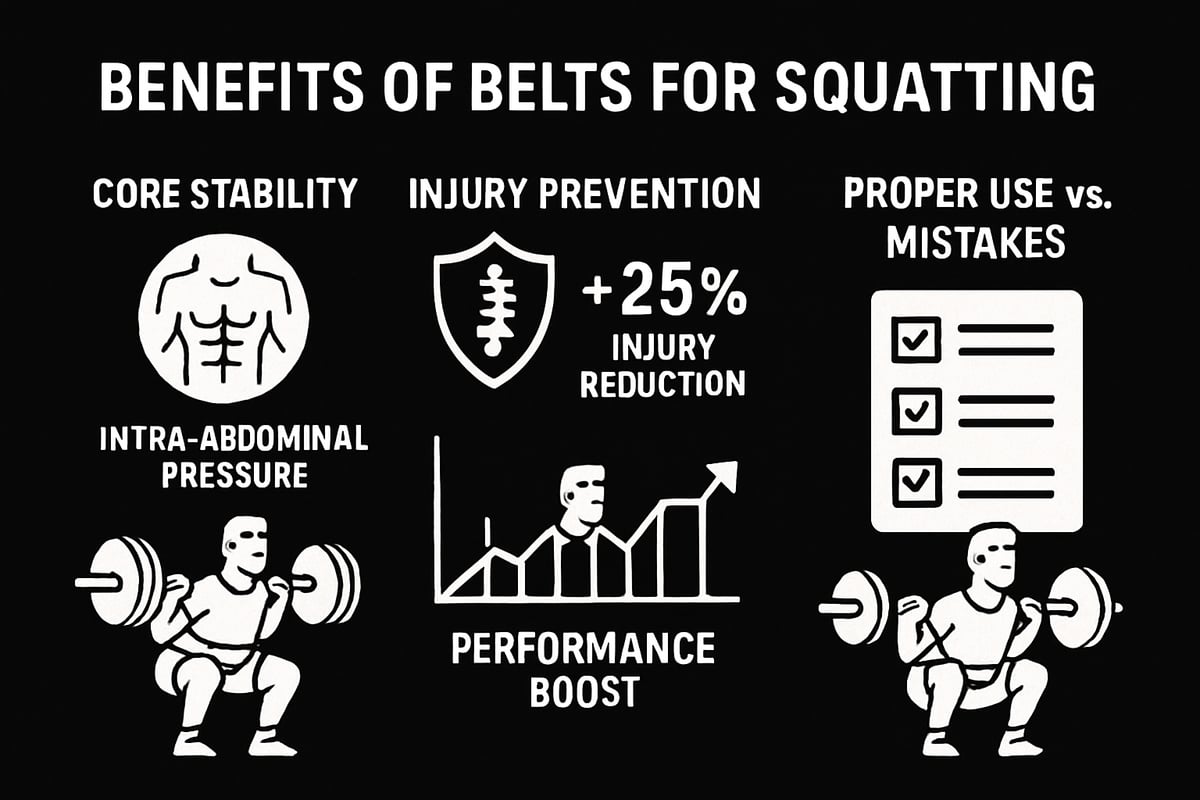
Enhanced Core Stability and Intra-Abdominal Pressure
One of the main reasons athletes choose belts for squatting is the dramatic increase in core stability. When you tighten your belt before a heavy squat, it helps you brace your core and increase intra-abdominal pressure. This extra support acts like a natural weightlifting brace, protecting your spine from excessive stress.
Research shows that weight belts can significantly enhance intra-abdominal pressure and muscle activation during squats. For a deeper dive, check out the Effectiveness of weight-belts during the squat exercise. Real-life lifters often report feeling more solid and stable at the bottom of a squat, making it easier to handle heavier loads and maintain proper form.
Injury Prevention and Longevity
Belts for squatting are more than a performance tool, they’re an investment in long-term health. By supporting your lower back and reducing lumbar spine stress, a good belt helps protect you from common lifting injuries. Studies suggest that lifters who use belts for squatting correctly experience fewer lower back strains than those who go without.
Strength coaches often recommend belts for squatting to maintain healthy joints and prevent chronic overuse injuries. The right belt can be the difference between years of pain-free lifting or nagging setbacks that stall your progress.
Performance Boost and Confidence
If you’re chasing new PRs, belts for squatting can help you break through plateaus. The physical support translates into mental confidence, allowing you to approach heavier lifts with less fear. Many athletes say that simply wearing a belt helps them focus, commit to the lift, and execute with better technique.
Testimonials from powerlifters and recreational gymgoers alike highlight how belts for squatting provide the edge needed to push for that extra rep or heavier weight. The psychological boost is just as important as the physical support.
Proper and Improper Use
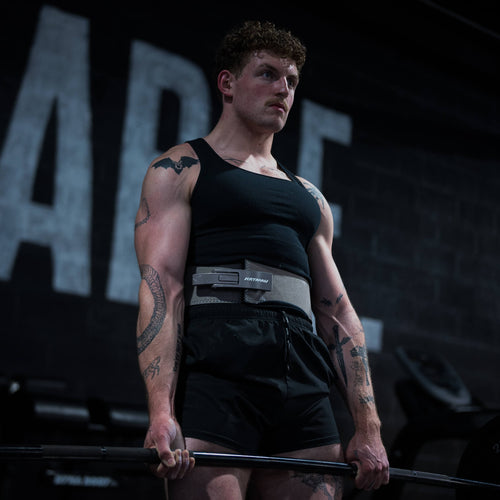
To get the most from belts for squatting, timing and technique are key. Wear your belt for maximal loads—typically above 80 percent of your one-rep max—or when fatigue sets in. Avoid overusing it during warmups or lighter sets, since this can hinder core development.
Common mistakes include wearing the belt too high or loose, or relying on it as a crutch for poor form. Integrate belts for squatting thoughtfully into your program, using them as a tool to enhance—not replace—solid lifting technique and core strength.
Key Features to Consider When Choosing a Squat Belt
Selecting the right belts for squatting can make a tangible difference in your performance and safety. With so many options on the market, understanding the features that matter most will help you find the perfect fit for your training style, goals, and budget.
Material and Build Quality
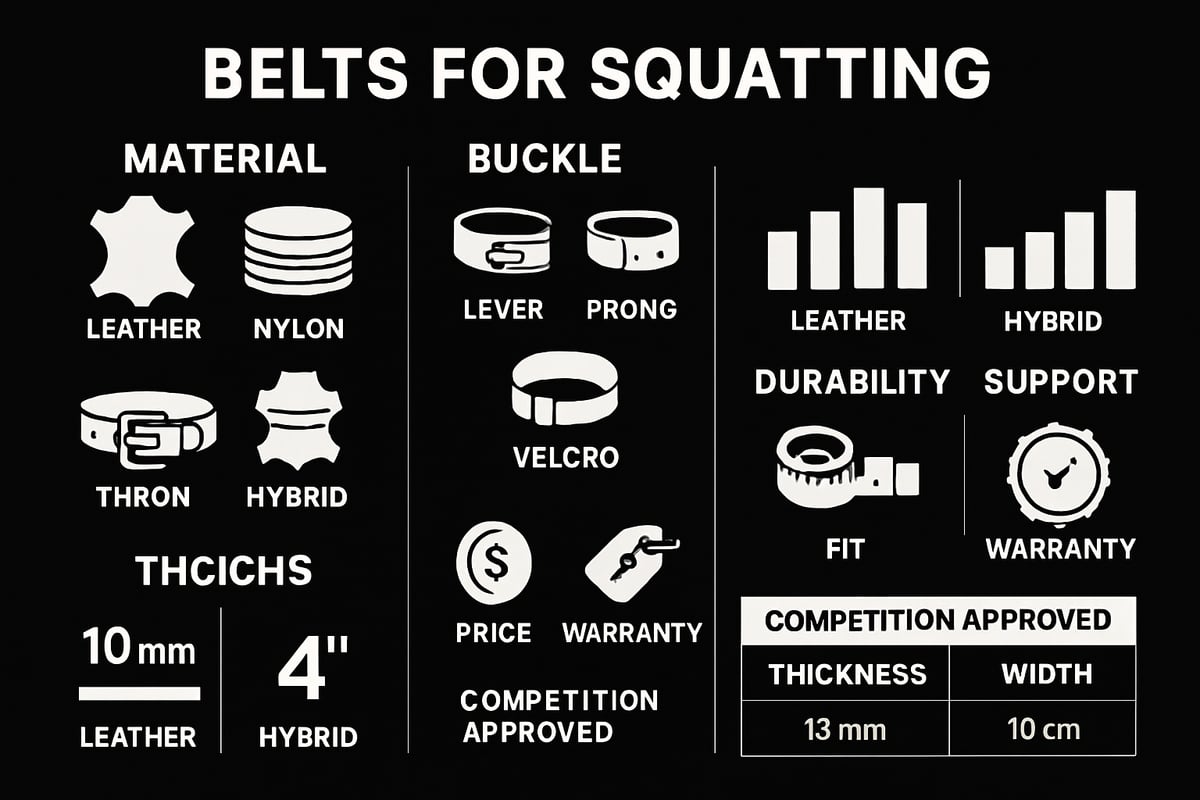
The material of belts for squatting is a primary factor that influences support, durability, and comfort. Leather belts are the gold standard for maximum rigidity and long-term use, making them popular among powerlifters. Nylon belts, on the other hand, offer more flexibility and lighter weight, which appeals to CrossFit athletes and those who prioritize mobility.
Hybrid belts combine features of both, providing a balance between support and comfort. Stitching quality, belt thickness, and heavy-duty hardware also impact longevity. For a deeper dive into how material choice affects performance and injury prevention, check out this Review of the use of lifting belts.
| Material | Rigidity | Comfort | Durability | Best For |
|---|---|---|---|---|
| Leather | High | Medium | Excellent | Powerlifting |
| Nylon | Medium | High | Good | CrossFit, Beginners |
| Hybrid | Medium | High | Very Good | Multipurpose |
Buckle Types: Lever, Prong, and Velcro
Buckle design is a crucial aspect of belts for squatting, affecting ease of use and security. Lever buckles allow for rapid tightening and removal, making them ideal for those who need fast adjustments between sets. Single-prong and double-prong buckles offer reliable hold but may take extra time to secure, especially under pressure.
Velcro closures are user-friendly, lightweight, and easily adjustable, though they may wear out faster than metal alternatives. If you plan to compete, check federation rules, as some only allow specific buckle types.
- Lever: Quick on/off, secure, needs tool to adjust.
- Prong: Versatile, secure, slower adjustment.
- Velcro: Light, flexible, less durable.
Thickness and Width
The thickness and width of belts for squatting directly impact the level of support you receive. Standard thicknesses are 10mm and 13mm, with widths commonly at 4 inches. Thicker belts (13mm) offer maximum support for heavy lifts but can feel restrictive for some users, while 10mm belts strike a balance between comfort and stability.
Athletes with shorter torsos may prefer a slightly narrower belt for better fit. Powerlifting federations like IPF and USAPL have strict specs, so always check requirements if you plan to compete.
- 10mm: Good for most lifters, easier break-in.
- 13mm: Maximum support, best for experienced lifters.
Sizing and Fit
Proper sizing is essential when choosing belts for squatting. Measure your waist at the navel, not your pants size, and consult the manufacturer's size chart for guidance. A snug, secure fit ensures the belt remains in place during heavy squats and provides optimal core support.
Adjustability options, such as extra holes or micro-adjustments, can make a significant difference in comfort and performance. Always test the belt's tightness before each set to avoid discomfort or slippage.
- Measure waist at navel
- Use size chart for reference
- Look for belts with micro-adjustments
Price and Warranty
Belts for squatting come in a wide range of prices, from entry-level nylon options around $40 to premium leather belts exceeding $250. While higher-priced belts often deliver superior materials and craftsmanship, budget-friendly options can still offer solid support for beginners.
Warranties vary, with some brands offering lifetime coverage and others providing limited guarantees. Consider long-term value, factoring in durability and warranty protection, when making your investment.
- Entry-level: $40–$60, basic support
- Mid-range: $100–$150, better materials
- Premium: $200+, top build quality, strong warranties
7 Best Belts for Squatting to Boost Your Lifts in 2025
Choosing the right belts for squatting can be the difference between setting a new PR and risking injury. With so many options on the market, it can feel overwhelming to find the perfect belt for your training style, goals, and budget. Below, we break down the top 7 belts for squatting in 2025, highlighting the unique strengths, construction, and ideal users for each. For a deeper dive into the science behind how belts for squatting improve performance, check out this Effectiveness of weight belts in squat performance research roundup.
Katamu Co. Premium Lever Belt
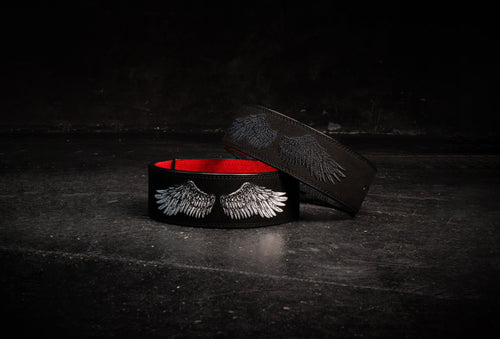
If you want style and substance in your belts for squatting, the Katamu Co. Premium Lever Belt is a top contender. This belt stands out with its premium leather construction and lever buckle, making it easy to secure and adjust between sets. Themed designs like Koi and Memento Mori add personality to your gym gear.
Features:
- Premium leather, lever buckle
- Stylish, unique designs
- 1-year manufacturing warranty
- 30-day money-back guarantee
- Free wrist wraps with belt orders
Benefits:
- Superior comfort and support, ideal for heavy squat sessions
- Durable enough for daily gym use
- Free shipping in the USA on orders over $75
Ideal for: Everyday lifters, powerlifters, and anyone who wants belts for squatting that combine performance and aesthetics.
Pros:
- Exceptional durability
- Standout visuals
- Trusted by over 50,000 lifters
Cons:
- Lever adjustment requires a screwdriver
- Higher price than entry-level belts for squatting
The Katamu Co. belt is an investment in both safety and style, making it a favorite among lifters aiming for new records.
Rogue Ohio Lifting Belt
The Rogue Ohio Lifting Belt is a staple in many gyms and a gold standard among belts for squatting. Crafted from 10mm vegetable-tanned leather, it offers a balance of rigidity and comfort that suits both beginners and advanced lifters.
Features:
- 10mm thick, vegetable-tanned leather
- Single-prong buckle
- IPF approved
- Made in the USA
Benefits:
- Quick break-in period
- Secure fit enhances confidence during max attempts
Ideal for: Powerlifters, athletes who prefer a traditional feel in their belts for squatting.
Pros:
- High durability
- Trusted by elite competitors
- Consistent support
Cons:
- Single-prong buckle can be tricky to tighten under pressure
- Limited design options
Rogue’s reputation for quality makes this one of the most respected belts for squatting, especially for those who value classic leather gear.
Inzer Advance Designs Forever Lever Belt
The Inzer Advance Designs Forever Lever Belt is legendary among competitive lifters. At 13mm thick, this belt delivers robust support for the heaviest lifts and is a staple in the world of belts for squatting.
Features:
- 13mm thick genuine leather
- Patented lever buckle
- Lifetime warranty
Benefits:
- Maximum support and rigidity
- Quick on/off lever system saves time during training
Ideal for: Competitive powerlifters who demand the best belts for squatting.
Pros:
- Lifetime warranty means peace of mind
- Unmatched support for heavy squats
- Lever mechanism is convenient
Cons:
- Bulky for some users, not great for Olympic lifts
- Not ideal for CrossFit or dynamic movements
If you want belts for squatting that are built to last a lifetime, Inzer’s Forever Lever Belt is the way to go.
SBD 13mm Lever Belt
SBD is a name synonymous with elite powerlifting, and their 13mm Lever Belt is no exception. This is one of the most premium belts for squatting you can buy, trusted at the highest levels of competition.
Features:
- 13mm English hide leather
- Patented SBD lever
- IPF approved
Benefits:
- Ergonomic design for comfort and support
- Crafted with top-tier materials
- Prestige brand trusted by world champions
Ideal for: Elite powerlifters and serious strength athletes needing the best belts for squatting.
Pros:
- Unmatched build quality
- Secure, consistent fit
- Excellent reputation
Cons:
- High price point
- Limited availability due to high demand
If you are chasing international records, this is one of the only belts for squatting that meets the strictest standards.
Pioneer Cut Powerlifting Belt
The Pioneer Cut Powerlifting Belt is designed for lifters who value adjustability and comfort. With 10mm thickness and a patented hole-spacing system, it offers more micro-adjustments than most belts for squatting.
Features:
- 10mm thick leather
- Patented Pioneer Cut (½" hole spacing)
- Single-prong buckle
- Made in the USA
Benefits:
- Custom sizing for a perfect fit
- Flexible enough for multiple lifts
Ideal for: Lifters who appreciate versatility and need belts for squatting that adapt to their changing waist size.
Pros:
- Customizable options
- Easier adjustments than standard prong belts
- High-quality craftsmanship
Cons:
- Single-prong takes longer to secure
- Leather may require break-in
The Pioneer Cut’s adjustability makes it a standout for anyone who wants precision in their belts for squatting.
Schiek Sports Model 2004 Nylon Lifting Belt
For those who want lightweight, flexible support, the Schiek Sports Model 2004 Nylon Lifting Belt is an excellent option among belts for squatting. Its contour design and Velcro closure make it easy to use and comfortable for long workouts.
Features:
- 4.75" width
- Contour design, lightweight nylon
- Velcro closure
Benefits:
- Comfort and flexibility for dynamic movements
- Quick adjustments between exercises
Ideal for: CrossFitters, functional fitness athletes, and beginners looking for approachable belts for squatting.
Pros:
- Affordable price
- Lightweight and easy to transport
- Versatile for various exercises
Cons:
- Less rigid than leather belts
- Velcro may wear out with heavy use
This belt is perfect for those starting their strength journey or mixing squats with other movements.
Dark Iron Fitness Genuine Leather Pro Weight Lifting Belt
The Dark Iron Fitness Genuine Leather Pro Weight Lifting Belt offers a blend of affordability and solid support. It is one of the best belts for squatting if you are on a budget but still want quality.
Features:
- 4-inch width
- 100% genuine leather
- Double-prong buckle
- Lifetime warranty
Benefits:
- Approved for lifts up to 600 lbs
- Good balance of flexibility and support
Ideal for: Budget-conscious lifters, beginners, and intermediate gymgoers needing reliable belts for squatting.
Pros:
- Affordable price
- Sturdy construction
- Lifetime warranty
Cons:
- Double-prong buckle can be cumbersome
- Not as thick as competition-grade belts
This belt is a smart entry point for anyone wanting dependable belts for squatting without breaking the bank.
Quick Comparison Table:
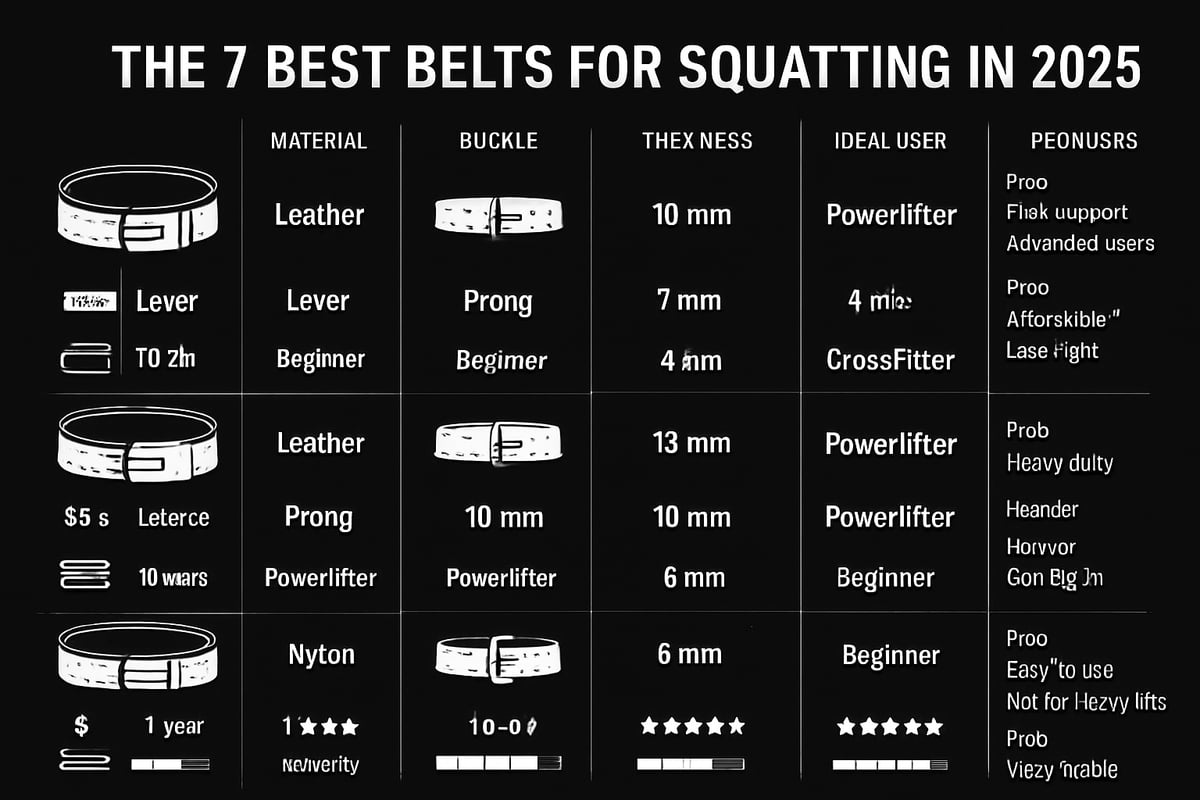
| Belt | Price (USD) | Thickness | Buckle Type | Warranty | Ideal For |
|---|---|---|---|---|---|
| Katamu Co. Premium Lever Belt | $109–$149 | Leather | Lever | 1 year | All lifters, style-focused |
| Rogue Ohio Lifting Belt | $140 | 10mm | Single-prong | N/A | Powerlifters, traditionalists |
| Inzer Forever Lever Belt | $129.95 | 13mm | Lever | Lifetime | Competitive powerlifters |
| SBD 13mm Lever Belt | $265 | 13mm | Lever | N/A | Elite powerlifters |
| Pioneer Cut Powerlifting Belt | $120–$140 | 10mm | Single-prong | N/A | Adjustable fit seekers |
| Schiek Model 2004 Nylon | $49.95 | Nylon | Velcro | N/A | CrossFit, beginners |
| Dark Iron Fitness Leather | $54.99 | 4-inch | Double-prong | Lifetime | Budget lifters |
Finding the best belts for squatting is about matching your training needs, budget, and personal preferences. Whether you want maximum support for new PRs, easy adjustability, or a stylish statement piece, these top picks for 2025 have you covered.
How to Care for and Maintain Your Squat Belt
Taking care of your belts for squatting is the secret to ensuring lasting performance, comfort, and safety. Whether you own a premium leather lever belt or a flexible nylon support, regular care will keep your gear in top shape. Let’s break down the best ways to clean, store, and protect your squat belt for years of reliable use.
Cleaning and Storage Tips
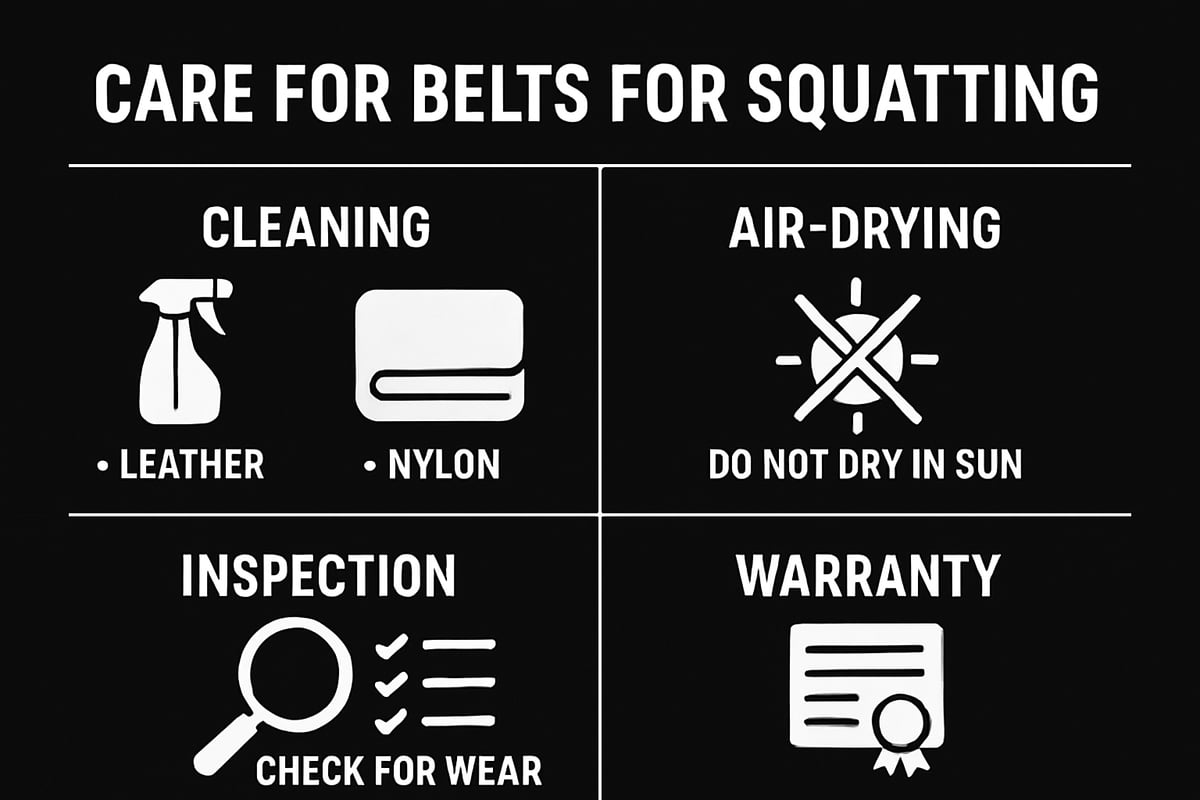
Routine cleaning is a must for belts for squatting, especially if you train hard and sweat a lot. For leather belts, wipe down the surface with a damp cloth after each session. Use a mild soap if needed, but avoid soaking the leather. Air-dry your belt in a cool, shaded area. Never place leather belts for squatting in direct sunlight, as this can dry and crack the material.
Nylon belts for squatting are easier to clean. Use gentle soap and water, then rinse and let them air-dry. Never use harsh chemicals or toss your belt in the dryer. To keep leather supple, apply a leather conditioner every few months. Store all belts for squatting flat or hung on a hook to maintain their shape and prevent creasing.
If you want more detailed care tips and gear comparisons, check out All Blog Articles on Lifting Gear for expert advice and step-by-step guides.
Longevity and Wear Prevention
To get the most out of your belts for squatting, inspect them regularly for early signs of wear. Look closely at the stitching, buckle, and adjustment holes. If you spot fraying, loose threads, or cracks in leather, it’s time for maintenance. Rotate your belt to avoid stretching the same area, especially if you squat often.
Avoid over-tightening your belts for squatting, as this can deform the structure and stress the hardware. Wipe off sweat and moisture after every session, and never store your belt in your gym bag for long periods. With these habits, many lifters see their belts for squatting last five years or more, even with frequent use.
Warranty and Replacement Considerations
Most premium belts for squatting come with warranties that cover manufacturing defects, hardware failures, and stitching issues. Always register your product and keep your proof of purchase to make warranty claims easy. If your belt shows deep cracks, persistent stretching, or fails to offer the same support as before, it may be time for a replacement.
Manufacturers report that well-maintained belts for squatting often last several years, but heavy use or improper care can shorten their lifespan. Watch for any loss of rigidity or broken hardware, and don’t hesitate to invest in a new belt if safety is at risk. Staying proactive with care and understanding your warranty will help you get the best value from your belts for squatting.
Frequently Asked Questions About Squat Belts
Looking to learn more about belts for squatting? Here are answers to the most common questions lifters ask about this essential gear.
When Should You Start Using a Belt for Squats?
Most lifters start considering belts for squatting when they progress to heavier loads. Beginners should focus on learning proper squat technique and building core strength first. Once you are lifting near your body weight or more, a belt can help you train safely. Many coaches recommend introducing a belt once you are comfortable with foundational movement patterns. For more on safe lifting gear, check out Our Mission for Safer Lifting.
Can a Belt Replace Core Training?
No, belts for squatting do not replace core training. A belt provides external support and helps you brace, but it cannot substitute for strong abs and lower back muscles. Keep your core routine consistent with planks, ab rollouts, and anti-rotation exercises. Use the belt as a tool for maximal lifts, but never as a crutch. This approach ensures balanced strength and injury prevention.
Are Belts Allowed in Powerlifting Competitions?
Yes, most federations permit belts for squatting as long as they meet specific requirements. For example, the IPF and USAPL have rules about belt width (up to 4 inches) and thickness (up to 13mm). Check your federation’s rulebook before competing. Approved belts must not have additional padding or non-standard fasteners. Always verify your gear to avoid disqualification.
How Tight Should a Squat Belt Be?
Your belt should be snug but not painfully tight. You should be able to take a deep breath and brace your core against the belt. If you cannot breathe or feel pinching, loosen it slightly. A good rule: you should fit one or two fingers between your body and the belt. Proper belt fit is crucial for both performance and comfort during squats.
Can You Use the Same Belt for Deadlifts and Squats?
Many athletes use the same belt for squatting and deadlifting, especially if it meets competition specs. However, some prefer different stiffness or widths for each lift. According to research on the influence of weightlifting belts on deadlift kinematics, belts can improve performance and safety in both lifts, but personal comfort may vary. Try both approaches to see what works best for your training style.
If you are serious about taking your squat game to the next level, having the right belt really does make all the difference. We have talked about how the best squat belts boost your stability, protect your back, and help you hit those new PRs with confidence. Whether you are just getting started or looking to upgrade to the highest quality gear, you deserve a belt that keeps up with your goals and looks great too. Ready to feel the difference for yourself? Level up your lifts and experience what premium support is all about.
