
 30-Day Money Back Guarantee

Struggling to hold onto heavy weights or noticing your grip slipping before your muscles feel tired? You are not alone. Grip strength is often the hidden key to unlocking real progress in the gym.
This guide is designed to help you master grip for weights and take your performance to the next level by 2026. We will break down the science behind grip, highlight different grip types, and share proven techniques for building strength.
By following expert advice, you can achieve stronger lifts, experience fewer injuries, and turn grip into your competitive advantage.
The Science and Importance of Grip Strength
Struggling to maintain control during heavy lifts or noticing your hands fatigue before your muscles? That’s where grip for weights becomes a game changer. Grip strength is more than just a hand squeeze—it’s a foundational skill that powers athletic performance and everyday function.
What Is Grip Strength and Why Does It Matter?
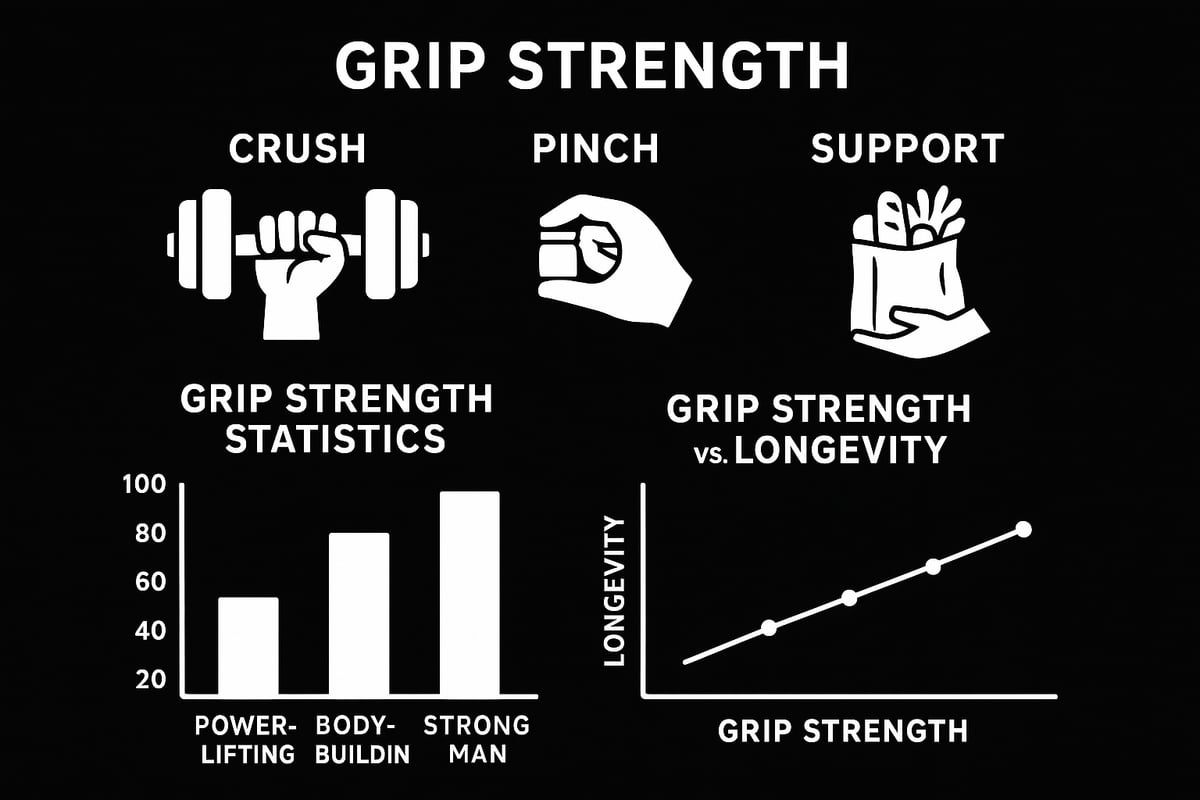
Grip strength refers to the force your hand and forearm muscles can generate when holding, squeezing, or supporting an object. There are three main types: crush grip (squeezing something like a hand gripper), pinch grip (holding objects between your fingers and thumb), and support grip (maintaining a hold for time, like hanging from a bar). Each plays a unique role in your grip for weights.
Here’s a quick comparison of grip types:
| Grip Type | Example Exercise | Purpose |
|---|---|---|
| Crush | Hand grippers | Maximal squeezing force |
| Pinch | Plate pinches | Thumb and finger strength |
| Support | Dead hangs, carries | Endurance and holding power |
A strong grip for weights is essential in weightlifting, powerlifting, and bodybuilding. If your hands give out first, your progress stalls—especially during deadlifts, pull-ups, and heavy rows. Studies have shown grip strength is a reliable predictor of total body strength and even lifespan. In fact, recent research highlights the grip strength and longevity correlation, making it a powerful indicator of overall health.
Elite athletes integrate specialized grip routines, such as farmer’s walks and thick bar training, to build resilience and prevent injuries. Sports science reveals that consistent grip training leads to neuromuscular adaptations, enhancing hand muscle recruitment and overall performance. Simply put, mastering grip for weights can unlock new personal records and reduce injury risk.
How Grip Strength Impacts Everyday Life
The benefits of grip for weights extend far beyond the gym. Strong hands make daily tasks easier, from carrying groceries and opening stubborn jars to handling tools and performing manual labor. Anyone who has struggled with a stuck lid knows the value of a powerful grip.
Research consistently links grip for weights to better cardiovascular health and slower aging. In older adults, higher grip strength is associated with a reduced risk of falls and improved mobility. Studies show that maintaining grip strength can even protect against age-related decline, supporting independence and quality of life.
The connection between grip for weights and overall wellness is clear. Whether you are lifting barbells or carrying your child, your grip is a vital part of staying strong, safe, and capable. Focusing on grip can help you avoid injuries, move confidently in daily life, and maintain your athletic edge as you age.
Types of Grips for Weightlifting and Their Applications
Mastering the right grip for weights is a game-changer for anyone serious about lifting. The way you hold the bar can impact strength, muscle activation, and even injury prevention. Understanding the main grip types gives you the power to target specific muscles and lift more effectively.
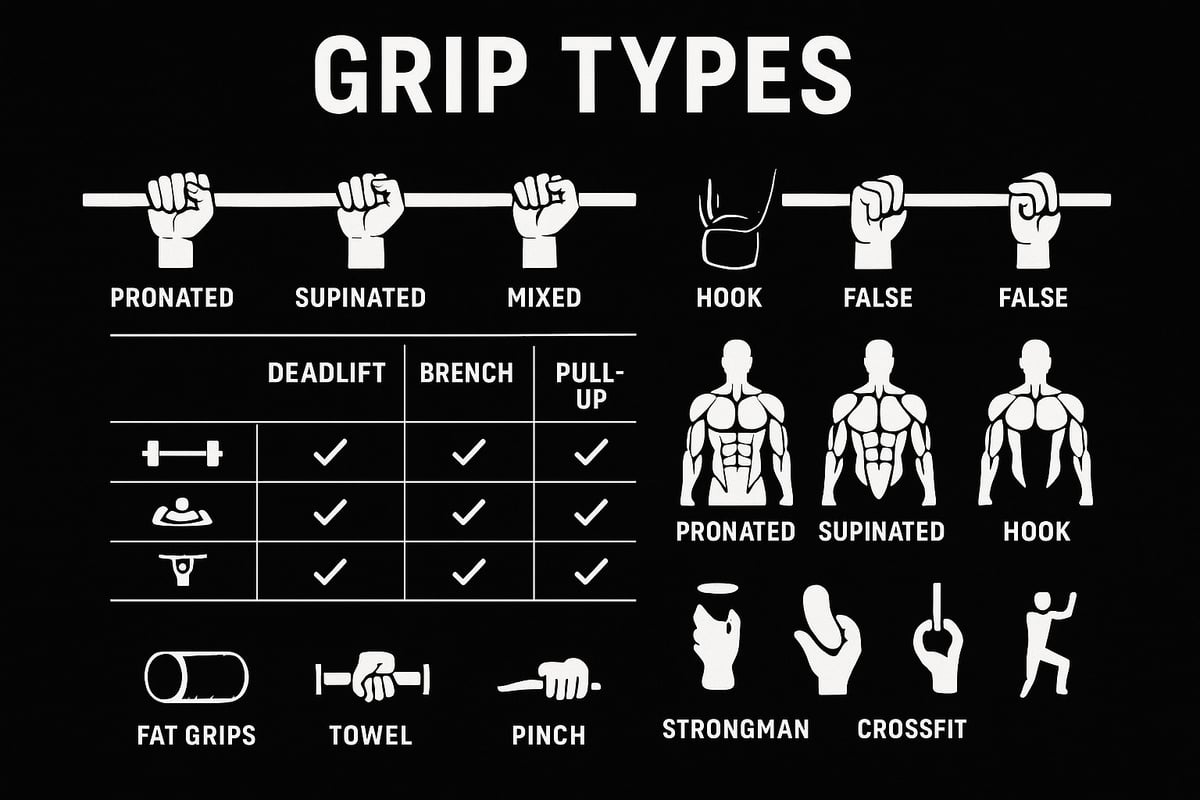
Overview of Key Grip Types
Choosing the right grip for weights starts with learning the basic hand positions. Each grip offers unique benefits and is suited for different exercises.
Pronated (Overhand) Grip: This classic grip has your palms facing down toward the floor. It is ideal for rows, pull-ups, and deadlifts. It promotes balanced forearm development and is the go-to grip for most pulling movements.
Supinated (Underhand) Grip: Here, your palms face up toward you. This grip for weights increases biceps activation and is often used for chin-ups and barbell curls. It helps target different muscle groups compared to the pronated grip.
Mixed (Alternating) Grip: One hand over, one hand under. This grip is popular for heavy deadlifts because it prevents the bar from rolling. However, overuse can lead to muscular imbalances or increased injury risk, so switch hands regularly.
Hook Grip: With this grip for weights, your thumb is trapped under your fingers on the bar. It is essential for Olympic lifts like the snatch and clean. The hook grip improves security on heavy lifts, but takes time to adapt due to initial discomfort.
False (Thumbless) Grip: Here, the thumb stays alongside the fingers, not wrapped around the bar. This grip is sometimes used in bench pressing or pull-ups to reduce wrist strain. However, it comes with safety considerations, as it offers less control.
Below is a quick reference table to help you choose the best grip for each exercise:
| Grip Type | Deadlift | Bench Press | Pull-Up | Row |
|---|---|---|---|---|
| Pronated | Yes | Sometimes | Yes | Yes |
| Supinated | No | No | Yes (chin) | Yes (curl) |
| Mixed | Yes (heavy) | No | Rarely | Rarely |
| Hook | Yes (Olympic) | No | Occasionally | No |
| False | Sometimes | Sometimes | Sometimes | No |
Experimenting with grip for weights across these options helps you find what feels strongest and safest for your goals.
Specialized Grips and Sport-Specific Uses
Beyond the basics, specialized grips can take your grip for weights to the next level. These variations challenge your forearms and hand muscles in new ways, unlocking greater strength and endurance.
Fat Grips and Thick Bars: By increasing the diameter of the bar, these tools force your grip to work harder. They are excellent for building forearm size and crushing strength. Thick bar training is common in strongman events and advanced bodybuilding routines.
Pinch Grip: This grip for weights involves holding plates or blocks between your fingers and thumb. It is a staple in strongman training and builds exceptional thumb and finger strength.
Rope and Towel Grips: Wrapping a rope or towel around the bar creates an unstable, dynamic grip. These are great for functional strength, grappling, and combat sports, as they mimic real-world challenges.
Research shows that alternative implements like fat grips or towels can boost muscle activation in the hands and forearms. They also add variety, keeping training fresh and reducing the risk of overuse injuries.
If you are interested in the best tools to enhance your grip for weights, check out this guide to the best accessories for grip training. Using the right equipment can accelerate your progress and help you break through plateaus.
Incorporating these specialized grips into your routine not only improves performance in the gym, but also prepares your grip for weights in sport-specific and real-life scenarios.
Step-by-Step Guide: Building Superior Grip Strength
Building a powerful grip for weights is a journey that rewards patience and smart training. By following these five essential steps, you'll unlock new strength, boost your lifts, and safeguard your hands for years to come.
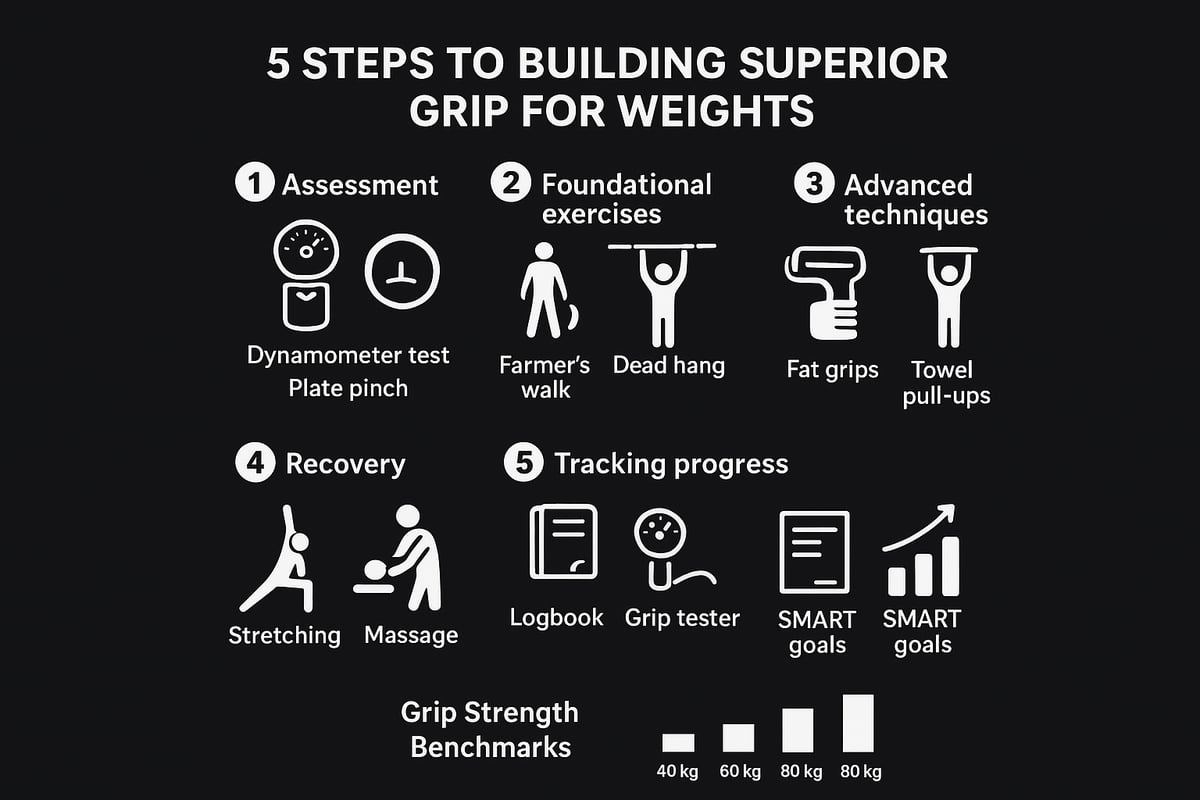
Step 1: Assess Your Current Grip Strength
Before jumping into a new grip for weights routine, it’s crucial to know where you stand. Start with simple tests like a hand dynamometer squeeze, a timed dead hang from a pull-up bar, or a plate pinch hold.
A dynamometer offers a precise number, while a dead hang or pinch hold reveals endurance. Compare your results to age and gender benchmarks to spot strengths and weaknesses. For reference, you can check handgrip strength normative values to see where you rank.
Average Grip Strength Benchmarks
| Age (yrs) | Men (kg) | Women (kg) |
|---|---|---|
| 20-29 | 46-50 | 29-31 |
| 30-39 | 44-47 | 28-30 |
| 40-49 | 41-45 | 26-29 |
| 50-59 | 39-43 | 24-28 |
Testing regularly helps you track improvements and tailor your grip for weights plan more effectively.
Step 2: Foundational Grip Exercises
Master the basics before chasing advanced methods. Foundational moves build a solid grip for weights and set the stage for long-term gains.
Try these time-tested exercises:
- Farmer’s Walks: Grab heavy dumbbells and walk, keeping your grip tight.
- Dead Hangs: Hang from a pull-up bar as long as possible.
- Plate Pinches: Squeeze two weight plates together and hold.
- Wrist Curls: Use a barbell or dumbbells for both flexion and extension.
Aim for 2-3 sets of each, 2-3 times per week. Focus on slow progression—add time, weight, or reps gradually. Integrate these into your regular gym routine to make grip for weights a consistent priority.
Step 3: Advanced Grip Training Techniques
Ready to push your grip for weights further? Advanced techniques overload your hands and forearms, forcing new growth.
- Fat Grips & Thick Bars: Attachments make any barbell or dumbbell harder to hold, firing up extra muscle fibers.
- Towel Pull-Ups: Drape a towel over a bar and perform pull-ups for a brutal grip challenge.
- Static Holds: Hold heavy weights at lockout for time, maximizing isometric strength.
- Isometric Pinch Holds: Squeeze and hold two plates together, focusing on endurance.
Decide whether to dedicate an entire session to grip for weights or add these as finishers after big lifts. Rotate techniques every few weeks to prevent adaptation and keep progress steady.
Step 4: Recovery and Injury Prevention
A strong grip for weights is built over time, not overnight. Your hand and forearm muscles are small and prone to overuse if not cared for.
Prioritize rest days for your hands, especially after intense sessions. Stretch your wrists and forearms gently. Use self-massage or a lacrosse ball to ease tight spots. Warm up with light mobility drills before heavy training.
Watch for warning signs like persistent soreness, tingling, or a drop in grip for weights performance. Address these early to avoid setbacks and keep your hands healthy.
Step 5: Tracking Progress and Setting Goals
Measuring progress keeps you motivated and ensures your grip for weights training pays off. Use a logbook or grip tester to record your results. Test your grip every few weeks with the same methods from Step 1.
Set SMART goals: Specific, Measurable, Achievable, Relevant, and Time-bound. For example, “Hold a 60-second dead hang in eight weeks” or “Increase my farmer’s walk load by 10% in three months.”
Real-world success stories show that focused grip for weights training can break plateaus in deadlifts and pull-ups. Celebrate your milestones and adjust your plan as needed for continued growth.
Common Grip Mistakes and How to Fix Them
Is your grip for weights holding you back, or even putting you at risk for injury? Even the most dedicated lifters can fall into common traps that stall progress and undermine hand strength. Let’s break down the biggest mistakes and learn how to fix them for safer, stronger training.
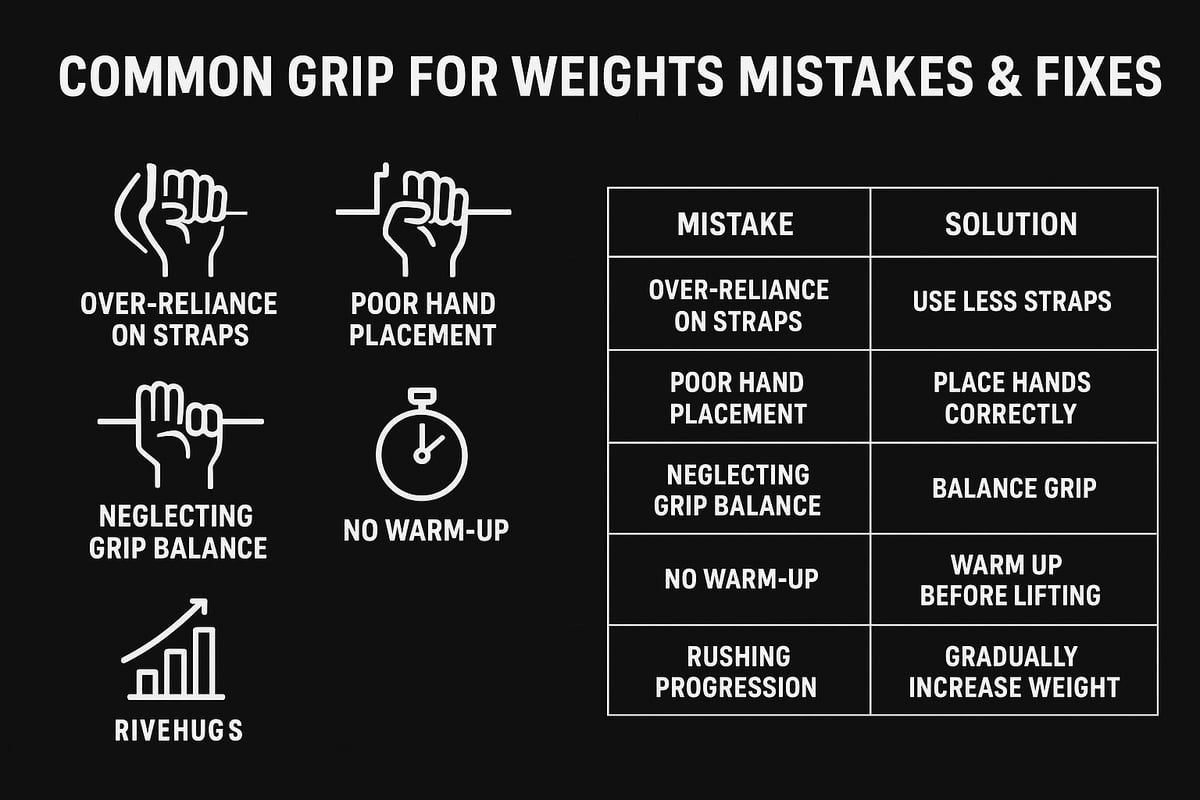
Most Frequent Errors in Grip Training
Many people trying to improve grip for weights unknowingly sabotage their results with a few classic errors. The first is relying too much on lifting straps or gloves. While straps can help on max effort sets, using them for every set prevents your hands and forearms from adapting to heavier loads. For those interested in proper strap use, check out this Lifting straps collection.
Another frequent mistake is poor hand placement and bar positioning. If your grip is off center or your wrists are cocked at awkward angles, you lose both strength and control. This can increase strain on the joints and limit your ability to progress with grip for weights.
Neglecting balanced development is also common. Many lifters focus only on crush grip, ignoring pinch and support variations. This imbalance can cause plateaus or even injuries over time.
Skipping warm-up and mobility work is another pitfall. Cold, stiff hands are prone to strains, and lack of mobility can worsen technique. Finally, rushing progression or adding too much load too soon often leads to overuse injuries or setbacks.
Proven Solutions and Corrections
The good news is that every grip for weights mistake has a fix. Start by gradually reducing strap dependency. Use straps only on your heaviest sets, and perform warm-ups and moderate lifts with just your hands. This strengthens your natural grip over time.
Work on your bar contact and hand engagement. Practice wrapping your thumb fully around the bar and keeping your wrist neutral. Simple drills with light weights can help reinforce proper positioning for grip for weights.
Balance your routine by training all grip types. Include crush, pinch, and support exercises each week. This not only builds a well-rounded grip but also reduces the risk of overuse issues.
Always begin sessions with a dedicated hand and wrist warm-up. Try wrist circles, finger stretches, and light holds before moving to heavier lifts. This primes the muscles and helps prevent injuries related to grip for weights.
Finally, progress slowly and listen to your body. Use a training log to track sets, reps, and how your hands feel. If you notice pain or excessive fatigue, back off and allow for recovery. Consistency and smart progression will help you master grip for weights and lift with confidence.
Essential Gear and Tools to Enhance Grip Training
Mastering grip for weights goes beyond raw strength. The right tools can transform your training, boost performance, and help you break through stubborn plateaus. Let’s explore the essential gear every lifter should consider for serious grip gains.
Must-Have Equipment for Every Lifter
When building grip for weights, your equipment choices matter. Here’s a breakdown of must-have tools, plus a quick comparison to help you decide what fits your needs:
| Gear | Effectiveness | Portability | Best Use | Price Range |
|---|---|---|---|---|
| Lifting Straps | High | Medium | Max lifts, deadlifts | $$ |
| Wrist Wraps | High | High | Presses, support, grip safety | $ |
| Fat Grips/Thick Bars | Very High | Medium | Overload, forearm strength | $$ |
| Grip Trainers | Medium | High | Targeted grip work | $ |
| Chalk | High | High | Reducing slippage | $ |
| Pinch Blocks | Medium | Low | Pinch strength, strongman | $$ |
Lifting Straps
Perfect for heavy pulls when grip for weights is the limiting factor. Use them sparingly to avoid over-reliance and ensure your hands still get challenged.
Wrist Wraps
These stabilize your wrists and enhance grip for weights, especially during pressing or overhead lifts. For a selection designed for both support and durability, check out Wrist wraps for lifting support.
Fat Grips and Thick Bars
Attaching fat grips or using thick bars increases hand and forearm activation, making every rep a grip challenge. This is ideal for lifters wanting to overload grip for weights without changing their core routine.
Grip Trainers and Hand Grippers
Portable and convenient, these allow focused work on crush and support grip. Great for use at home, the office, or while traveling.
Chalk
A simple tool that makes a big difference by reducing sweat and slippage. Chalk keeps your grip for weights reliable, especially during high-rep or max-effort sets.
Pinch Blocks, Rolling Handles, and More
Specialty tools like pinch blocks and rolling handles target unique grip patterns, from pinch to rotational strength. These are popular in strongman and functional fitness circles.
Comparative Data and Practical Tips
Studies and user reviews consistently show that combining multiple tools is the best approach for maximizing grip for weights. For example, alternating between fat grips and traditional bars can accelerate grip development while reducing overuse injuries.
Start with the basics, like chalk and wrist wraps, then add specialized gear as your grip for weights improves. Remember, the best equipment is the one you’ll use consistently and safely.
Advanced Programming: Integrating Grip Training for 2026 Success
Unlocking the next level of grip for weights demands more than just basic exercises. Advanced programming means weaving grip training seamlessly into your overall strength plan, so it supports your goals without causing burnout. With the right approach, you can boost your grip for weights, improve performance in every lift, and reduce injury risk. Let’s break down how to structure, adapt, and evolve your grip training for real results in 2026.
Programming and Periodization for Grip Gains
To maximize grip for weights, use periodization—systematically varying training volume and intensity. Integrate grip work into your strength, hypertrophy, or power cycles. For example, during a strength block, add heavy static holds after main lifts. In hypertrophy phases, use higher-rep wrist curls and fat grip implements for volume.
Here's a sample weekly template:
| Day | Main Focus | Grip Integration |
|---|---|---|
| Mon | Deadlift | Farmer’s walks |
| Wed | Pull-ups | Towel hangs |
| Fri | Bench Press | Plate pinches |
Keep grip for weights work balanced. Schedule 2-3 focused sessions per week, and adjust based on recovery. Always listen to your body and scale back if you notice persistent fatigue in your hands or forearms.
Sport-Specific and Individualized Grip for Weights Plans
Your grip for weights program should reflect your sport and personal needs. Powerlifters may prioritize maximal static holds and mixed grips, while CrossFit athletes benefit from dynamic, endurance-based protocols like rope climbs or thick bar carries.
Age, gender, and body composition play roles too. For instance, research shows that higher body fat can negatively impact grip strength—consider reviewing Adiposity's impact on grip strength for deeper insights. Seniors or those with injury history should focus on moderate loads, longer recovery, and progressive overload.
Customize your grip for weights schedule to match your specific lifts, recovery needs, and lifestyle. Track what works, and don’t be afraid to adjust.
Tracking Progress, Motivation, and Future Trends
Stay on top of your grip for weights results by using simple tools and smart tech. Log your grip strength in a journal or use digital grip testers and mobile apps to measure progress. Set clear milestones—like increasing dead hang time or moving up a gripper level—and celebrate small wins.
Stay motivated by joining grip-focused communities or finding a training partner. New studies connect grip strength not just to lifting, but also to overall wellness and even mental health. For example, stronger grip may support better brain health, as shown in recent grip strength and mental health studies.
Looking ahead, expect new grip tools, smarter wearables, and more research driving the importance of grip for weights in gym culture. Prioritizing grip now sets you up for success as lifting evolves in 2026.
Now that you’ve got the inside scoop on building next level grip strength and making real progress in the gym, why not take the next step and upgrade your gear as well? The right equipment doesn’t just boost your performance—it helps you train smarter, lift safer, and stay consistent. At Katamu, you’ll find premium lifting gear that actually lasts, from lever belts to wrist wraps and beyond. If you’re ready to see what quality can do for your lifts, Level up your lifts and set yourself up for 2026 success. Your future PRs will thank you!
