
 30-Day Money Back Guarantee

Every serious lifter eventually faces a critical decision: when should you start using wrist support for weight lifting? Whether you're grinding through heavy bench presses, pushing overhead movements to new limits, or simply want to protect your joints for long-term training success, understanding wrist support isn't just about slapping on some gear. It's about strategic reinforcement that lets you lift heavier, safer, and with greater confidence. As weights climb and training volume increases, your wrists become vulnerable stress points that can make or break your performance.
Understanding Wrist Anatomy and Lifting Stress
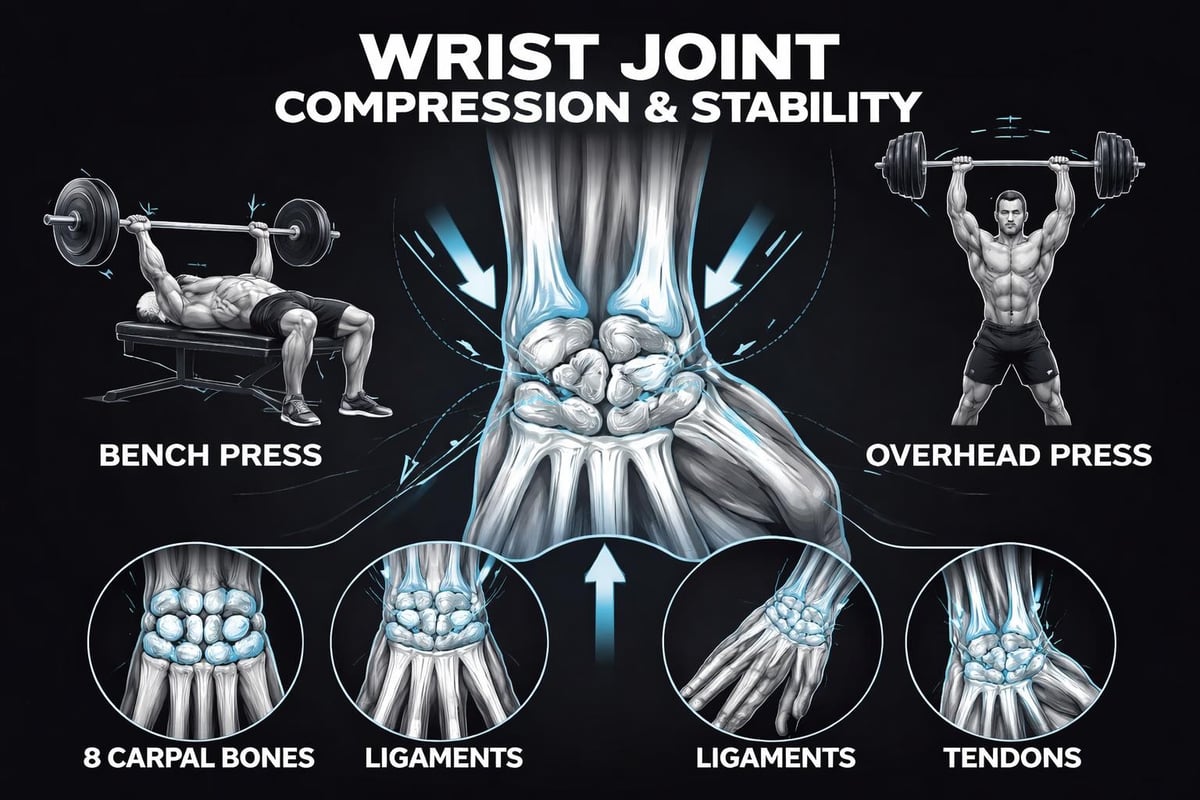
Your wrists contain eight small carpal bones, numerous ligaments, and tendons that weren't designed to handle several hundred pounds of external load. During pressing movements, these delicate structures face compression forces while simultaneously managing stability demands.
The wrist joint operates through a complex interplay of flexion, extension, and radial-ulnar deviation. When you bench press, your wrists must maintain neutral alignment while transferring force from your hands through your forearms. Any deviation creates stress concentrations that accumulate over time.
Common stress points include:
- Scapholunate ligament strain from hyperextension
- Triangular fibrocartilage complex (TFCC) irritation
- Flexor and extensor tendon inflammation
- Carpal tunnel pressure from repetitive compression
Heavy overhead presses amplify these challenges. The weight sits directly above your wrists, demanding perfect alignment while your shoulders, elbows, and wrists form a stable vertical column. Understanding proper wrist protection strategies becomes essential for anyone pushing serious weight overhead.
When Load Exceeds Natural Capacity
Most lifters can handle moderate weights without additional wrist support for weight lifting. Natural wrist strength develops through progressive training, and healthy joints adapt to increasing demands. Problems emerge when volume, intensity, or movement complexity outpaces adaptation.
Front squats present a unique challenge. The barbell rests on your front deltoids while your wrists hyperextend to maintain grip. This position stresses the wrist differently than pressing movements, often causing discomfort even in lifters with strong, healthy wrists.
| Lift Type | Wrist Stress Level | Support Priority |
|---|---|---|
| Bench Press (85%+ 1RM) | High | Recommended |
| Overhead Press | Very High | Highly Recommended |
| Front Squat | Moderate-High | Situational |
| Push Press | Very High | Highly Recommended |
| Dips (weighted) | Moderate | Optional |
Types of Wrist Support for Weight Lifting
Not all wrist support products serve the same purpose. Understanding the differences helps you select appropriate gear for your specific needs and lifting style.
Wrist Wraps
Wrist wraps dominate the strength training world for good reason. These elastic bands wrap around your wrists, providing compression and limiting excessive extension or flexion. Quality wraps like those in the KatamuCo wrist wraps collection combine durability with the right balance of flexibility and support.
Length matters significantly. Shorter wraps (12-16 inches) offer light support suitable for moderate weights and general training. Medium wraps (18-20 inches) provide the sweet spot for most lifters, delivering substantial support without excessive bulk. Competition-length wraps (24-36 inches) offer maximum rigidity for maximal attempts.
Stiffness variations include:
- Flexible wraps: Breathable, comfortable for high-rep work
- Medium stiffness: Versatile for most training scenarios
- Competition-grade: Maximum rigidity for 1RM attempts
Wrist Straps vs. Wraps
Beginners often confuse wrist wraps with lifting straps, but these accessories serve completely different functions. Wrist wraps stabilize the joint during pressing movements. Lifting straps assist grip during pulling exercises like deadlifts and rows.
Using both accessories strategically addresses different limiting factors. Your back might handle more weight than your grip allows during deadlifts (straps solve this). Your shoulders might press more weight than your wrists can safely stabilize (wraps solve this).
Wrist Sleeves and Braces
Neoprene sleeves provide compression and warmth rather than rigid support. They're excellent for joint health and minor discomfort but don't restrict movement enough for heavy pressing work. Medical-grade braces offer maximum support for injury recovery but limit natural movement patterns too much for optimal training.
Performance Benefits Beyond Injury Prevention
While weightlifting safety drives many lifters to adopt wrist support, performance enhancement often becomes the primary reason they continue using it.
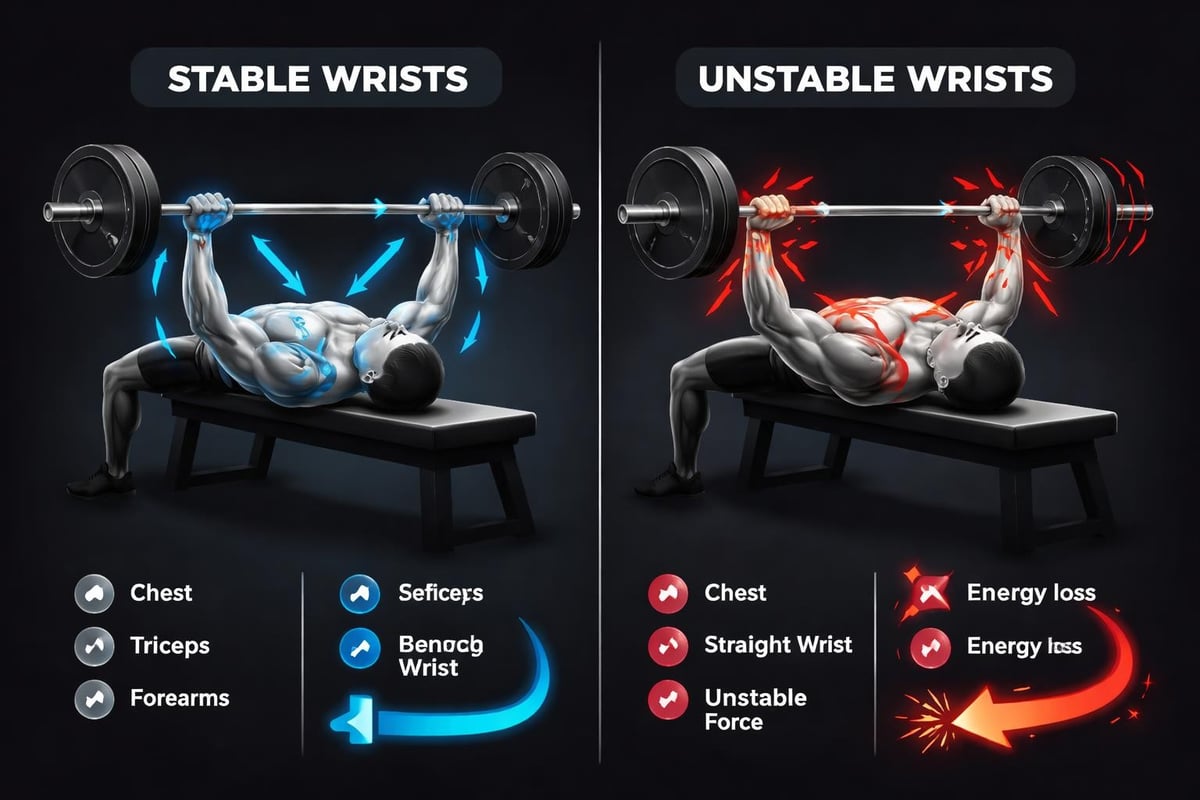
Proper wrist support for weight lifting creates a more stable foundation for force transfer. When your wrists remain locked in optimal alignment, energy flows efficiently from your hands through your forearms into the bar. Unstable wrists leak power and reduce the weight you can effectively move.
Confidence Under Maximum Loads
Psychological factors influence physical performance more than many lifters acknowledge. Knowing your wrists have additional reinforcement removes a mental barrier, letting you focus entirely on executing the lift. This confidence translates to better technique, more aggressive bar speed, and ultimately heavier successful attempts.
Competition lifters understand this principle intimately. The USAWA rulebook allows wrist wraps in most divisions because they recognize proper equipment enhances performance while maintaining competitive fairness. Even tested federations that limit other supportive gear typically permit wrist wraps.
Training adaptations with consistent wrap use:
- Reduced nervous system inhibition near maximum loads
- Improved bar path consistency across working sets
- Higher sustainable training volumes in pressing movements
- Faster recovery between intense pressing sessions
- Greater long-term joint health preservation
Volume Tolerance Improvements
High-volume pressing programs like Smolov Jr. or Brandon Lilly's Cube Method demand exceptional recovery capacity. Adding wrist support for weight lifting during these demanding phases protects your joints from cumulative stress while maintaining movement quality across numerous sets.
Consider a typical high-volume bench day: 8 sets of 3 reps at 80-85% 1RM. Without wraps, your wrists endure 24 heavy repetitions of compression and stabilization stress. Multiply this across three to four weekly pressing sessions, and you're looking at 72-96 high-stress repetitions weekly. Proper support dramatically reduces the cumulative toll.
Selecting the Right Wrist Support
Choosing appropriate wrist wraps requires matching product characteristics to your training style, experience level, and specific goals.
Material Considerations
Cotton blends offer comfortable, breathable options that work well for general training. They wash easily and maintain shape through extended use. Elastic blends provide more aggressive support with greater rebound, ideal for maximum attempts. Hybrid materials balance both qualities.
Premium manufacturers construct wraps with reinforced stitching that survives years of hard training. Cheap wraps separate at the seams or lose elasticity after months, requiring replacement. At KatamuCo, the focus on premium quality means gear that lasts through countless training cycles rather than disposable accessories that fail when you need them most.
| Feature | Beginner Priority | Advanced Priority |
|---|---|---|
| Length | 16-18 inches | 20-24 inches |
| Stiffness | Medium-Flexible | Medium-Stiff |
| Material | Cotton blend | Hybrid/Elastic |
| Price Point | Budget-Moderate | Premium acceptable |
| Thumb Loop Quality | Basic | Reinforced |
Sizing and Fit Standards
Most wrist wraps follow universal sizing, but wrist circumference and personal preference influence ideal fit. Measure your wrist at its narrowest point, just above the wrist bone. Most adult lifters fall between 6-8 inches in circumference.
Proper wrapping technique matters as much as equipment quality. Start with the wrap positioned on your forearm, not directly on your wrist joint. The thumb loop anchors the wrap while you pull tension across the back of your hand, then wrap toward your elbow with consistent, firm pressure. The final wrap should cover the wrist joint completely while allowing full finger mobility.
Technical specifications and standards vary between manufacturers, but key metrics include tensile strength, elasticity retention, and durability under repeated stress. Quality wraps maintain their supportive properties through hundreds of training sessions.
Programming Wrist Support Into Training
Strategic use beats constant dependency. CrossFit Central's guidance on weightlifting accessories emphasizes using support when needed rather than developing reliance on equipment.
Progressive Integration Approach
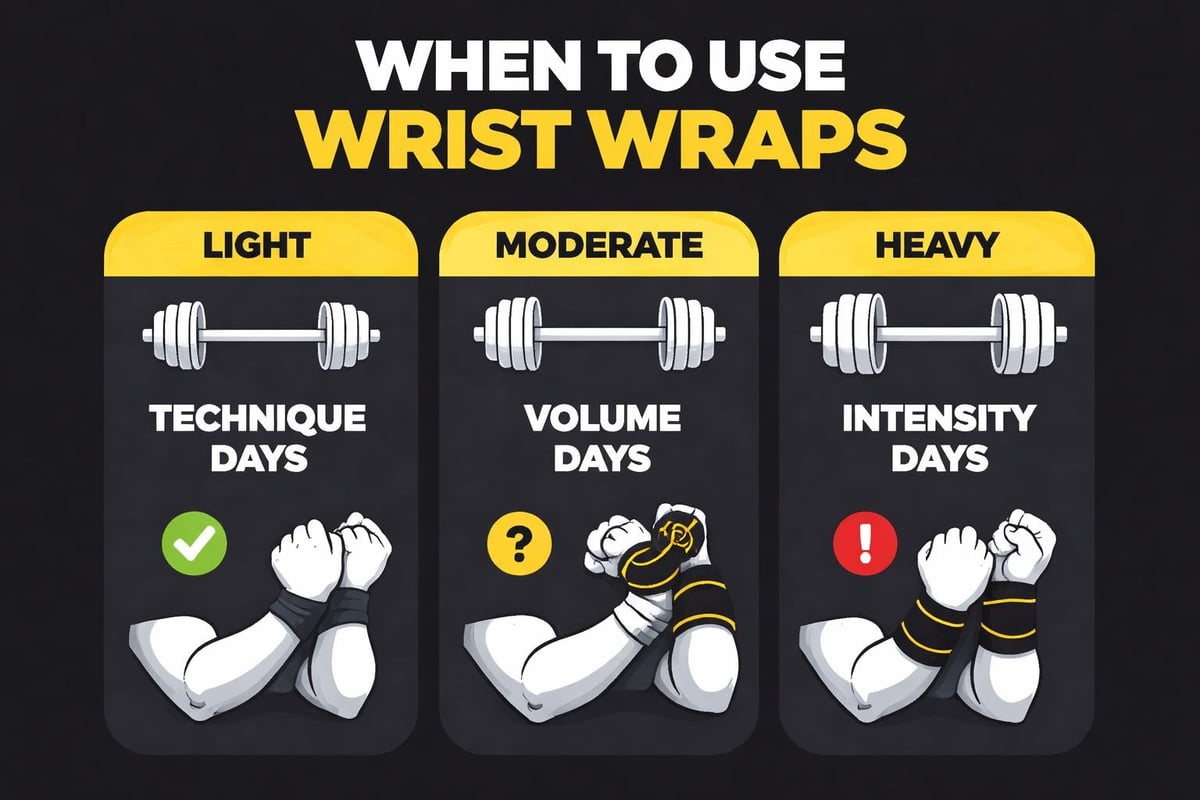
Many coaches recommend training without wraps during warm-up sets and lighter working sets. This preserves natural wrist strength development while providing support when loads demand it. A practical threshold: wrap up once you exceed 75-80% of your 1RM in pressing movements.
Sample bench press session:
- Warm-up sets (bar - 60%): No wraps
- Light working sets (65-75%): Optional wraps
- Heavy working sets (80%+): Wraps recommended
- Maximum attempts (90%+): Wraps essential
This approach maintains natural joint strength while protecting against excessive stress during the most demanding portions of training. Your wrists adapt to moderate loads without artificial support, developing resilience that transfers to wrapped and unwrapped lifting alike.
Movement-Specific Applications
Overhead presses demand wraps more urgently than horizontal pressing. The vertical load path places maximum stress on wrist stability, making support nearly essential for serious overhead work. Learning proper wrist support techniques specific to each major lift optimizes both safety and performance.
Front squats require different wrapping strategies than presses. Some lifters prefer looser wraps that permit the extreme wrist extension necessary for proper rack position. Others find that moderate support reduces discomfort without limiting their catch position. Experimentation reveals what works for your individual anatomy and mobility.
Common Mistakes and How to Avoid Them
Even experienced lifters misuse wrist support for weight lifting, reducing effectiveness or creating new problems.
Over-Tightening Syndrome
Wrapping too aggressively restricts blood flow and causes numbness or tingling. Your hands should maintain normal color and sensation throughout your sets. If fingers turn pale or you experience pins-and-needles sensations, you've wrapped too tight.
Proper tension feels firm and supportive without causing discomfort. You should maintain full finger mobility and normal proprioception. The wrap stabilizes without strangling.
Neglecting Wrist Strength Development
Becoming overly dependent on wraps weakens natural wrist stability over time. Balance wrapped training with specific wrist strengthening exercises: wrist curls, reverse curls, radial and ulnar deviation work, and farmer's carries all build foundational strength.
Weekly wrist conditioning routine:
- Wrist curls: 3 sets x 15-20 reps
- Reverse wrist curls: 3 sets x 15-20 reps
- Radial deviation: 2 sets x 12-15 reps each side
- Plate pinches: 3 sets x 30-45 seconds
Ignoring Pain Signals
Wrist support manages healthy joints under heavy loads; it doesn't rehabilitate injuries. Sharp pain, persistent aching, or limited range of motion indicates problems requiring professional evaluation. Wraps might temporarily mask symptoms while underlying damage worsens.
Distinguish between productive training discomfort and concerning pain signals. Dull pressure during heavy sets is normal. Sharp, shooting pain or pain that persists after training demands attention from qualified healthcare providers.
Maintenance and Longevity
Premium wrist wraps represent an investment in your training infrastructure. Proper care extends their functional lifespan significantly.
Cleaning and Storage
Hand wash wraps in cold water with mild detergent after particularly sweaty sessions. Machine washing works occasionally but accelerates wear on elastic fibers and stitching. Air dry flat rather than using heat, which degrades elastic components.
Store wraps loosely rolled rather than tightly wound or stretched. Constant tension gradually reduces elasticity. Keep them in your gym bag's dry compartment, away from wet towels or dirty clothes that transfer bacteria and odors.
Replacement Indicators
Even quality wraps eventually wear out. Replace them when you notice:
- Significant elasticity loss (wraps feel loose at normal tension)
- Fraying or separation at stitched seams
- Thumb loop tears or excessive stretching
- Persistent odor despite cleaning
- Visible thinning or material degradation
Professional powerlifters often maintain multiple wrap sets in rotation, extending each pair's lifespan while ensuring fresh wraps for competition day. This rotation system makes sense for serious lifters training heavy pressing movements multiple times weekly.
Building a Complete Support System
Wrist support for weight lifting works best as part of comprehensive joint protection strategy. The knee sleeves protect your lower body during squats and lunges. Quality lifting belts stabilize your spine during heavy compounds. Each piece serves specific functions that combine for total body support.
Smart lifters build their accessory arsenal gradually, prioritizing based on training focus and individual needs. Heavy squatters invest in belts and knee sleeves first. Bench press specialists prioritize wrist wraps and potentially elbow sleeves. Olympic weightlifters need both wrist and knee support for the demands of snatches and clean and jerks.
Creating sustainable training practices means protecting your body's weak links while building comprehensive strength. Wrist wraps let you push pressing movements harder while your natural wrist strength continues developing through controlled exposure and specific conditioning work.
The difference between temporary gym enthusiasm and decade-long strength development often comes down to smart injury prevention. Supporting your wrists during the most stressful portions of training preserves joint health for the long haul. Combined with proper technique, progressive programming, and adequate recovery, quality wrist support for weight lifting becomes an essential tool for sustainable progress.
Protecting your wrists during heavy pressing work isn't optional if you're serious about long-term strength development. The right wrist support for weight lifting enhances performance while preserving joint health through thousands of training sessions. Whether you're chasing new PRs on bench press or building sustainable overhead pressing strength, quality gear makes the difference between temporary gains and lasting progress. Explore the premium lifting accessories at KatamuCo designed for serious lifters who demand both performance and durability from their training equipment.
