 30-Day Money Back Guarantee

Choosing the right competition gear can make or break your powerlifting meet experience. While most lifters obsess over their belt and knee sleeves, your singlet plays a crucial role in ensuring you're competition-ready. An ipf powerlifting singlet must meet specific technical requirements to be legal for sanctioned meets, and understanding these regulations is essential for any serious competitor. Whether you're preparing for your first local meet or aiming for international competition, wearing approved gear gives you one less thing to worry about on meet day.
Understanding IPF Singlet Requirements
The International Powerlifting Federation maintains strict standards for competition attire. According to the IPF Technical Rules Book, every piece of equipment worn during sanctioned competitions must meet specific criteria. These regulations exist to ensure fairness and consistency across all competitions worldwide.
Technical Specifications for Competition Singlets
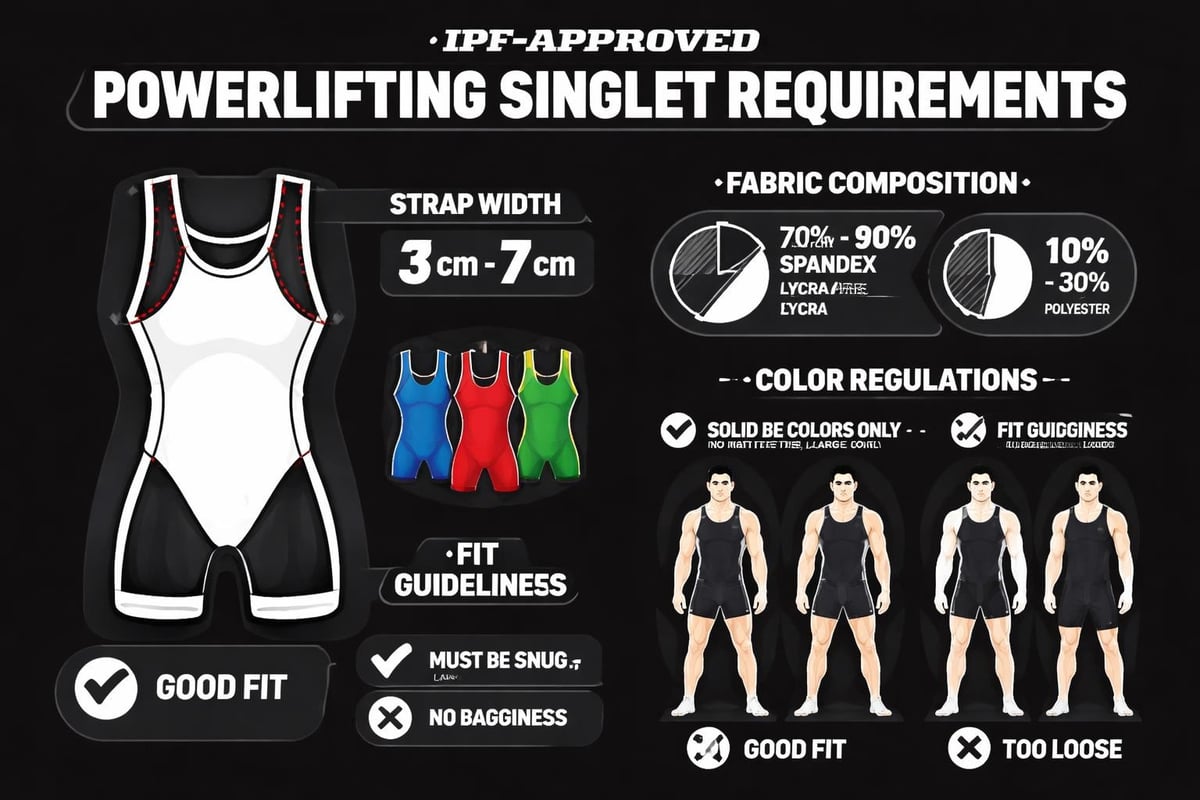
An ipf powerlifting singlet must be a one-piece, tight-fitting garment that allows referees to clearly see proper body positioning during all three lifts. The singlet cannot have any exposed zippers, buttons, or velcro that might provide additional support during lifts. Collarless or sleeveless designs are both acceptable, but the straps must be at least 4cm wide at their narrowest point.
The fabric composition matters significantly. Most approved singlets use a blend of polyester and spandex that provides:
- Adequate stretch for full range of motion
- Durability through multiple competitions and washes
- Enough compression to stay in place without riding up
- Quick-drying properties for comfort during long meets
Color restrictions also apply to competition singlets. While training singlets can feature any design, your ipf powerlifting singlet for official meets must be predominantly one color. Small logos and trim in contrasting colors are permitted, but wild patterns or excessive branding will get you turned away at equipment check.
Approved Brands and Models
The IPF maintains a comprehensive approved list that's updated periodically. As of 2026, the official list of IPF-approved personal apparel includes dozens of manufacturers from around the world. Not all singlets from approved brands are legal-only specific models that have undergone testing and certification.
| Brand | Popular Models | Price Range | Best For |
|---|---|---|---|
| Titan | Triumph, Superior | $80-120 | Competitive lifters seeking durability |
| Inzer | Gripper, Leviathan | $75-110 | Traditional fit, multiple color options |
| SBD | Classic Singlet | $90-130 | Premium materials, sleek design |
| A7 | Cone, Bar Grip | $70-100 | Modern aesthetics, grippy fabric |
| Metal | King | $65-95 | Budget-friendly certified option |
Why Brand Certification Matters
You might wonder why you can't just wear any athletic singlet to a powerlifting meet. The certification process ensures that singlets don't provide unfair advantages through material thickness, compression levels, or construction methods. Some fabrics offer more rebound out of the bottom of a squat or off the chest during bench press, which violates the spirit of raw powerlifting.
When shopping for your first ipf powerlifting singlet, always verify the specific model appears on the current approved list. Brands frequently release new designs, and just because last year's model was approved doesn't guarantee the updated version received certification. Many lifters have shown up to meets with brand-new singlets only to discover their specific model wasn't on the list.
At KatamuCo, we understand the importance of using quality equipment that meets regulations while also looking good. Just as we design our lever belts with both performance and style in mind, the best singlet manufacturers create approved gear that helps you feel confident on the platform.
Sizing and Fit Considerations
Getting the right size for your ipf powerlifting singlet requires more attention than typical athletic wear. Too loose and it won't pass equipment check; too tight and you'll restrict your movement during crucial lifts. Most manufacturers provide detailed size charts, but these don't always align with standard clothing sizes.
How to Measure for Your Singlet
Start by taking accurate measurements:
- Chest circumference at the widest point (typically nipple line)
- Waist measurement at your natural waistline, not your belt line
- Hip measurement at the widest point of your glutes
- Inseam length from crotch to where you want the leg opening to sit
- Torso length from shoulder to crotch
Most lifters find they need to size down from their typical clothing size. A properly fitted singlet should feel snug when you first put it on but stretch comfortably when you move into lifting positions. Test your range of motion by performing air squats, getting into bench press position, and setting up for deadlifts while wearing the singlet before competition day.
Body Type Variations
Different brands cut their singlets for different body types. Lifters with significant muscle mass in the upper body might prefer brands that offer more room through the chest and shoulders. Those with shorter torsos should look for models with adjustable straps or shorter overall length to avoid excess fabric bunching.
- Heavyweight lifters often prefer brands with reinforced seams and more durable fabric blends
- Women lifters should seek brands offering specific women's cuts rather than unisex sizing
- Taller athletes need to verify inseam length to ensure proper coverage
- Wider-hipped lifters benefit from models with more stretch through the hip area
Care and Maintenance Tips
Your ipf powerlifting singlet represents an investment in your competition career. With proper care, a quality singlet should last through dozens of meets and countless training sessions. Improper washing can degrade the elastic fibers, reducing the compression and potentially causing the singlet to fail equipment check at future competitions.
Washing Guidelines
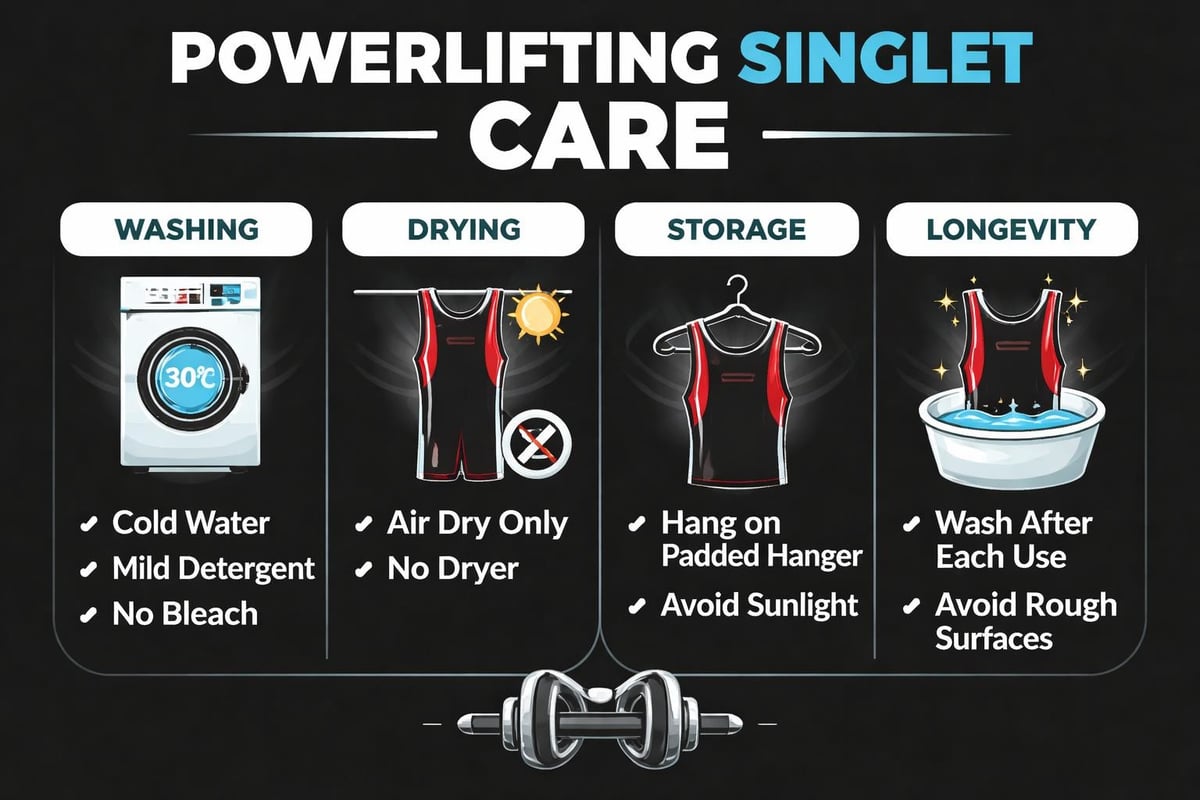
Always check the manufacturer's specific care instructions, but general best practices include:
- Wash in cold water on gentle cycle immediately after competitions
- Use mild detergent without bleach or fabric softeners
- Avoid washing with items that have hooks or velcro that could snag fabric
- Air dry whenever possible rather than using machine dryers
- Store flat or hanging, never bunched up in a gym bag
Never use fabric softener on your singlet. While it might make the fabric feel softer initially, it coats the fibers and breaks down the elastic properties over time. This can cause the singlet to lose its shape and compression, making it uncomfortable to wear and less effective at staying in place during lifts.
Training Versus Competition Singlets
Many lifters own multiple singlets-some for training and others reserved exclusively for competitions. While it might seem excessive, this approach offers several advantages. Your competition singlet stays in pristine condition and maintains its approved status, while training singlets can be any style or brand that helps you prepare.
Benefits of Training in a Singlet
Getting comfortable moving in a singlet before meet day reduces one variable in your competition preparation. Practice your warm-up routine while wearing a singlet to identify any issues with mobility, chafing, or discomfort. Some lifters discover they need to adjust their setup positioning when wearing a singlet versus their typical training shorts and shirt.
Training singlets don't need to be IPF-approved, which opens up more affordable options. You can find basic wrestling singlets or generic powerlifting styles for $30-50 that serve perfectly for getting accustomed to the feel. Save your official ipf powerlifting singlet for mock meets and actual competitions to preserve its condition and ensure it remains compliant with regulations.
Competition Day Checklist
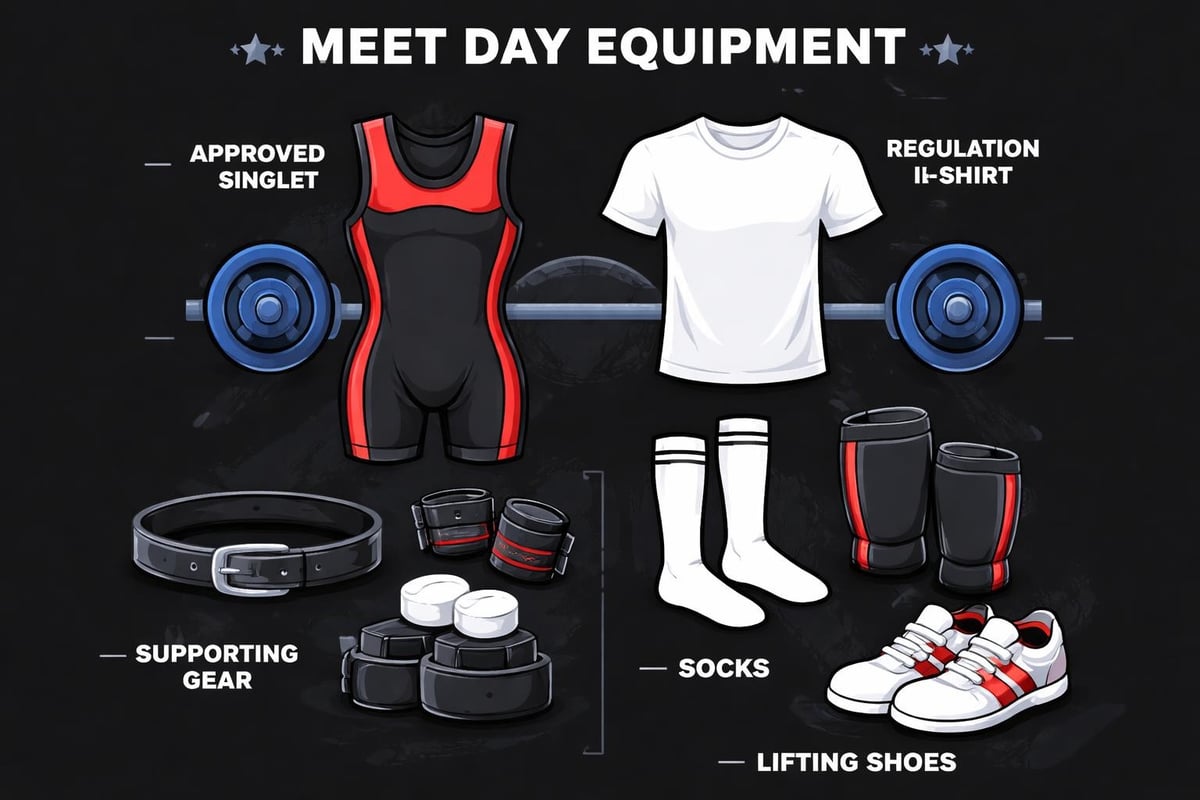
Beyond just having an approved singlet, you need to plan your complete competition outfit. The IPF approved equipment list covers all personal apparel, and every item you wear must comply with the rules. Equipment check happens before you can lift, so arriving with non-compliant gear can derail your entire meet.
Required and Permitted Items
Here's what you need to bring:
| Item Category | Requirements | Common Mistakes |
|---|---|---|
| Singlet | IPF-approved model, correct color | Wrong model year, faded color |
| T-shirt | Plain, single-ply, crew or V-neck | Logos too large, wrong material |
| Underwear | Briefs only, no boxer briefs | Wrong style, visible under singlet |
| Socks | Knee-high for deadlifts | Too short, sliding down |
| Shoes | Flat sole or approved lifting shoes | Excessive heel height |
Your t-shirt worn under the ipf powerlifting singlet must be plain with minimal branding. No graphics, slogans, or large logos are permitted beyond a small manufacturer's mark. The shirt must be tight-fitting enough that it doesn't bunch up but not so compressive that it provides additional support.
Regional Variations and Affiliate Federations
While IPF rules govern international competitions, various national and regional federations may have slightly different requirements. USA Powerlifting, CPU (Canadian Powerlifting Union), and British Powerlifting all follow IPF standards for major competitions but might allow more flexibility at local meets. Always check your specific meet's rules posted on the federation website.
Understanding Federation Hierarchies
The IPF serves as the international governing body, but your path to world championships typically starts at local meets under affiliate federations. Most regional competitions require ipf powerlifting singlet compliance even if they're not technically IPF-sanctioned. This standardization helps lifters prepare for higher-level meets without needing to purchase different equipment at each stage.
New lifters sometimes get confused by the distinction between:
- IPF and its affiliates (strict equipment rules, drug tested)
- Alternative federations (may allow different gear, varying testing policies)
- Unsanctioned meets (often most relaxed about equipment requirements)
If your goal involves eventually competing at national or international levels, investing in properly approved gear from the beginning makes sense. The habits you build at local meets carry forward to bigger platforms, and knowing your singlet is always competition-legal removes one source of stress.
Common Equipment Check Failures
Even experienced lifters occasionally fail equipment check due to singlet-related issues. Understanding common failure points helps you avoid these problems at your next meet. Meet directors want lifters to pass-they're not looking for reasons to disqualify you-but they must enforce the rules consistently for all competitors.
Preventable Issues
The most frequent singlet-related failures include:
- Color fading from too many washes or sun exposure
- Seam damage that creates openings or loose threads
- Strap alterations where lifters tried to adjust the fit
- Wrong model from an approved brand but uncertified design
- Excessive wear showing through fabric transparency
Inspect your singlet thoroughly before each competition. Hold it up to light to check for thinning fabric, examine all seams for integrity, and verify the color hasn't faded significantly. Bring a backup singlet if you have one, just in case your primary fails inspection or gets damaged during warm-ups.
Building Your Competition Wardrobe
As you progress in powerlifting, you'll accumulate various pieces of competition gear. Your ipf powerlifting singlet represents just one component of a complete meet-day outfit. Smart lifters build their wardrobe gradually, starting with essentials and adding specialty items as their competition schedule expands.
Investment Priority List
For lifters on a budget, prioritize purchases in this order:
- Approved singlet in a neutral color (black is most versatile)
- Quality lifting belt that meets regulations and supports your lifts
- Proper socks in multiple heights for different preferences
- Plain t-shirts in your preferred fit
- Backup singlet in the same or different approved color
- Specialty items like wrist wraps, knee sleeves, or deadlift slippers
At KatamuCo, we focus on premium lifting gear that lasts for years, which is exactly the approach you should take with your competition wardrobe. A well-made ipf powerlifting singlet might cost more initially, but it's cheaper than replacing a budget option every season. For more information about quality standards in lifting equipment, check our gear specifications page.
Psychological Aspects of Competition Attire
Beyond the technical requirements, your singlet affects your mental game on meet day. Feeling comfortable and confident in your competition attire translates directly to better performance on the platform. Some lifters prefer bold colors that make a statement, while others choose understated black to blend in and focus on their lifting.
Finding Your Competition Identity
Your first few meets involve figuring out what works for you personally. Experiment with:
- Different color options to see what makes you feel most confident
- Various brands to find the best fit for your body type
- Singlet styles (tank versus T-back straps, leg length variations)
- Layering approaches with your t-shirt and warm-up gear
Many successful lifters develop a consistent competition "uniform" they wear at every meet. This consistency creates mental associations between the attire and peak performance, helping trigger your competitive mindset when you change into your singlet on meet day. Whether you're superstitious or simply appreciate routine, finding your ideal setup matters.
Future of Competition Singlet Regulations
The IPF periodically reviews and updates its technical rules, including equipment specifications. Recent years have seen discussions about modernizing singlet requirements to accommodate evolving fabric technologies and changing aesthetic preferences in the sport. Staying informed about rule changes ensures your competition wardrobe remains compliant as standards evolve.
Anticipated Developments
Industry observers expect potential changes in several areas:
- More flexible color and design allowances for singlets
- Updated fabric composition rules to account for new materials
- Streamlined approval processes for manufacturers
- Clearer guidelines for logo placement and sizing
- Possible adjustments to fit requirements based on body diversity
Even as rules evolve, the fundamental purpose remains constant: ensuring all lifters compete under fair and consistent conditions. Your ipf powerlifting singlet will always need to meet basic standards of fit, construction, and functionality, regardless of how specific technical details might shift over time. Make it a habit to review the current rules before each competition season to catch any updates that might affect your gear.
Understanding ipf powerlifting singlet requirements ensures you're always competition-ready and helps you make smart purchasing decisions that serve you through multiple seasons of lifting. Whether you're preparing for your first local meet or competing on the international stage, having properly approved gear removes unnecessary stress from meet day. At KatamuCo, we believe in equipping lifters with premium gear that performs when it matters most-from our signature lever belts to complete competition accessories that help you lift with confidence and style.

1 comment
AI slop.