 30-Day Money Back Guarantee

Finding the right lifting belt can transform your training experience, but knowing where to start your search can feel overwhelming. Whether you're typing "lifting belts near me" into your phone while standing in a gym parking lot or planning a deliberate shopping trip, understanding your options helps you make a smarter investment. The lifting belt market has evolved significantly in 2026, with both local retailers and specialized online stores offering premium options that combine functionality with style. This guide explores everything you need to know about finding quality lifting belts, from local shopping strategies to understanding what makes a belt worth your money.
Understanding Why Location Matters for Lifting Belt Shopping
The search for lifting belts near me often starts with urgency. Maybe your old belt finally gave out mid-workout, or you've decided it's time to invest in proper support for your heavy compound lifts.
Local shopping offers immediate gratification and the ability to physically inspect products before purchase. You can feel the leather quality, test the buckle mechanism, and ensure the sizing works for your body type without waiting for shipping.
Benefits of shopping locally include:
- Immediate availability without shipping delays
- Hands-on inspection of materials and construction
- Ability to try different sizes before committing
- Face-to-face expert advice from staff
- Easy returns if something doesn't fit properly
However, local options often come with limitations. Big-box sporting goods stores typically carry generic brands with limited design options and questionable durability. The average gymgoer deserves better than mass-produced belts that crack after six months of regular use.
The Local Retail Landscape for Lifting Equipment
When searching for lifting belts near me, you'll encounter several types of retailers, each with distinct advantages and drawbacks.
Sporting Goods Chains stock basic belts alongside general fitness equipment. These stores prioritize volume over specialization, meaning you'll find entry-level options but rarely premium gear with unique designs or superior construction. Staff knowledge varies dramatically, and you might get advice from someone who's never performed a heavy squat.
Specialty Fitness Stores cater specifically to serious athletes and powerlifters. These locations understand the difference between a $30 velcro belt and a premium lever belt built to last years. The selection tends toward functional quality, though design variety may still be limited compared to specialized online retailers.
Local Gyms and Pro Shops sometimes sell equipment directly to members. This convenience can't be beaten if you're already training there, but pricing often includes a significant markup, and inventory is usually minimal.
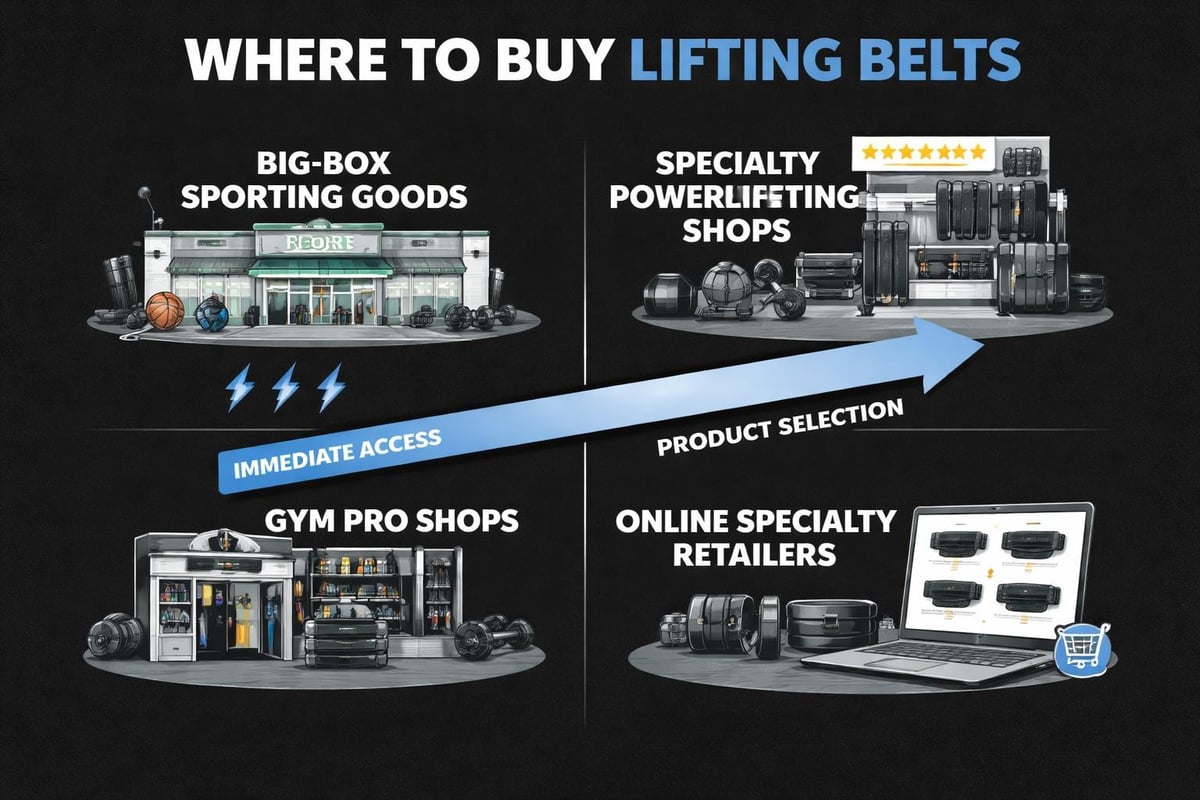
| Retailer Type | Selection | Price Range | Expertise Level | Convenience |
|---|---|---|---|---|
| Sporting Goods Chains | Limited | $25-$80 | Low | High |
| Specialty Fitness Stores | Moderate | $60-$150 | High | Moderate |
| Gym Pro Shops | Minimal | $70-$200 | Moderate | Very High |
| Online Specialty Retailers | Extensive | $50-$250 | Very High | Moderate |
Key Features to Evaluate When Shopping Local
Walking into a store armed with knowledge changes the entire shopping experience. Understanding what separates premium lifting belts from mediocre ones helps you ask the right questions and spot quality instantly.
Material Quality and Construction
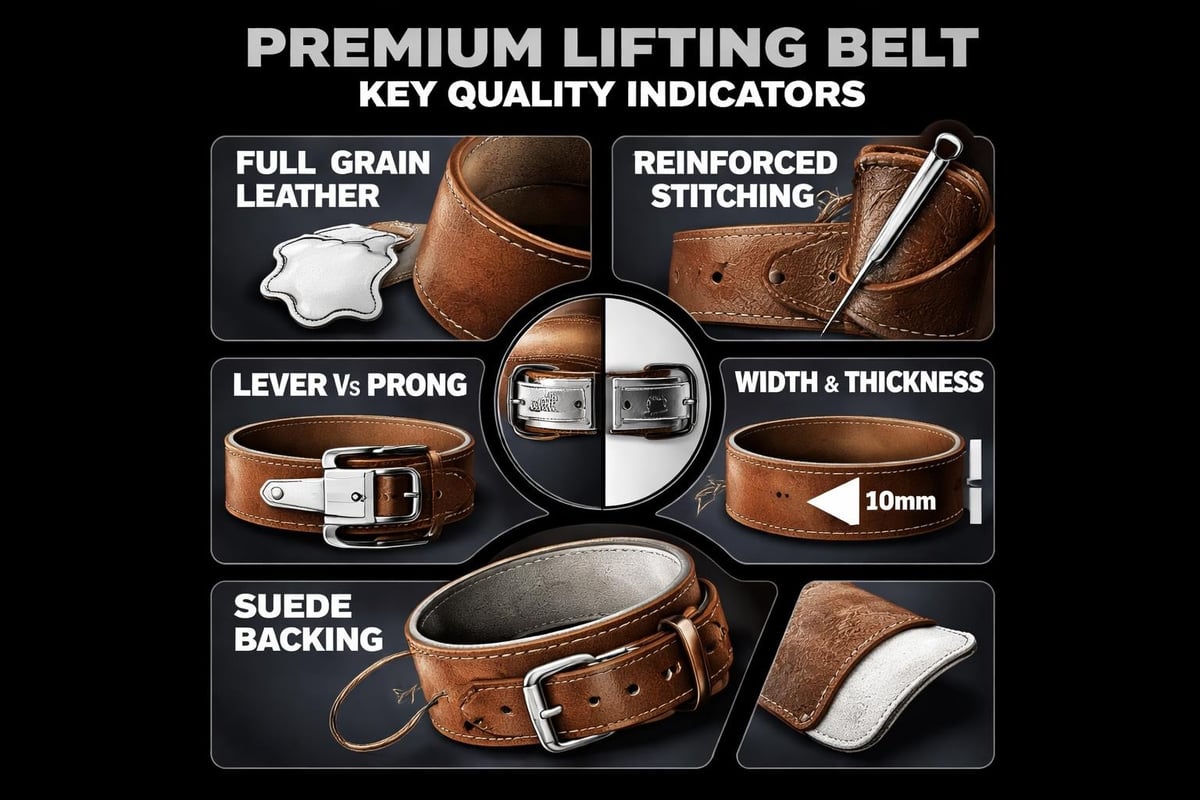
Genuine leather remains the gold standard for lifting belts that last years rather than months. When examining belts locally, check for full-grain leather rather than bonded or split leather. Full-grain develops a beautiful patina over time while maintaining structural integrity through thousands of lifts.
Stitching quality indicates overall construction standards. Double or triple stitching along stress points prevents premature failure. Run your fingers along the edges - premium belts have smooth, reinforced edges that won't dig into your skin during heavy sets.
The backing material matters more than most shoppers realize. Quality belts use suede backing that grips your body without requiring excessive tightening. This prevents the belt from shifting during lifts while remaining comfortable enough for multi-hour training sessions.
Buckle Systems and Adjustment Mechanisms
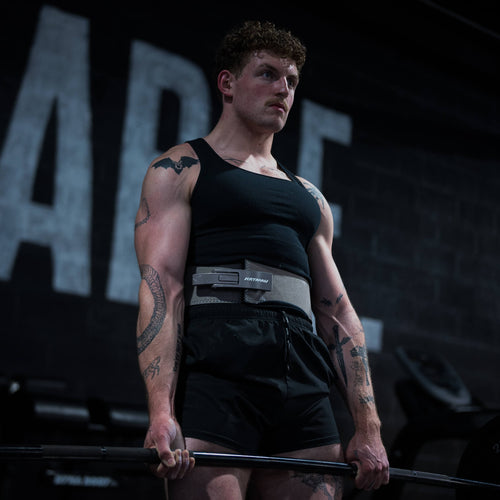
Lever belts have dominated the powerlifting scene in 2026 for good reason. A quality lever mechanism allows single-handed operation, letting you loosen the belt between sets without assistance. When shopping for lifting belts near me, test the lever action repeatedly - it should feel smooth and lock securely without play.
Prong buckles offer different advantages:
- More adjustment options for weight fluctuations
- No moving parts to potentially malfunction
- Traditional aesthetic many lifters prefer
- Lower price point for comparable quality
Test how easily the prong slides through the holes. Premium belts have precisely punched holes that grip the prong firmly without requiring excessive force. Cheap belts often have rough, torn holes that weaken over time.
Width, Thickness, and Sizing Considerations
Standard powerlifting belts measure 4 inches wide (10cm) and 10-13mm thick. This width maximizes intra-abdominal pressure while complying with most competition regulations. Some manufacturers offer 3-inch belts for athletes with shorter torsos or those prioritizing mobility over maximum support.
Thickness affects both support and break-in period. A 13mm belt provides maximum rigidity but requires weeks to properly mold to your body. The 10mm option offers a balance between support and immediate comfort, making it ideal for the average gymgoer who wants premium quality without an extended break-in.
Sizing mistakes cost money and training time. Measure your waist at the point where you'll wear the belt - typically across your navel, not at your pants waistline. Add 3-4 inches to this measurement for your belt size. Quality retailers stock size charts specific to their products.
The Online Alternative: Specialized Retailers
The "lifting belts near me" search often leads to a crucial realization - the best options might not be in your immediate area. Specialized online retailers have revolutionized access to premium lifting gear, offering combinations of quality and design impossible to find at local stores.
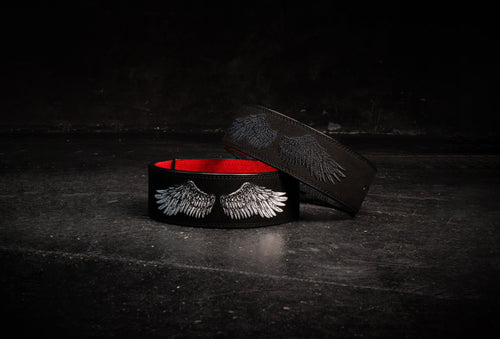
KatamuCo exemplifies this evolution. Rather than settling for generic black belts with basic hardware, modern lifters can choose from collections inspired by Japanese aesthetics, Greek mythology, or minimalist design principles. This personalization doesn't sacrifice functionality - premium materials and construction remain the foundation.
Advantages of Online Specialty Shopping
Online retailers focusing exclusively on lifting equipment understand their audience intimately. They're run by lifters for lifters, resulting in product selections curated for performance rather than profit margins alone.
- Access to lever belts with unique designs unavailable locally
- Detailed size guides with measurement instructions
- Customer reviews from actual powerlifters and strength athletes
- Bundles that pair belts with complementary gear
- Direct manufacturer relationships ensuring consistent quality
The knowledge gap that plagues big-box retailers disappears when shopping with specialists. Product descriptions explain exactly what makes each belt different, from leather tanning processes to hardware specifications. Many companies offer responsive customer service from staff who actually use the products they sell.
Navigating Shipping and Returns
The main hesitation about abandoning the "lifting belts near me" search centers on not being able to try before buying. Premium online retailers address this through comprehensive return policies and detailed sizing information.
Most specialty companies offer 30-60 day return windows, allowing you to train with the belt and ensure it meets your needs. This trial period actually exceeds what you'd get testing a belt for two minutes in a store.
Shipping considerations in 2026:
- Standard delivery typically takes 3-5 business days domestically
- Expedited options available for urgent needs
- Free shipping thresholds often apply to belt purchases
- International shipping reaches most countries within 7-10 days
Complementary Gear to Consider
While searching for lifting belts near me, consider whether your training would benefit from additional supportive equipment. A comprehensive approach to lifting gear maximizes performance and injury prevention.
Knee Sleeves for Lower Body Training
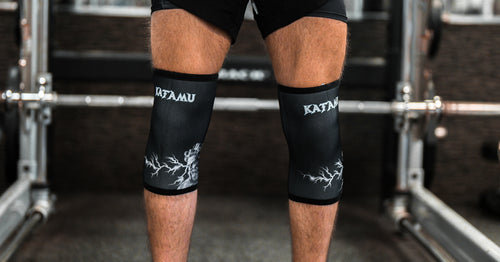
Heavy squats stress both your core and knees. Quality knee sleeves provide compression and warmth that support joint health during high-volume training. Unlike rigid knee wraps used in equipped powerlifting, sleeves offer moderate support while maintaining natural movement patterns.
The relationship between belts and knee sleeves is complementary. Your belt increases intra-abdominal pressure for spinal stability, while sleeves support knee tracking and reduce impact stress. Together, they create a foundation for progressive overload without unnecessary injury risk.
Wrist Support and Grip Accessories
Pressing movements benefit from wrist stabilization just as squats and deadlifts benefit from belt support. Wrist wraps prevent hyperextension during heavy bench presses and overhead work, allowing you to focus on moving weight rather than wrist discomfort.
Lifting straps complement belt work differently. When performing high-rep deadlift variations or accessory pulling movements, straps eliminate grip as a limiting factor. This lets you fully fatigue target muscles rather than stopping when your hands give out.
| Accessory | Primary Benefit | Best Used For | Pairs With Belt |
|---|---|---|---|
| Knee Sleeves | Joint support, warmth | Squats, leg press | Yes |
| Wrist Wraps | Prevent hyperextension | Pressing movements | Sometimes |
| Lifting Straps | Grip assistance | High-rep pulls | Rarely |
| Elbow Sleeves | Compression, warmth | Bench, overhead work | Sometimes |
Making the Investment Decision
Premium lifting belts represent a significant investment compared to budget alternatives found during casual "lifting belts near me" searches. Understanding the cost-benefit relationship helps justify spending $100-200 on equipment that will serve you for years.
Cost Per Use Analysis
A quality lever belt costing $150 might seem expensive compared to a $40 velcro option from a sporting goods store. However, durability changes the calculation dramatically.
The budget belt typically lasts 6-12 months of regular training before the velcro weakens, stitching fails, or the material cracks. Replacing it twice yearly costs $80 annually. Meanwhile, a premium belt lasts 5-10 years with proper care, bringing the annual cost to $15-30.
Beyond pure economics, quality affects training quality:
- Consistent support means predictable performance on heavy sets
- Comfort encourages actual belt use rather than avoiding it
- Confidence in equipment lets you focus on the lift
- Pride in gear you're excited to wear increases training consistency
Understanding Quality Markers
Research by organizations like NIOSH examines back belt effectiveness, highlighting the importance of proper use rather than just ownership. A premium belt used correctly provides measurable benefits, while any belt used improperly offers false security.
When evaluating options during your search for lifting belts near me, look for manufacturers who provide usage guidance alongside products. Resources explaining proper weightlifting belt use help you maximize your investment by understanding when and how to incorporate the belt into training.
Quality manufacturers stand behind their products with warranties covering defects in materials and workmanship. This protection matters when spending serious money on training equipment.
Training Adaptation and Belt Integration
Purchasing a belt is just the beginning. Proper integration into your training program determines whether you receive the full benefits that justify the investment.
When to Wear Your Belt
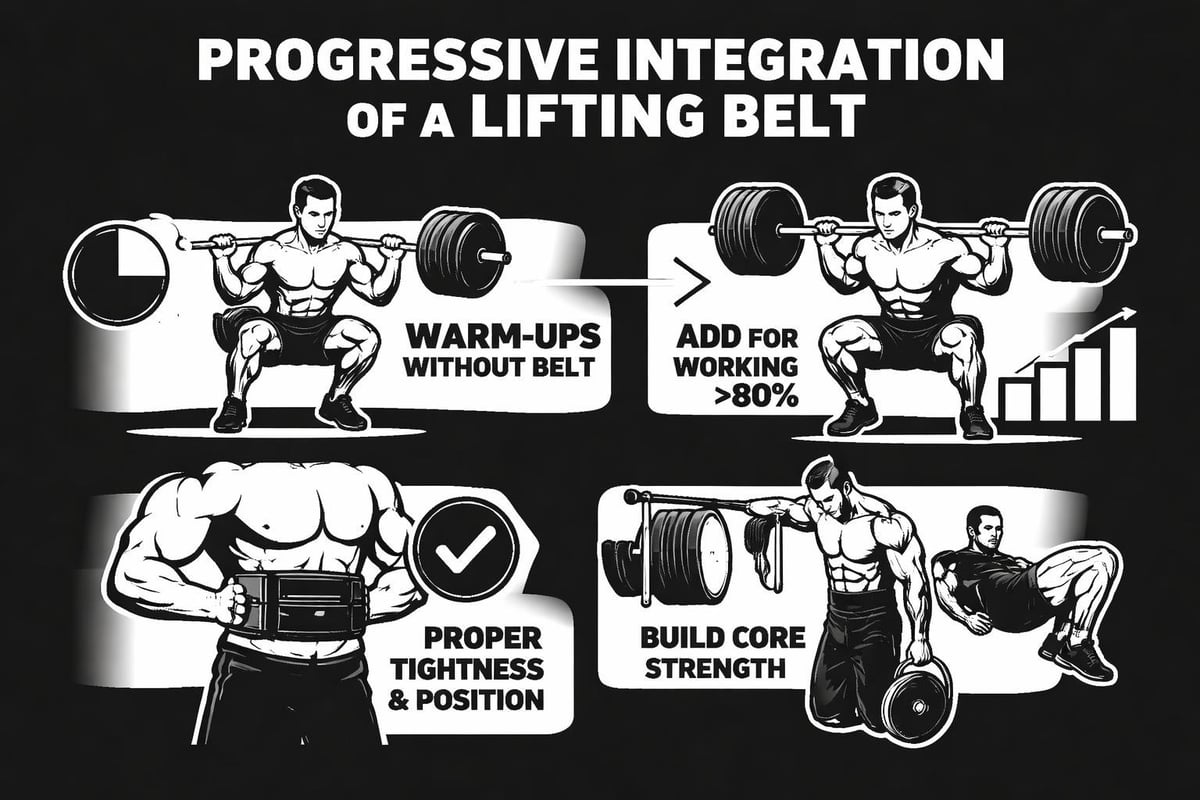
Beginning lifters often make two opposite mistakes - never using their belt or wearing it for every single set. The middle path maximizes both strength development and safety.
Reserve belt use for:
- Working sets at 80%+ of your one-rep max
- Heavy compound movements (squats, deadlifts, overhead press)
- Peak intensity phases of training cycles
- Sets where maintaining rigid torso position is critical
Leave the belt off for warmup sets, accessory work, and lighter training days. This approach strengthens your natural core stability while still providing support when loads truly demand it. Studies examining belt effects on muscle recruitment suggest optimal use targets specific high-intensity scenarios rather than constant wear.
Breaking In Your Premium Belt
Leather belts require a break-in period inversely proportional to their quality. A premium 13mm belt might feel rigid initially, but this stiffness indicates dense, durable leather that will serve you for years.
- Wear it around the house while doing normal activities for 15-20 minutes daily
- Roll and flex the belt repeatedly to begin breaking down stiffness
- Use leather conditioner sparingly on the outer surface (never the suede backing)
- Start with lighter training loads until the belt conforms to your torso shape
- Gradually progress to working sets as comfort increases
Expect 2-4 weeks before a premium belt feels truly comfortable. This patience pays dividends in longevity and performance.
Beyond Basic Black: Design and Personalization
The functional fitness gear market has evolved dramatically. Searching for lifting belts near me in 2026 reveals options that express personal style without compromising performance.
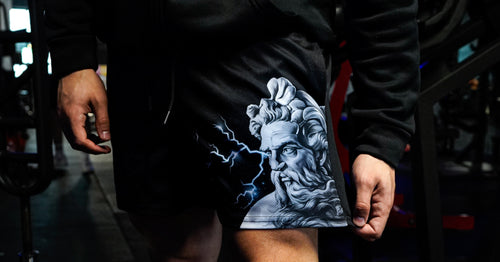
Premium manufacturers now offer collections with distinctive aesthetics. The Japanese Collection brings Eastern-inspired designs to Western strength training, while Greek God themed belts connect modern lifting to ancient strength traditions.
This personalization matters more than many realize. Training consistency often depends on psychological factors as much as programming quality. Gear you're excited to use encourages gym attendance and effort. When your belt reflects your personality and aesthetics, it becomes part of your training identity rather than just equipment.
Design considerations that maintain functionality:
- Premium designs use the same materials as basic versions
- Unique aesthetics apply to leather coloring and artwork, not construction
- Hardware specifications remain competition-legal regardless of design
- Break-in periods and durability match across aesthetic variations
Caring for Your Investment
Proper maintenance extends belt life from years to decades. The care routine for premium lifting belts is surprisingly simple but consistently neglected.
Regular Cleaning and Conditioning
Sweat and chalk accumulate on belts during training, gradually degrading materials if left unaddressed. Monthly cleaning prevents this deterioration.
- Wipe down the belt with a slightly damp cloth after heavy training sessions
- Use leather-specific cleaner quarterly to remove embedded grime
- Apply leather conditioner 2-3 times annually to prevent drying and cracking
- Allow the belt to air dry completely before storing
- Never submerge the belt in water or use harsh chemical cleaners
The suede backing requires different care. Brush it occasionally with a suede brush to restore the nap and remove compressed areas. This maintains the grip that prevents belt slippage during lifts.
Storage Best Practices
How you store your belt between training sessions affects its longevity as much as how you use it.
Hang your belt on a dedicated hook or peg rather than leaving it crumpled in your gym bag. This prevents permanent creasing that weakens leather fibers. If you must store it in a bag, roll it loosely with the suede facing outward.
Avoid extreme temperatures and humidity. Leaving your belt in a hot car degrades leather rapidly, while excessive moisture promotes mold growth on suede backing. A climate-controlled environment extends belt life significantly.
Making Your Final Selection
Armed with knowledge about features, quality markers, and usage, you're ready to make an informed decision. Whether you choose a local retailer or specialized online option depends on your specific priorities.
Questions to Ask Before Purchase
Clarifying your needs prevents buyer's remorse and ensures you select the right belt for your training.
Training style considerations:
- Do you primarily train powerlifting-style with heavy compounds?
- Will you use the belt for Olympic weightlifting or CrossFit?
- Do you compete, requiring federation-legal specifications?
- How frequently do you train with loads requiring belt support?
Personal preference factors:
- Does the lever convenience justify potential higher cost?
- Do you prefer traditional prong aesthetics and adjustability?
- How important are unique designs versus basic functionality?
- Will you coordinate the belt with other lifting accessories?
Research exploring belt effectiveness across different populations reminds us that proper selection and usage matter more than simply owning a belt.
The Try-Before-Commitment Approach
If abandoning the "lifting belts near me" search for online specialty shopping still feels risky, consider a hybrid approach. Visit local stores to determine your size and preferred belt type, then shop online for the specific design and quality level you want.
Many lifters find that trying several basic belts locally helps them understand exactly what they want in their permanent belt. This hands-on research justifies investing in premium options from specialized retailers who offer superior quality and designs.
The bestsellers collection at specialized retailers represents battle-tested options that satisfy the majority of lifters. Starting here narrows your decision to proven performers rather than overwhelming you with every possible variation.
Finding quality lifting belts requires balancing immediate convenience with long-term value, functionality with personal style. Whether your "lifting belts near me" search leads to a local specialty store or a premium online retailer, prioritizing construction quality and proper fit ensures your investment supports years of productive training. At KatamuCo, we've built our reputation on delivering lever belts that combine competition-grade durability with designs that make you excited to train, backed by the accessories every serious lifter needs to maximize their potential.
