 30-Day Money Back Guarantee

Finding the right lifting accessories can transform your training sessions, and when it comes to convenience and selection, searching for lifting straps amazon brings up thousands of options. The challenge isn't finding straps - it's identifying which ones actually deliver on quality, durability, and performance. With Amazon's marketplace flooded with brands ranging from budget options to premium alternatives, understanding what separates a reliable training tool from a waste of money becomes essential. This guide breaks down everything you need to know about selecting, using, and maximizing the value of lifting straps purchased through Amazon's platform.
Understanding What Lifting Straps Actually Do
Lifting straps serve a specific purpose in strength training that many beginners misunderstand. These simple fabric or leather loops wrap around your wrists and the barbell, creating a mechanical advantage that prevents the bar from rolling out of your hands during heavy pulls.
When you're performing exercises like deadlifts, rows, or shrugs, your grip strength often gives out before the target muscles reach failure. This creates a frustrating bottleneck in your training progression. Lifting straps eliminate this limitation by transferring the load from your fingers and forearms to your wrists and the strap material itself.
The Science Behind Grip Failure
Your forearm muscles are significantly smaller than your back, legs, and posterior chain. During heavy deadlifts, your lats and hamstrings might be capable of pulling 500 pounds, but your grip might fail at 405 pounds. This discrepancy means you're leaving gains on the table.
Research on lifting performance and grip assistance shows that straps allow lifters to maintain form and continue progressive overload on target muscle groups without being limited by forearm endurance. However, the key is using them strategically rather than as a permanent crutch.
Types of Lifting Straps on Amazon's Marketplace
When browsing lifting straps amazon listings, you'll encounter several distinct categories. Each type serves different training styles and experience levels.
Traditional Cotton Straps remain the most popular option. These typically measure 18-24 inches long and 1.5 inches wide, constructed from woven cotton with reinforced stitching. They're affordable, durable, and work well for most pulling exercises.
Padded Straps add a neoprene or foam layer where the strap contacts your wrist. This extra cushioning reduces discomfort during high-volume training sessions or when working with extremely heavy loads. They cost slightly more but provide superior comfort.
Figure-8 Straps create a closed loop system that's faster to secure and virtually impossible to lose your grip with. Powerlifters and strongman competitors favor these for max effort deadlift attempts.
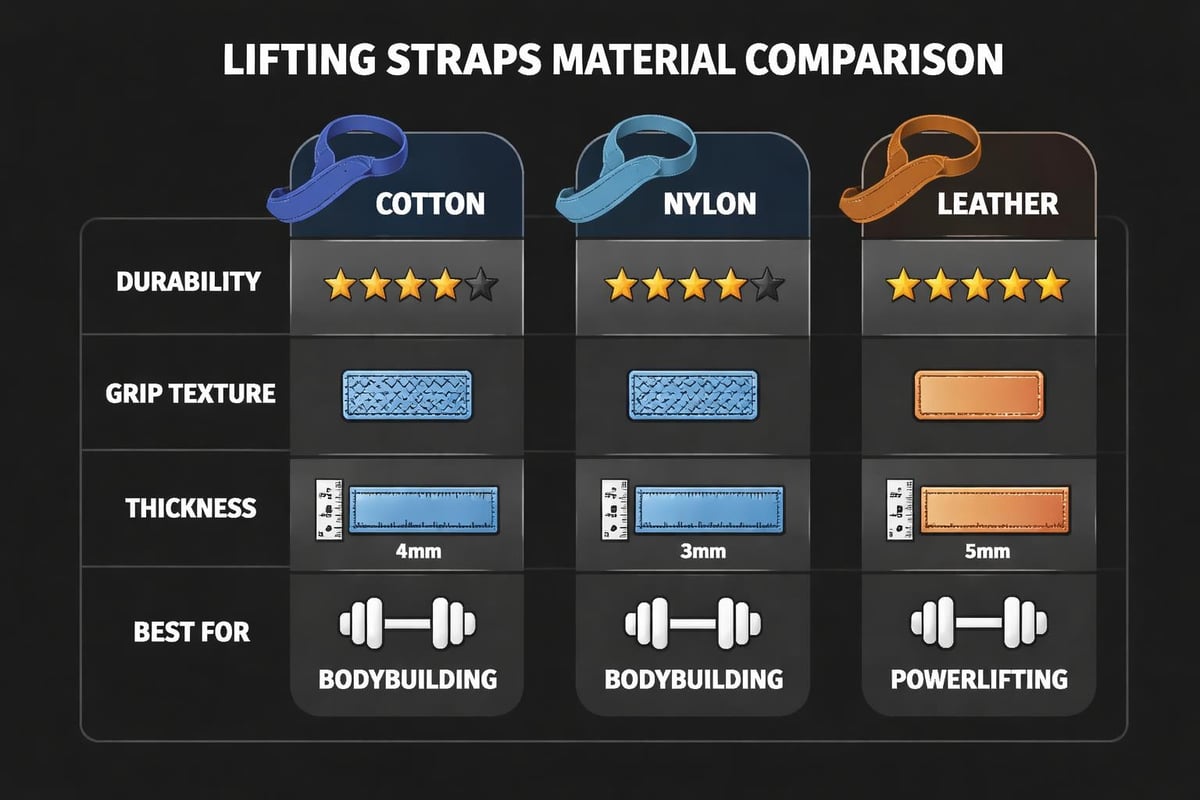
| Strap Type | Best For | Price Range | Durability |
|---|---|---|---|
| Cotton Traditional | General training, beginners | $8-$15 | 6-12 months |
| Padded Nylon | High-volume bodybuilding | $12-$25 | 12-18 months |
| Figure-8 | Max effort lifts, competitions | $15-$30 | 18-24 months |
| Leather | Advanced lifters, longevity | $20-$40 | 2+ years |
Material Considerations Matter More Than You Think
The comparison between leather, nylon, and cotton materials reveals significant performance differences. Cotton offers the best balance of grip and affordability, nylon provides superior strength-to-weight ratios, and leather delivers unmatched durability with a break-in period.
Nylon straps resist moisture and chalk better than cotton, making them ideal for sweaty training environments. However, they can be slightly more slippery during the initial wrap. Leather straps develop a custom fit over time but require more maintenance to prevent cracking and stiffness.
How to Choose Quality Lifting Straps Amazon Offers
Amazon's rating system helps filter options, but knowing what to look for beyond star ratings ensures you get genuine quality. Check for reinforced stitching at stress points, particularly where the loop connects to the main strap body. This junction bears the most tension and frequently fails on cheap models.
Strap width impacts both comfort and functionality. Wider straps (1.5-2 inches) distribute pressure more evenly across your wrist, reducing the cutting sensation during heavy pulls. Narrower straps (1-1.25 inches) wrap more securely around the bar but can dig into skin.
Red Flags in Product Listings
When searching lifting straps amazon, watch for these warning signs:
- Listings without specific material composition details
- No manufacturer warranty or return policy information
- Reviews mentioning stitching failures within the first month
- Suspiciously low prices (under $6) suggesting inferior materials
- Stock photos instead of actual product images
- Lack of sizing information or adjustability details
Length matters more than most realize. Standard 21-inch straps work for most lifters, but if you have larger wrists or prefer multiple wraps around the bar, consider 24-inch models. Shorter 18-inch versions suit smaller hands and lighter weight applications.
Proper Lifting Strap Technique and Application
Understanding how to use lifting straps correctly prevents both injury and equipment damage. The basic technique involves creating a loop, inserting your hand with the strap tail pointing toward your fingers, then wrapping the tail around the bar in the direction opposite your grip.
For an overhand grip, wrap the strap over the bar moving toward your body. This creates tension as you lift, tightening the connection automatically. Reverse this direction for underhand grips.
Step-by-Step Wrapping Process
- Create the wrist loop by threading the strap through the sewn loop, forming an adjustable circle
- Insert your hand with fingers pointing toward the long tail of the strap
- Tighten the wrist loop firmly but not constrictively - you should fit one finger beneath it
- Position the bar in your palm before wrapping
- Wrap the tail 1-2 times around the bar, ensuring the final wrap secures the previous layers
- Grip over the wrap with your fingers and thumb, creating a double security system
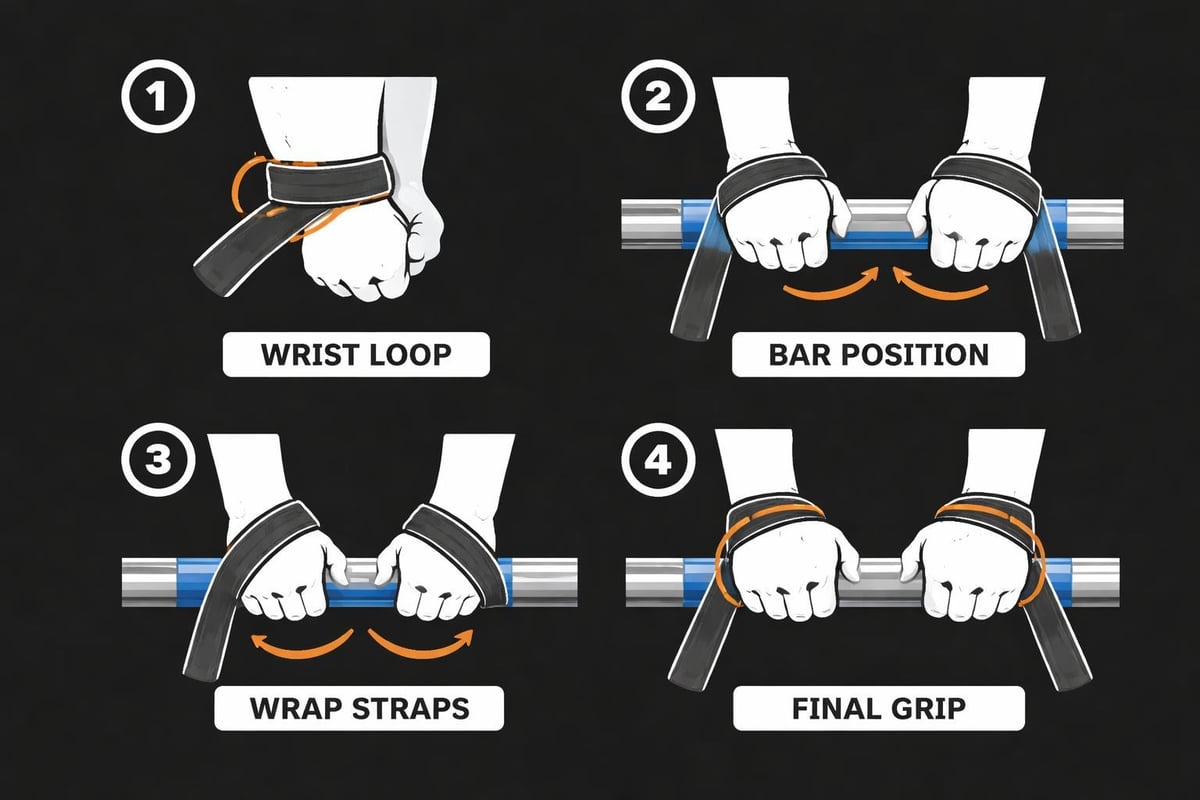
The positioning of your wrist within the loop affects leverage. Place the strap pad or reinforced section directly on top of your wrist, not underneath or to the side. This alignment prevents the strap from rolling or twisting during the lift.
When to Use Straps vs Training Without Them
Strategic strap usage balances benefits with potential drawbacks. Many coaches recommend a hybrid approach where you perform your initial working sets without straps, then add them for final heavy sets or volume work after grip becomes the limiting factor.
Reserve straps for exercises where grip limits muscle development, not exercises designed to build grip strength. Use them for:
- Deadlift variations (conventional, Romanian, deficit)
- Barbell and dumbbell rows
- Pull-ups with added weight
- Rack pulls and shrugs
- High-rep back training days
Avoid using straps for:
- Farmer's carries and grip-specific training
- Olympic lift variations (clean, snatch)
- Warm-up sets under 60% of your max
- Exercises where dropping the weight poses safety risks
Programming Strap Use Intelligently
Consider implementing a periodization approach with lifting straps amazon purchases. During strength phases focusing on maximal loads, straps become valuable tools. During hypertrophy phases emphasizing controlled eccentrics, they prevent premature set termination due to grip fatigue.
Build dedicated grip training into your routine if you regularly use straps. Two 10-minute grip sessions weekly - featuring dead hangs, plate pinches, and thick-bar holds - maintain forearm development while allowing strap use for primary movements.
Comparing Amazon's Top Lifting Strap Brands
The best lifting straps available through Amazon span several price points and design philosophies. Harbinger leads the budget-friendly category with their padded cotton straps, offering excellent value at $12-$15. These work perfectly for beginners and intermediate lifters not yet moving elite-level weights.
Versa Gripps represent the premium end, featuring a patented design that combines straps with built-in palm support. At $40-$60, they're an investment, but the added wrist stability and quick-release mechanism justify the cost for serious lifters.
| Brand | Material | Unique Feature | Price | Best For |
|---|---|---|---|---|
| Harbinger | Cotton + padding | Non-slip grip pattern | $12-$15 | Budget-conscious beginners |
| Gymreapers | Reinforced cotton | Extended length options | $15-$20 | Larger hands, multiple wraps |
| IronMind | Heavy cotton | Competition-approved | $18-$22 | Powerlifters, serious athletes |
| Rogue Fitness | Nylon/leather blend | Lifetime warranty | $25-$35 | Long-term investment |
| Versa Gripps | Patented material | Integrated palm support | $40-$60 | Professional athletes |
What Amazon Reviews Actually Tell You
Analyzing lifting straps amazon reviews requires reading between the lines. Five-star reviews from verified purchases within the first month indicate initial impressions, not long-term durability. Look for three and four-star reviews from users who've owned the straps for 6+ months - these provide realistic assessments.
Common complaints about strap width being too narrow or too wide are subjective and depend on individual hand size. However, universal complaints about stitching failure, material degradation, or uncomfortable pressure points signal genuine quality issues.
The Investment Value of Quality Straps
Cheap lifting straps amazon sells for under $10 might seem like smart budgeting, but they rarely last beyond 3-4 months of consistent use. Premium straps costing $25-$40 typically survive 2+ years of regular training, making the cost-per-use significantly lower.
Calculate actual value by dividing the purchase price by expected training sessions. A $12 strap lasting 3 months (approximately 40 sessions) costs $0.30 per workout. A $30 strap lasting 18 months (approximately 240 sessions) costs $0.125 per workout - less than half the per-use cost.
Material quality directly correlates with longevity. Double or triple-stitched seams withstand exponentially more stress cycles than single-stitched alternatives. Reinforced wrist loops with bar-tacked stitching patterns prevent the most common failure point.
At KatamuCo, we understand that quality lifting accessories make measurable differences in training outcomes. While we specialize in premium lever belts, our accessories line includes lifting straps designed with the same durability standards our customers expect.
Maintenance and Care for Extended Lifespan
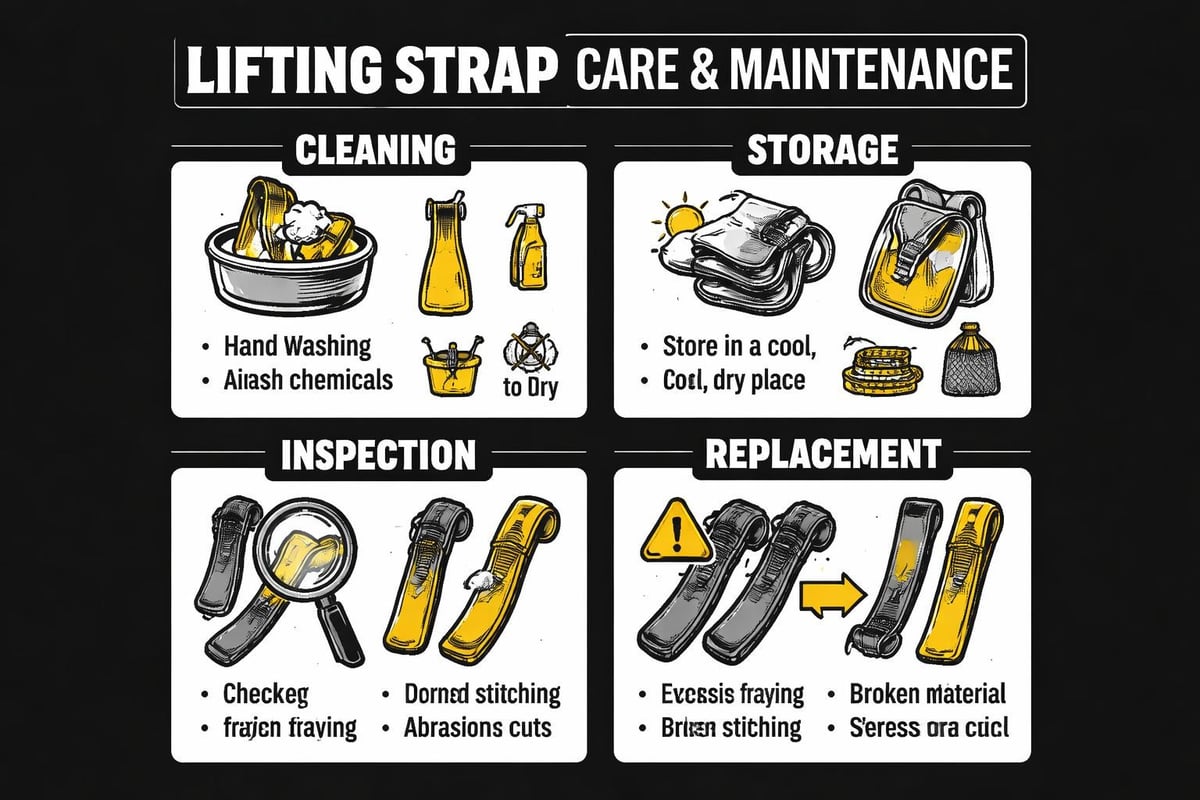
Most lifters never wash their straps, which accelerates material breakdown. Chalk, sweat, and oil accumulation weakens fabric fibers and causes premature deterioration. Hand-wash cotton and nylon straps monthly using mild detergent and cool water, then air-dry completely before storage.
Leather straps require different care. Apply leather conditioner every 2-3 months to prevent cracking and maintain flexibility. Avoid soaking leather straps, as water can weaken the material structure and cause permanent stiffness.
Storage Best Practices
- Store straps flat or loosely coiled, never tightly bound
- Keep them in a dry, ventilated area away from direct sunlight
- Separate from sharp objects that could snag or tear the material
- Allow complete drying between uses if you train multiple times daily
Inspect your straps before each training session. Check the stitching at stress points, examine the material for fraying, and test the wrist loop security. Replace straps immediately if you notice significant wear - a strap failure during a heavy deadlift creates serious injury risk.
Advanced Techniques and Variations
Experienced lifters develop personalized wrapping methods that optimize their specific grip patterns and bar preferences. Some wrap straps figure-8 style around both the bar and their wrist, creating an ultra-secure connection for maximum attempts.
The hook grip modification involves wrapping the strap, then using your thumb to pin the tail against the bar before closing your fingers. This technique combines strap security with maintained finger involvement, helping preserve grip strength development.
Strap Alternatives and Complementary Tools
Lifting straps versus hooks presents a practical comparison for different training scenarios. Hooks offer faster attachment and removal, making them ideal for high-volume training with frequent weight changes. However, they don't allow the same natural hand positioning as traditional straps.
Chalk and liquid grip products complement strap use rather than replace it. Apply chalk for warmup sets and lighter working sets, then add straps when grip becomes limiting. This approach maximizes muscle engagement while maintaining some grip stimulus.
Specialty Straps for Specific Training Styles
Bodybuilders focusing on muscle isolation benefit from thicker, more padded straps that allow complete mental focus on the target muscle without grip distraction. These typically feature additional wrist support and wider contact surfaces.
Powerlifters preparing for competition need straps that replicate their competition grip as closely as possible during training. Non-padded, minimal-thickness straps maintain better bar feel and hand positioning specificity.
Olympic weightlifters should avoid traditional straps entirely for competition movements. The quick-release requirement during cleans and snatches makes straps dangerous. However, they can use straps for accessory pulling work like snatch-grip high pulls or clean pulls when specifically training positional strength.
CrossFit athletes face unique challenges since straps aren't permitted in competition. Using lifting straps amazon options for supplemental strength work makes sense, but competition preparation should emphasize grip endurance without assistance.
The Role of Straps in Injury Prevention
Proper strap use prevents certain injuries while potentially creating others if applied incorrectly. When grip fails during heavy deadlifts without straps, lifters often compensate with compromised form - rounding their backs or hitching the weight. Straps maintain clean technique through complete ranges of motion.
However, over-reliance on straps can lead to underdeveloped forearm strength, increasing injury risk during sports or activities requiring grip strength. Balance is essential - use straps to overcome grip limitations on primary movements, but include direct grip work in your programming.
Wrist positioning within the strap affects joint stress. Excessive wrist extension (bending backward) during heavy pulls places dangerous torque on the wrist joint. Keep your wrists neutral or slightly flexed when using straps, distributing force along the forearm's strongest alignment.
Making the Final Purchase Decision
After researching lifting straps amazon offers, narrow your choices based on three primary factors: intended use frequency, exercise selection, and budget constraints.
For beginners training 3-4 times weekly, budget-friendly padded cotton straps from established brands provide excellent value. These cost $12-$18 and last 6-12 months with proper care, making them perfect for developing your technique and determining if you'll use straps long-term.
Intermediate lifters training 5-6 times weekly benefit from mid-range options featuring reinforced stitching and quality materials. Expect to invest $20-$30 for straps that survive 12-18 months of consistent use across various pulling movements.
Advanced lifters and competitive athletes should prioritize premium materials and construction. Leather straps or high-end synthetic options costing $30-$50 provide the durability and performance consistency required for heavy training loads and frequent use.
Reading Between the Marketing Lines
Amazon listings frequently use terms like "professional grade" or "competition quality" without substantiation. Verify claims through reviews and material specifications rather than marketing language. Look for specific details about stitching patterns, material weight (GSM for fabrics), and manufacturer testing standards.
Consider sellers offering satisfaction guarantees or extended return windows. This confidence in their product quality allows you to test the straps during actual training sessions before committing fully.
Selecting quality lifting straps through Amazon's marketplace requires balancing material durability, functional design, and price considerations that align with your specific training demands. Whether you're building your first home gym or upgrading worn equipment, the right straps enhance your pulling strength progression while protecting your grip from premature fatigue. At KatamuCo, we build premium lifting accessories designed to match the intensity of your training, from professional-grade lifting straps to our signature lever belts, all crafted to support years of consistent progress in the gym.
