

 30-Day Money Back Guarantee

The bar feels different once the weight gets real. At a certain point, your setup, bracing, and confidence matter just as much as raw strength. That is why so many lifters ask, are lever belts worth it? If you train heavy, care about performance, and want gear that actually earns its place in your bag, the answer is often yes - but not for everyone, and not for every style of training.
Are lever belts worth it when you train heavy?
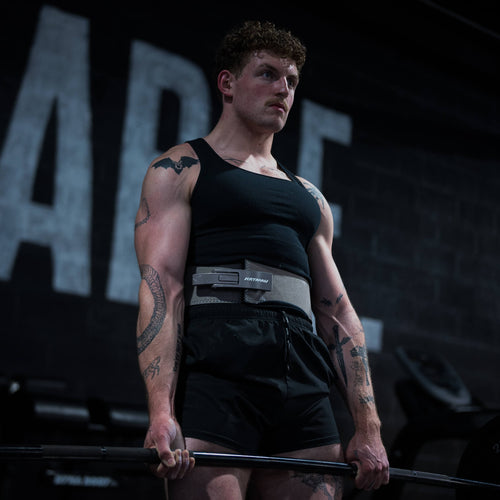
A lever belt is built for one thing: locking you in fast and consistently. Unlike a prong belt, which uses holes and a buckle, a lever belt opens and closes with a metal lever mechanism. You set the fit once, then clamp it down the same way every time. That repeatability is the main advantage.
When you are squatting, deadlifting, or pressing near your top working weights, consistency matters. A belt is not there to lift the weight for you. It gives your core something to brace against, which can help you create more intra-abdominal pressure and feel more stable under load. A lever belt does that with very little friction. You are not wrestling with prongs between sets. You are not guessing whether you tightened it one hole too loose or one hole too tight. You lock in, lift, and move.
For serious lifters, that ease adds up. Heavy training is already demanding. If your equipment helps you stay focused on execution instead of setup, it is doing its job.
What a lever belt actually does
A good lever belt does not replace technique. It supports good technique by making strong bracing easier to maintain. That can mean a more solid torso position in the squat, more confidence in the hole, or less energy wasted trying to stabilize during a heavy pull.
The biggest benefit is usually not magical strength gains. It is improved rigidity and a better sense of pressure. Many lifters feel more aggressive and more connected to the lift when the belt is set correctly. That mental piece matters too. When the weight is moving into serious territory, confidence is performance.
There is also a practical edge. Lever belts are fast. If you run sets with short rest periods, or move between warm-ups and work sets quickly, the lever system saves time and hassle. In a training environment where rhythm matters, that convenience is not small.
Where lever belts shine most
Lever belts make the most sense for lifters with relatively stable belt settings. If your squat and deadlift belt position and tightness stay close from session to session, a lever system feels almost custom-built. You dial in the fit and get the same lockdown every time.
Powerlifters are the obvious match. If your training revolves around heavy compound lifts and progressive overload, a lever belt fits the job. It is especially useful when you are handling loads where every part of your setup needs to be repeatable.
Bodybuilders and general strength athletes can also benefit, but it depends on how they train. If you only belt up for your heaviest top sets on compounds, a lever belt can still be a great tool. If your sessions involve lots of movement variety, giant swings in waist size from meal timing, or frequent changes in tightness preference, the advantage gets less clear.
Are lever belts worth it over prong belts?
This is where the real debate starts. Lever belts are not universally better. They are better for specific lifters.
A prong belt is more adjustable on the fly. That matters if you want one notch for squats, another for deadlifts, and something looser for accessory work. It also helps if your bodyweight fluctuates often, especially during a bulk or cut. You can change the fit in seconds without tools.
A lever belt wins on speed, consistency, and feel. Once it is set, the closure is fast and secure. Many lifters also prefer the clean, locked-in sensation of a lever over a traditional buckle. It feels more premium, more deliberate, and often more competition-focused.
The trade-off is flexibility. Changing the fit on a lever belt usually means unscrewing the lever and resetting it. That is not hard, but it is not something most lifters want to do mid-session. So if your training style demands frequent adjustment, a prong belt may fit better.
That does not make lever belts overrated. It just means they are specialized. And specialization is exactly what many serious lifters want.
Who should probably buy one
If you train around the big lifts, push intensity regularly, and want your gear to feel as dialed as your programming, a lever belt is usually worth the investment. It suits lifters who care about details and who want equipment that performs the same way every session.
It also makes sense if you are tired of cheap belts that break in poorly, loosen up, or feel inconsistent. A quality lever belt is one of those pieces of gear that can stay in your rotation for years if it is built right. Durability matters more when the product is meant to support you under serious weight.
For newer lifters, the answer depends on where you are. If you are still learning how to brace, a belt can help you feel what proper pressure should be like, but it should not become a shortcut for weak technique. You need to know how to control your trunk without depending on gear for every rep. A belt is a performance tool, not a substitute for fundamentals.
Who might be better off skipping it
If you mostly do bodybuilding-style work with moderate loads, machines, and higher reps, you may not need a lever belt at all. That does not mean it has no value, only that it may not be the best use of your money right now.
The same goes for casual gym-goers who are not consistently training heavy compounds. If your sessions are more general fitness than strength-focused, a lever belt can be overkill.
And if you know you like changing belt tightness often, be honest about that. Some lifters hate feeling locked into one setting. For them, the speed of the lever does not outweigh the lack of quick adjustability.
Fit, thickness, and build quality matter more than hype
Not all lever belts are worth it. Some are stiff in the wrong ways, use weak hardware, or cut corners on the leather and stitching. A bad lever belt can feel bulky without feeling supportive. That is the worst combination.
A well-made belt should feel secure, stable, and durable. The lever should close cleanly and stay locked. The material should break in over time without collapsing. The edges should not feel like they are fighting your torso every session. Premium gear should perform like premium gear.
Thickness matters too. A 10mm belt often gives a strong balance of support and comfort for most lifters. A 13mm belt is stiffer and can feel more aggressive, which some advanced powerlifters prefer. Neither is automatically better. Your body type, lifting style, and comfort level all matter.
That is another reason the question is not just are lever belts worth it, but are quality lever belts worth it. The answer there is much stronger than it is for bargain-bin options.
The real value is performance plus trust
The best lifting gear does two things. It improves performance, and it makes you trust your setup. That second part is huge. When you step under a heavy bar, hesitation costs more than most people realize. A belt that feels solid every time helps remove noise from the moment.
That is why a premium lever belt can be worth more than its price tag suggests. It is not just about support. It is about repeatability, confidence, and having one less weak link in your system. For athletes who train with intent, that matters.
A lever belt also tends to fit the mindset of lifters who see training as more than a hobby. It is gear with purpose. It has a sharper feel, a more serious identity, and a stronger connection to heavy performance. That is a big part of the appeal. With the right build, it becomes a long-term piece of your training standard, not just another accessory.
Katamu’s audience gets this instinctively. If your gear has to perform and look like it belongs in a serious setup, a lever belt checks both boxes when the quality is there.
So, are lever belts worth it?
If you train hard, lift heavy, and want fast, repeatable support on your biggest movements, yes - lever belts are worth it. If you need constant adjustability or rarely touch loads that challenge your brace, maybe not.
The smartest way to look at it is simple: buy a lever belt when your training has grown into one. When your lifts are demanding enough that setup consistency, support, and confidence can directly affect performance, a good lever belt stops being extra. It becomes part of the standard you bring to the gym every time.
