 30-Day Money Back Guarantee

A belt that feels unbreakable in your hands can still be the wrong belt once the bar is loaded. This lever belt thickness guide cuts through the 10mm versus 13mm debate so you can choose support that matches how you train, brace, and move under real weight.
Thickness matters because it changes the belt’s stiffness, break-in period, pressure against your torso, and the way it responds when you push into it. But thicker is not automatically better. The best lever belt is the one that helps you create a hard, repeatable brace without becoming the limiting factor in your setup.
Lever Belt Thickness Guide: 10mm vs. 13mm
Most serious lifting belts fall into two thickness categories: 10mm and 13mm. Both can deliver serious support. The difference is the trade-off between adaptability and maximum rigidity.
A 10mm lever belt is the more versatile option. It is stiff enough for heavy squats, deadlifts, and presses, yet it tends to break in faster and sit more comfortably around the torso. For lifters who train several movement patterns, change positions often, or want a belt they can wear through a full strength session, 10mm usually feels more natural.
A 13mm lever belt is built for maximum structure. The extra leather adds noticeable rigidity, giving aggressive bracers a firmer surface to push against under heavy loads. It is a favorite among powerlifters chasing big squat numbers, especially those who prefer a hard, locked-in feel. That stiffness comes with a cost: it can take longer to break in, feel less forgiving when bending over, and create more pressure around the ribs or hips depending on your build.
Neither option manufactures strength. A belt supports the brace you create with your diaphragm, abs, obliques, and back. Think of it as a wall. The better you press outward in every direction, the more value you get from the belt’s structure.
Why a few millimeters feel so different
The jump from 10mm to 13mm sounds small, but leather thickness changes how the belt flexes around your midsection. A 13mm belt resists folding and conforms more slowly. That can make it feel exceptionally secure during a heavy walkout, but also more intrusive during setup and hip hinge movements.
A 10mm belt still delivers firm support while allowing more give. For many lifters, that means cleaner breathing between reps, less pinching at the bottom of a squat, and less interference when pulling from the floor. If you wear your belt across bodybuilding work, rows, overhead pressing, or high-volume compounds, that added mobility can matter more than maximum stiffness.
Choose Thickness Based on Your Training
Your sport, lifting style, body proportions, and load selection should drive the decision. Do not buy a 13mm belt just because it sounds more hardcore. Buy the thickness that makes you more consistent when the set gets heavy.
Choose a 10mm lever belt if you want versatility
A 10mm belt is often the strongest all-around choice for general strength athletes, bodybuilders, and newer powerlifters. It is substantial enough for demanding barbell work without turning every warm-up and accessory set into a battle with your equipment.
Choose 10mm if you regularly squat and deadlift, train multiple styles of lifting, or prefer a belt that becomes comfortable sooner. It is also a smart choice for lifters with shorter torsos, because a very stiff belt can crowd the space between the ribs and pelvis. If you have ever felt a belt dig into your hip bones at the bottom of a squat, less thickness may help.
The 10mm option is not a compromise belt. Plenty of strong lifters use it for serious training and competition-level loads. Its advantage is that it supports hard bracing while staying practical for the rest of your session.
Choose a 13mm lever belt if maximum rigidity is the goal
A 13mm belt earns its reputation under maximal or near-maximal loads. If your training centers on low-rep squats, you brace aggressively, and you want the most immovable platform possible, the added stiffness can feel elite.
This is especially relevant for experienced powerlifters who know exactly where they like a belt positioned and how tightly they can tolerate it. A 13mm belt rewards a consistent setup. Set the lever, create pressure, and attack the lift.
Still, it is not automatically the better deadlift belt. Some lifters love the firm support when pulling. Others find a 13mm belt too rigid once they fold into their start position. Deadlift mechanics are personal, so comfort in the hinge is a real deciding factor, not a minor detail.
Consider your torso and belt placement
Body shape changes the equation. A tall lifter with more room between the ribs and hips may find a thick belt comfortable and stable. A shorter lifter or someone with a compact torso may feel compressed by the same belt, particularly in a deep squat.
Where you wear the belt matters too. A higher position can work well for some squatters, while a lower position may feel better for deadlifts. Before choosing thickness, pay attention to where your current belt pinches, shifts, or catches. Those clues usually say more than a generic recommendation ever could.
Lever Buckles and Fit Matter as Much as Thickness
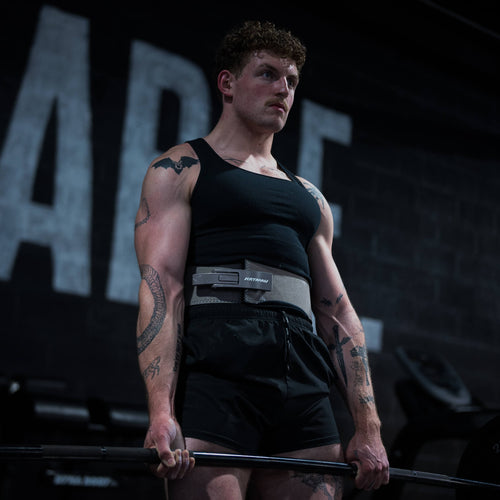
A lever belt should close tight enough to provide a firm bracing surface, but not so tight that you cannot draw a full breath into your abdomen and sides. The lever buckle gives you a consistent closure every time, which is one reason serious lifters prefer it over constantly adjusting a prong belt.
The catch is that lever belts are less convenient to adjust between sets. Most designs require moving screws to change the sizing position. That means your fit needs to be intentional. Measure around the area where you actually wear the belt, not your jeans waist, and follow the brand’s sizing chart instead of guessing from pant size.
Your ideal setting may also change across a training block. Some lifters want a slightly tighter setting for a heavy single and a touch more room for higher-rep work or a post-meal session. If your waist measurement sits right at the edge of a size range, consider how you expect to use the belt before committing.
A quality buckle matters here. It should feel secure, open predictably, and hold its setting without creating unnecessary hassle. The belt leather and buckle work as one system. Premium materials are not just about appearance - they affect the confidence you have when you step under a loaded bar.
What Break-In Really Feels Like
A new lever belt, especially a 13mm model, can feel stiff enough to question your purchase. That is normal. The leather needs repeated use to mold to your torso and movement patterns. You should expect a firm belt at first, not one that immediately feels soft.
Break it in through training, not shortcuts that damage the leather. Wear it during your working sets, gradually find the position that feels strongest, and let it adapt over time. Bending or rolling a belt aggressively may speed up softness, but it can also create unwanted creases and reduce the clean structure you paid for.
Do not confuse break-in discomfort with a poor fit. Mild stiffness is expected. Sharp pinching, breathing restriction, rib pain, or constant contact with the hips is a sign that the sizing, placement, or thickness may be wrong for you.
The Best Thickness for Your Next Heavy Session
For most lifters, 10mm is the smart starting point: powerful support, easier movement, and less punishment while you build your bracing skill. For experienced athletes whose training is built around heavy, low-rep barbell work, 13mm can provide the rigid feel they want when the bar gets serious.
Katamu lever belts are built for lifters who want their gear to perform with the same intent they bring to the platform and the rack. Choose the thickness that makes you want to take the next plate, not the thickness that looks toughest on a product page. Your belt should reinforce your discipline every time you lock the lever and step into the set.
