 30-Day Money Back Guarantee

Miss your belt size and everything feels off - too loose to brace hard, too tight to get air, too awkward to trust under a heavy set. If you’ve been asking what size lever belt for me, the answer starts with one thing most lifters get wrong: you do not buy a lever belt based on your jeans size.
A lever belt is built for pressure, not casual wear. It needs to lock in around your actual torso where you lift, not where your pants sit, and not what size tag you wore last year. Get that right, and the belt feels like part of your setup. Get it wrong, and even a premium belt feels like a mistake.
What size lever belt for me depends on where you measure
The cleanest way to size a lever belt is to measure your waist with a soft tape around the spot where the belt will sit during your main lifts. For most people, that is around the navel or slightly above it. Stand relaxed, not flexed, and do not suck in your stomach. You want a real number, not an optimistic one.
This matters because lever belts are more fixed than prong belts. A prong belt gives you faster micro-adjustments from hole to hole. A lever belt gives you speed and consistency, but the fit needs to be more deliberate from the start. That is the trade-off. If your bodyweight swings often through bulking, cutting, or water shifts before a meet, sizing becomes even more important.
If you are between sizes, do not guess based on what sounds more comfortable. Look at the brand’s measurement range and think about where your current waist falls inside that range. The best place to land is usually near the middle, not the very top or bottom, because it gives you room to adjust the lever position later.
Ignore pant size and use lifting measurements
Pant sizes are a bad reference point for belts. Different brands cut their waists differently, denim stretches, and most people wear pants lower than a lifting belt sits. A 34 in one brand can fit like a 32 or 36 somewhere else. That is why lifters who order by jeans size so often end up returning belts.
Your lifting measurement is what counts. If your waist at belt position measures 35 inches, that is the number that should guide your decision. Not your joggers, not your work pants, and definitely not the size you hope to be after the next cut.
A good rule is simple: buy for the body you are lifting with now. Belts are performance gear. They should match your current training, not your future plans.
How a lever belt should actually fit
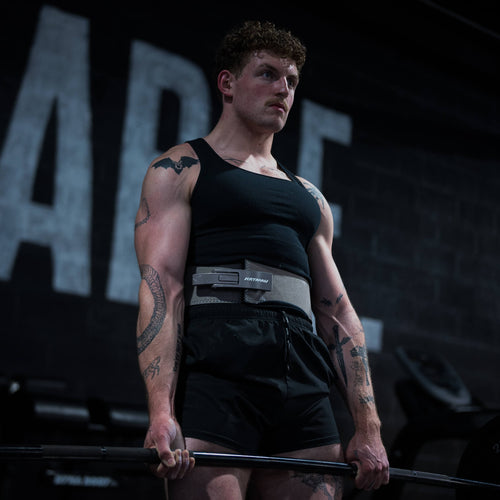
A properly sized lever belt should feel snug before you even start bracing. Once you take a deep breath and push into it, the belt should feel secure and solid without crushing your ability to expand your torso. You want pressure to push against, not a cage that kills your setup.
If the belt closes easily but still floats or shifts when you squat or pull, it is probably too big. If you have to fight for every breath or the belt pinches so hard that you change your mechanics just to wear it, it is probably too small.
There is also a difference between "tight" and "effective." A lot of newer lifters assume tighter automatically means more support. It does not. The belt works when you can create pressure into it. If it is so tight that you cannot brace well, you lose the whole point.
The biggest fit mistakes lifters make
The first mistake is measuring your waist cold and then expecting the belt to fit the same during a hard session. Training pumps, food, sodium, and hydration can all change how a belt feels. That does not mean you should size up dramatically. It means you should choose a size that gives you some adjustment range and understand that fit can vary slightly from day to day.
The second mistake is buying a belt for only one lift. Your squat position, deadlift setup, and even machine work may put the belt in slightly different places. Some lifters like the exact same setting for everything. Others need to move the lever position depending on the day. If you know one lift feels much tighter than another, that is normal. It is one reason mid-range sizing is usually smarter than sizing to the extreme end.
The third mistake is ignoring torso shape. Two lifters can have the same waist measurement and different experiences with the same belt. A shorter torso may feel more crowded by a belt, especially in the deadlift. A longer torso may tolerate the same setup more easily. Size is still based on measurement, but comfort depends on build and movement.
Why lever belts feel different from prong belts
If this is your first belt, you should know why the feel can surprise people. Lever belts are known for fast on and off use, a locked-in closure, and a more consistent fit once adjusted. That makes them a favorite for lifters who want repeatable support every session.
The trade-off is flexibility. A prong belt lets you change holes quickly between lifts, between sets, or when your bodyweight fluctuates. A lever belt usually needs a screwdriver to move the lever position. That does not make it worse. It just makes it more exact.
For a lot of serious lifters, exact is the point. Once the fit is dialed in, the belt becomes part of the ritual. Same tightness. Same brace. Same standard every time.
What if you are between sizes?
If you are right between two sizes, the better choice depends on how you train and how your body changes through the year. If you are in a gaining phase, sit at the top of one range, and want room to grow, the larger size can make sense. If you are cutting, sit at the lower end of a range, and prefer a more aggressive fit, the smaller one may be the better move.
Still, there is a limit. Do not size down just because you want the belt to feel hardcore. A belt that is too small will fight your brace and make setup miserable. Do not size up because you are worried a snug fit means discomfort either. A lever belt is supposed to feel serious. Comfort is not the same as looseness.
If your measurement sits almost exactly in the center of one size range, that is usually your answer. No drama. No overthinking.
Width, thickness, and your build matter too
When people ask what size lever belt for me, they usually mean waist size. But overall fit is also affected by the belt’s width and thickness. A standard 4-inch lever belt is a classic choice for powerlifting because it gives broad, consistent support. For many lifters, that is the sweet spot.
But not every torso loves a thick, wide belt the same way. If you are shorter through the trunk, a stiff 4-inch belt can feel like it runs into your ribs and hips at the same time. That does not mean the waist size is wrong. It means the belt style may feel more aggressive on your frame.
Thickness changes the feel too. A thicker belt can feel more rigid and supportive under maximal loads, but it may need more break-in and feel less forgiving at first. If you are newer to belt training, that first session can feel intense. Give it some time before assuming the size is wrong.
How to check if your current belt size is wrong
Your belt size is probably off if you always close it on one of the last possible settings, or if you are maxed out in the opposite direction with nowhere to go. It is also a warning sign if the belt consistently shifts during heavy work, digs in so badly that you avoid using it, or changes your lifting position in a way that feels unnatural.
A belt should support your brace, not become the main thing you think about during the set. You should notice it, but you should not be fighting it.
If you already own a lever belt and the fit is close, check the lever placement before writing it off. Small adjustments can make a major difference. Sometimes the belt is not the wrong size. It is just set wrong.
The smart way to choose once and lift with confidence
Measure at your lifting position. Compare that number to the size chart. Aim for the middle of the range when possible. Think honestly about whether your bodyweight is stable, climbing, or dropping. And remember that a lever belt should feel tight enough to brace against, not loose enough to forget.
That is the real answer to what size lever belt for me. It is less about guessing your clothing size and more about choosing a belt that matches how you actually train. When the fit is right, the belt does what premium gear should do - it disappears into your process and shows up when the weight gets serious.
Pick for performance, not wishful thinking. Your next heavy set will tell you if you got it right.
