 30-Day Money Back Guarantee

Powerlifting demands more than just raw strength and dedication. The right powerlifting apparel can make the difference between a successful lift and a missed attempt, between staying comfortable during training and dealing with unnecessary distractions. Whether you're preparing for your first competition or you're a seasoned lifter looking to upgrade your gear, understanding the landscape of powerlifting apparel helps you make informed decisions that support your performance goals. From federation-approved singlets to supportive accessories, the world of lifting gear has evolved significantly, offering athletes more options than ever before while maintaining strict standards for competitive integrity.
Understanding Competition Powerlifting Apparel Requirements
When you step onto the platform at an official powerlifting meet, your clothing choices aren't entirely your own. Different powerlifting federations maintain specific requirements for what lifters can wear during competition, and these regulations exist to ensure fairness and safety across all competitors.
The World Powerlifting organization outlines approved equipment specifications that cover everything from singlets to footwear. Understanding these requirements before competition day prevents embarrassing disqualifications and ensures you can focus entirely on your lifts.
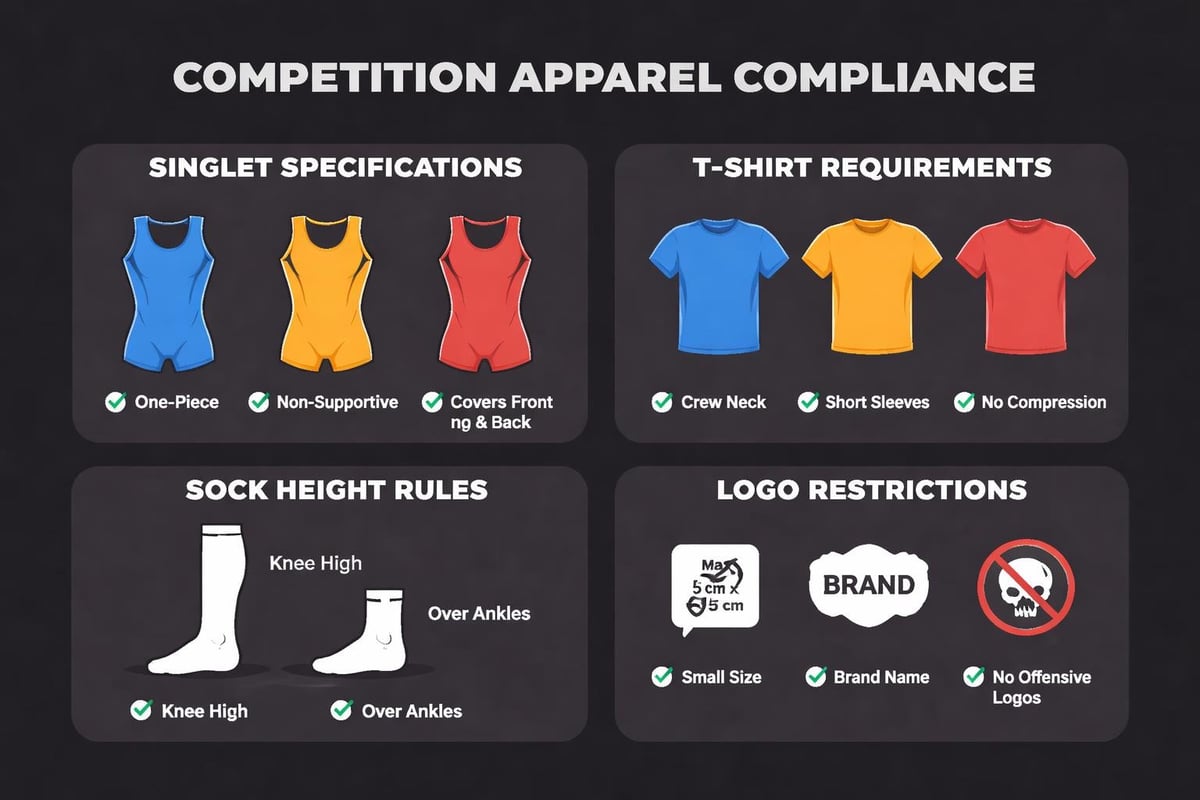
Key competition apparel requirements typically include:
- Form-fitting singlets that don't cover the knees or elbows
- Approved t-shirts worn under the singlet (crew neck or v-neck)
- Specific sock height requirements for deadlifts
- Footwear with defined sole thickness limitations
- Restrictions on visible logos and branding
The USA Powerlifting apparel policy updates regularly clarify what's permissible on the platform, particularly regarding logos and emblems that can appear on competition attire. These updates help maintain uniformity while allowing some personal expression through approved gear choices.
Navigating Federation-Specific Gear Lists
Different powerlifting federations maintain their own approved equipment lists, which can create confusion for athletes who compete across multiple organizations. The IPF approved apparel and equipment list provides comprehensive guidance for International Powerlifting Federation competitions, valid through December 31, 2026.
These approved lists aren't static documents. Federations regularly add or remove manufacturers based on testing and compliance reviews. For instance, the IPF recently announced STOIC's removal from their approved list, effective after December 2026, demonstrating how these requirements evolve.
Athletes competing at the youth level face additional considerations. The USA Powerlifting youth guidelines emphasize proper technique alongside approved apparel specifications, recognizing that young athletes are still developing their lifting form and need gear that supports safe progression.
Essential Training Powerlifting Apparel
While competition requires strict adherence to federation rules, your training apparel choices offer much more flexibility. The right training gear balances comfort, functionality, and durability to support consistent progress in the gym.
Quality training powerlifting apparel should withstand the rigors of heavy lifting sessions week after week. Unlike regular gym clothes, lifting-specific gear addresses the unique demands of squats, bench press, and deadlifts through reinforced construction and strategic design features.
Core Training Wardrobe Components
| Apparel Type | Primary Function | Key Features |
|---|---|---|
| Performance Shorts | Mobility and comfort | Stretchy fabric, reinforced seams, squat-friendly |
| Training Singlets | Movement freedom | Breathable, non-restrictive, durable |
| Compression Gear | Support and recovery | Graduated compression, moisture-wicking |
| Technical T-Shirts | Versatility | Breathable, quick-dry, reinforced stitching |
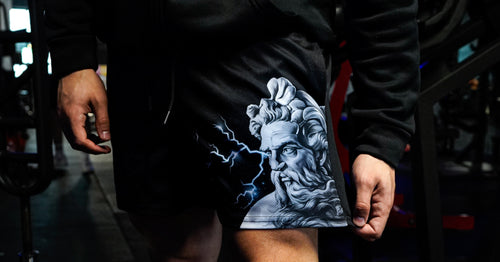
Many serious lifters build their training wardrobe around performance shorts that can handle deep squats without restriction. These shorts typically feature gussets and four-way stretch materials that move with your body during compound movements.
Your training apparel should prioritize:
- Durability - Heavy lifting creates friction and stress on fabric
- Range of motion - No restrictions during full depth squats
- Moisture management - Keeping you dry through intense sessions
- Fit consistency - Maintaining shape after repeated washing
The distinction between training and competition powerlifting apparel allows you to experiment with different styles and brands while discovering what works best for your body type and lifting style. Many athletes maintain separate wardrobes for each purpose, using training sessions to test new gear before investing in competition-approved versions.
Supportive Powerlifting Apparel and Accessories
Beyond basic clothing, supportive powerlifting apparel includes specialized equipment designed to enhance performance and reduce injury risk. These accessories bridge the gap between raw lifting and fully equipped divisions, offering varying levels of assistance depending on your competitive category and training goals.
Belts: The Foundation of Heavy Lifting
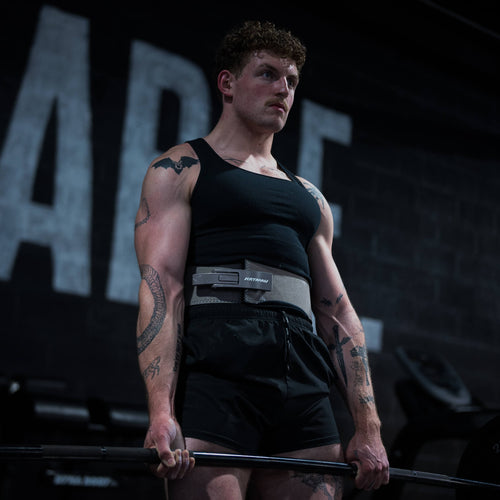
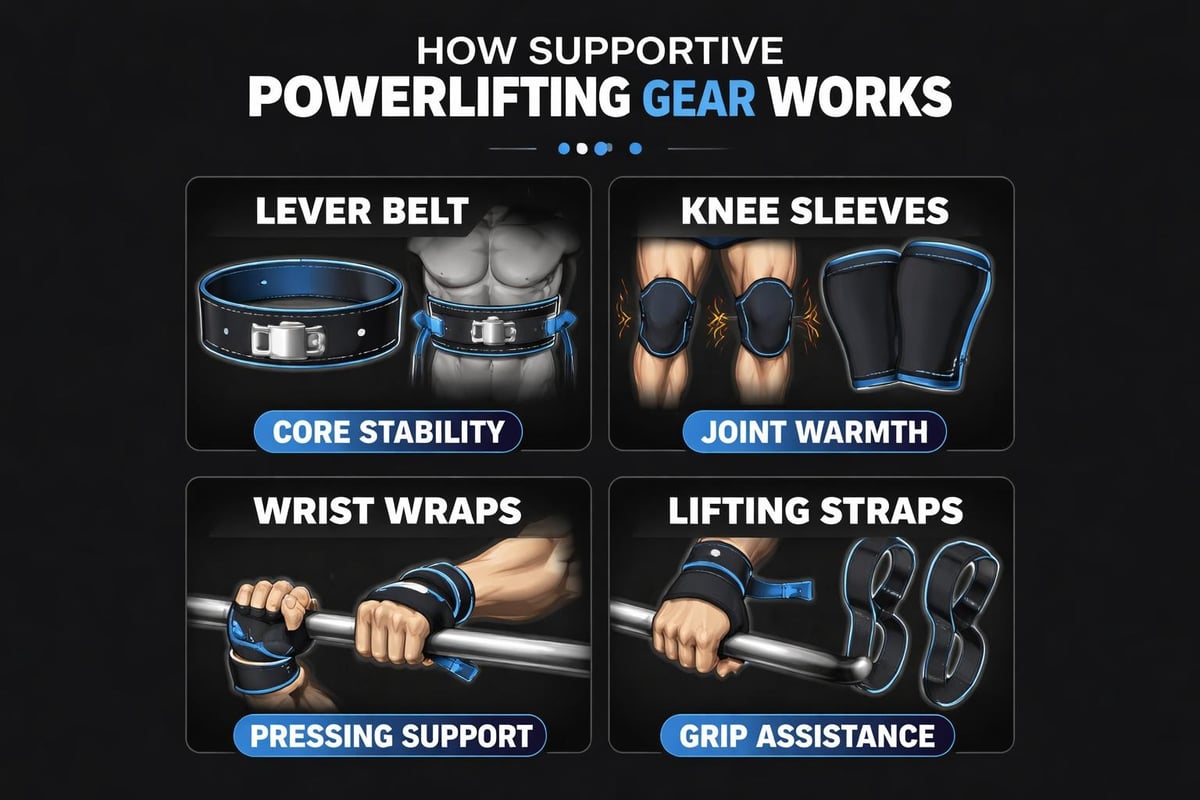
Lever belts represent one of the most important investments in powerlifting apparel for serious athletes. These belts create intra-abdominal pressure that stabilizes your spine during maximal lifts, allowing you to handle heavier weights more safely.
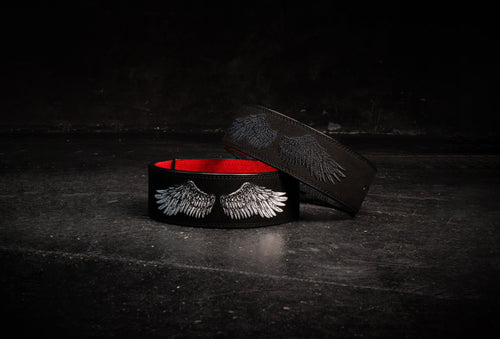
Lever belts from KatamuCo offer the convenience of quick adjustment between exercises while maintaining consistent tightness throughout your session. The lever mechanism ensures you can achieve the same belt tension on every set, unlike prong belts that can vary based on which hole you select.
Premium lever belts should last years with proper care, making them a worthwhile investment compared to cheaper alternatives that break down after months of regular use. Look for belts with reinforced stitching, quality leather or synthetic materials, and robust lever mechanisms that won't fail during heavy attempts.
Knee Sleeves and Joint Support
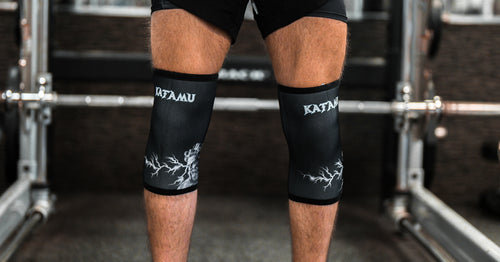
Knee sleeves serve multiple purposes in powerlifting apparel systems. They provide warmth to the joint, light compression for proprioceptive feedback, and minimal rebound assistance out of the bottom of a squat. Unlike knee wraps, which can add significant pounds to your total, sleeves offer support while keeping you in the raw division of most federations.
The thickness of knee sleeves matters considerably. Seven-millimeter sleeves provide moderate support suitable for training and some competitions, while five-millimeter options offer less restriction with lighter support. Your choice depends on preference, knee health, and competition rules.
Wrist Wraps for Pressing Strength
Wrist wraps protect your wrists during heavy pressing movements by preventing hyperextension and providing external stability. Different wrap lengths suit different purposes - shorter wraps (12-18 inches) offer mobility for Olympic lifts and dynamic movements, while longer wraps (24-36 inches) provide maximum support for maximal bench pressing.
Quality wrist wraps feature thumb loops for secure positioning and durable materials that maintain elasticity through hundreds of training sessions. The stiffness of the wrap material determines how much support you receive, with competition-grade wraps offering rigid support compared to more flexible training options.
Specialized Powerlifting Apparel Categories
As powerlifting has grown in popularity, specialized powerlifting apparel categories have emerged to address specific needs within the sport. These niche items serve particular purposes that general gym apparel can't adequately fulfill.
Equipped Lifting Gear
Equipped powerlifting introduces supportive garments that significantly increase the weight you can lift. Bench shirts, squat suits, and deadlift suits use specialized materials and construction to store elastic energy during the eccentric portion of lifts, then release that energy during the concentric phase.
These garments require dedicated practice to use effectively. The learning curve is steep - lifters often experience decreased performance initially as they learn to work with the equipment rather than against it. Equipped lifting represents a distinct discipline within powerlifting, with its own techniques, training methodologies, and community.
| Equipment Type | Primary Lift | Weight Assistance | Learning Difficulty |
|---|---|---|---|
| Bench Shirt | Bench Press | 100-300+ lbs | Very High |
| Squat Suit | Squat | 50-200+ lbs | High |
| Deadlift Suit | Deadlift | 20-100+ lbs | Moderate |
| Knee Wraps | Squat | 30-80 lbs | Moderate |
The Southern Powerlifting Federation rule book provides detailed specifications for equipped gear, illustrating how different federations regulate these performance-enhancing garments. Understanding these rules before investing in expensive equipped powerlifting apparel prevents costly mistakes.
Singlets and Meet Day Essentials
Competition singlets represent perhaps the most recognizable piece of powerlifting apparel. These form-fitting garments allow judges to verify proper depth on squats and observe lockout positions on all three lifts. IPF-approved singlets must meet specific cut and material requirements to ensure compliance across international competitions.
Beyond the singlet itself, meet day requires several additional apparel items. Tall socks for deadlifts prevent bar contact with bare shins (required by most federations), while approved t-shirts under your singlet must meet specific criteria regarding sleeve length and neckline style. The USA Powerlifting Rulebook details these requirements comprehensively, helping athletes prepare complete competition wardrobes.
Training Enhancement Through Smart Apparel Choices
Your powerlifting apparel choices influence training quality in ways that extend beyond mere comfort. Strategic gear selection can improve proprioception, enhance focus, and even contribute to injury prevention when approached thoughtfully.
Smart apparel strategies for training progression:
- Wear competition gear during preparation phases to adapt to the feel and restrictions
- Use supportive accessories progressively, not constantly, to avoid dependency
- Invest in quality basics that won't distract you with discomfort or wardrobe malfunctions
- Maintain separate training and competition wardrobes to extend gear longevity
- Replace worn supportive equipment before it fails during important lifts
Temperature regulation matters more than many lifters realize. Appropriate powerlifting apparel for your gym environment helps maintain optimal body temperature for performance. Too cold and your muscles stay tight and prone to strain; too warm and you fatigue prematurely from heat stress.
Matching Apparel to Training Phases
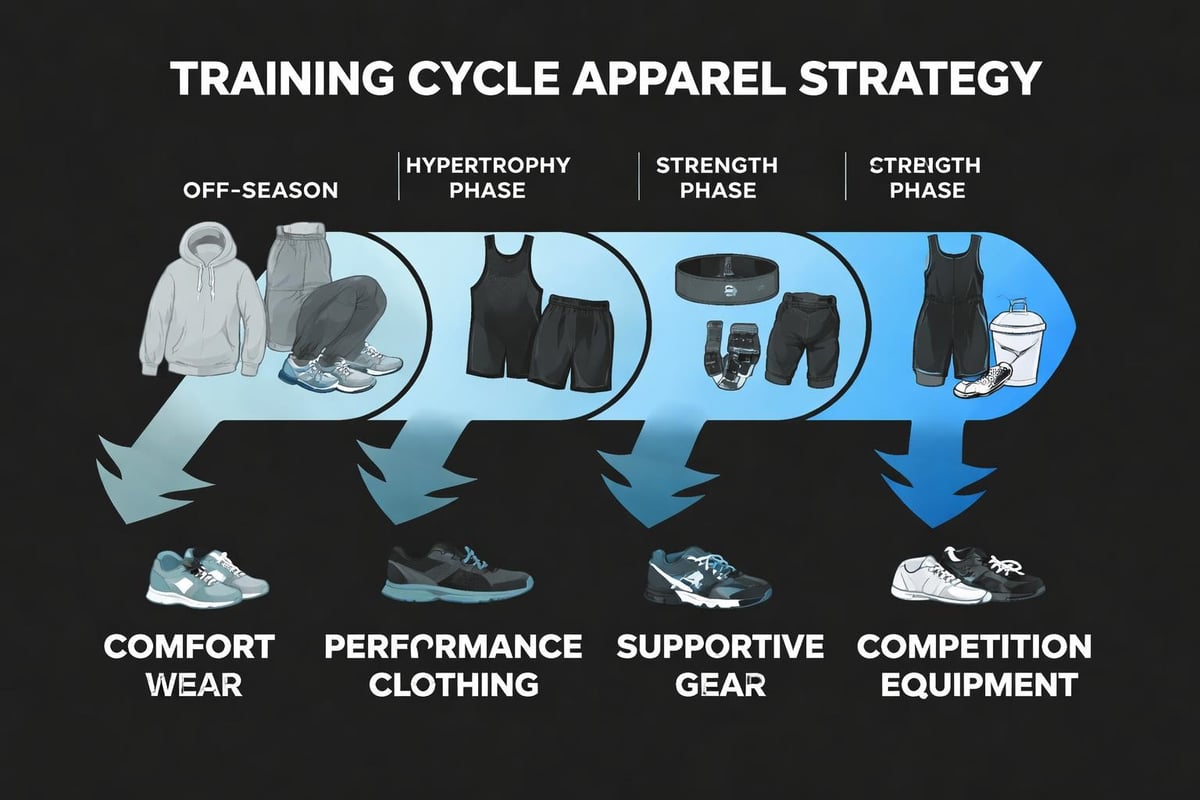
Periodized training benefits from corresponding apparel choices. During hypertrophy phases with higher volume and moderate intensity, comfort-focused powerlifting apparel helps you complete demanding workouts without restriction. Mesh shorts and breathable tops support the high-rep work that builds muscle mass during these blocks.
As you transition into strength phases, introducing supportive equipment gradually helps you adapt to the feel of belts, sleeves, and wraps while building maximal force production. Peak phases before competition should include regular practice with all competition gear, ensuring nothing feels unfamiliar on meet day.
This periodized approach to powerlifting apparel prevents overreliance on supportive equipment while ensuring you're comfortable and confident when wearing it during competition. Athletes who train exclusively with or without support often struggle when competition rules differ from their training norm.
Building Your Powerlifting Apparel Collection
Starting powerlifting doesn't require a massive initial investment in specialized apparel. Strategic purchasing allows you to build a functional wardrobe over time, prioritizing items that deliver the most value for your current training stage and competitive goals.
Priority Purchases for Beginners
Phase One - Training Essentials:
- Quality performance shorts or training pants
- Moisture-wicking shirts
- Proper lifting footwear with stable soles
- Basic gym duffle bag for gear transport
Phase Two - Supportive Gear:
- Lever belt for core stability
- Knee sleeves for joint warmth
- Wrist wraps for bench pressing
- Lifting straps for accessory work
Phase Three - Competition Preparation:
- Federation-approved singlet
- Competition t-shirt and socks
- Meet day backup equipment
- Additional accessories as needed
This phased approach spreads costs across your lifting journey while ensuring you have appropriate powerlifting apparel for each training stage. Rushing to purchase everything immediately often results in buying wrong sizes, incompatible equipment, or federation-non-compliant gear that can't be used in competition.
Many lifters also benefit from exploring crosstraining equipment options that complement powerlifting training. Resources like DoubleUnders, which specializes in premium crosstraining equipment, offer conditioning tools that support powerlifters' accessory work and cardiovascular fitness between heavy sessions.
Quality Versus Quantity Considerations
Premium powerlifting apparel costs more upfront but delivers better value over years of use. A quality lever belt might cost three times as much as a budget option, yet last ten times longer while providing superior support and comfort throughout its lifespan. The same principle applies to knee sleeves, wrist wraps, and other supportive accessories.
| Factor | Budget Gear | Premium Gear |
|---|---|---|
| Initial Cost | $20-50 | $80-150 |
| Typical Lifespan | 6-12 months | 3-5+ years |
| Performance Support | Basic | Optimized |
| Competition Legal | Sometimes | Usually |
KatamuCo's bestsellers demonstrate what serious lifters prioritize when investing in gear. These popular items combine durability with design, offering functionality that supports performance goals while looking sharp in the gym or on the platform.
Durability becomes especially important for training powerlifting apparel that sees frequent use. Shorts that develop holes after a few months of squatting, or belts whose lever mechanisms fail mid-session, create frustration and disrupt training consistency. Premium options from reputable manufacturers avoid these pitfalls through superior materials and construction quality.
Maintaining and Caring for Powerlifting Apparel
Proper care extends the lifespan of your powerlifting apparel significantly, protecting your investment while ensuring gear performs consistently. Different apparel types require specific maintenance approaches based on their materials and construction.
Leather and Synthetic Belt Care
Lever belts demand particular attention to maintain their structural integrity and appearance. Leather belts benefit from occasional conditioning with leather care products that prevent drying and cracking. Store belts flat or loosely rolled rather than tightly coiled, which can create permanent creases that affect fit and function.
Synthetic belts require less intensive care but still benefit from regular cleaning to remove sweat and chalk residue. Most synthetic materials can be wiped down with damp cloths, though checking manufacturer recommendations prevents damage from inappropriate cleaning products.
Belt maintenance checklist:
- Clean after every 5-10 training sessions
- Condition leather quarterly
- Inspect lever mechanism monthly
- Store away from direct sunlight and heat
- Replace when structural integrity compromises
Washing Supportive Accessories
Knee sleeves, wrist wraps, and other fabric-based powerlifting apparel accumulate sweat, chalk, and bacteria quickly. Hand washing in cold water with mild detergent preserves elasticity better than machine washing, though some products specifically permit machine washing on gentle cycles.
Air drying is essential for neoprene knee sleeves. Heat from dryers degrades the material, reducing compression and shortening product life. Wrist wraps similarly benefit from air drying, which helps maintain the elastic properties that provide wrist support.
Never use fabric softener on performance powerlifting apparel. These products coat fibers in ways that reduce moisture-wicking properties and can degrade elastic materials over time. Similarly, bleach and harsh detergents break down technical fabrics, making them less effective and shortening their usable lifespan.
Seasonal and Environmental Powerlifting Apparel Considerations
Training environments vary dramatically based on geography and season, requiring adaptable powerlifting apparel strategies that maintain performance year-round. What works in climate-controlled commercial gyms may prove inadequate in garage or outdoor training spaces.
Cold weather training demands layers that warm muscles without restricting movement. Starting workouts in pump covers or long sleeves, then stripping down as body temperature rises, prevents muscle strains while avoiding overheating during working sets. Technical fabrics that wick moisture prevent the clammy feeling that comes from training in cotton when transitioning from warm-up to heavy lifting.
Hot weather and poorly ventilated training spaces require maximum breathability in your powerlifting apparel choices. Lightweight, moisture-wicking materials help regulate body temperature, while lighter colors reflect heat better than dark alternatives. Some lifters find chalk alternatives or liquid chalk helpful in hot conditions where traditional chalk becomes pasty when mixed with excessive sweat.
Home Gym Versus Commercial Facility Apparel
Training location influences appropriate powerlifting apparel beyond just environmental factors. Commercial gyms often enforce dress codes that require shirt wearing and prohibit certain styles. Home gym training offers complete freedom in apparel choices, allowing lifters to wear (or not wear) whatever optimizes their comfort and performance.
This freedom can be advantageous for testing different competition singlet fits or practicing with minimal clothing to improve movement awareness. However, lifters training exclusively at home should periodically practice with full competition apparel to avoid surprises on meet day when clothing rules apply.
Selecting the right powerlifting apparel enhances your training experience, supports your performance goals, and ensures competition readiness when meet day arrives. From federation-approved singlets to supportive accessories, each piece of gear serves specific purposes that contribute to your lifting success. KatamuCo provides premium lifting gear built to last through years of demanding training, offering lever belts, knee sleeves, wrist wraps, and other essential powerlifting apparel that combines quality construction with designs that look as good as they perform. Whether you're preparing for your first meet or working toward a new total, the right gear makes every training session more effective.
