 30-Day Money Back Guarantee

You feel it when the bar gets heavy. Not just in your quads and lungs, but in your knees - that split second where you want more confidence coming out of the hole. That’s why the best knee sleeves for lifting matter. Good sleeves do not turn weak positions into strong ones, but they can give you warmth, compression, and a more locked-in feel when the weight starts fighting back.
The problem is that most lifters shop for knee sleeves the wrong way. They either buy the stiffest pair they can find because it sounds more serious, or they grab a cheap pair that stretches out after a few hard sessions. Neither move helps much. The right sleeve depends on how you train, how much support you actually want, and whether you care more about rebound, comfort, or all-day wearability.
What makes the best knee sleeves for lifting?
At the highest level, a knee sleeve needs to do three things well: stay in place, deliver consistent compression, and hold up under repeated heavy training. If it slides down during squats, cuts circulation, or loses tension after a few weeks, it is not built for serious work.
Compression is the main reason most lifters wear sleeves. A properly fitted sleeve gives the knee joint a secure, pressurized feel that many athletes notice immediately on squats, lunges, leg press, and even machine work. That feeling alone can improve confidence under load. For some lifters, especially those training hard multiple times per week, warmth is just as valuable. Warm knees tend to feel better through volume, especially if your training includes deep flexion and back-to-back lower-body sessions.
Then there is rebound. Not every knee sleeve gives much of it. Softer sleeves feel more natural and less restrictive, while stiffer sleeves can offer a stronger pop out of the bottom of a squat. That does not automatically make stiff sleeves better. It just means they serve a different purpose.
Thickness matters more than most people think
When people talk about the best knee sleeves for lifting, they usually start with thickness. That makes sense because thickness changes how a sleeve feels almost immediately.
5mm knee sleeves
A 5mm sleeve is usually the most versatile option. It gives solid compression and warmth without making every leg movement feel overly restricted. If you train across bodybuilding, general strength work, accessories, and occasional heavy squats, 5mm tends to hit the sweet spot. It is also a strong choice for lifters who want support but do not want to wrestle their sleeves on and off between exercises.
For a lot of gym athletes, 5mm is the best everyday option. It works well for higher-volume leg days, mixed sessions, and lifters who care about comfort as much as support.
7mm knee sleeves
A 7mm sleeve is the more serious choice for heavy lifting, especially powerlifting-style training. It feels denser, tighter, and more aggressive around the joint. If your priority is squatting heavy and you want maximum support from a sleeve, this is usually where you land.
The trade-off is obvious. A 7mm sleeve can feel too stiff for longer workouts, accessory circuits, or lifters who prefer a more natural knee bend. Great for top sets and strength-focused sessions. Not always ideal for everything else.
Fit decides whether the sleeve works
You can buy premium material, strong stitching, and the right thickness, then ruin all of it with the wrong size. Fit is the difference between support and distraction.
A good knee sleeve should feel tight enough that pulling it on takes effort, but not so tight that your foot goes numb or the sleeve digs painfully into the back of your knee. Once it is on, it should stay put through your full range of motion. If it bunches, slides, or twists, the sizing is off or the construction is weak.
Some lifters intentionally size down for a more competition-style fit, especially in 7mm sleeves. That can work if you want maximum compression and do not mind the struggle. But for most people, especially if you train for an hour or more and move beyond just squat singles, an ultra-tight fit becomes annoying fast. The best choice is usually the tightest fit you can wear without turning the session into a battle against your gear.
Material and build quality separate real training gear from throwaway gear
Not all neoprene feels the same. Better sleeves hold their shape, keep their compression, and resist stretching out. Cheap sleeves often feel decent on day one, then start loosening after repeated sessions, sweat, and washing.
Stitching matters too. Heavy lifters put a lot of stress on seams when they pull sleeves on and when they hit deep knee flexion under load. Weak stitching fails early. Reinforced seams and durable panel construction are not flashy features, but they are the reason one pair survives months of hard training while another tears in your gym bag.
This is where premium gear earns its price. If you train hard, low-quality sleeves are not a bargain. They are just a shorter path to buying again.
Which lifter needs which type of sleeve?
The best sleeve depends on your training style.
If you are a powerlifter or strength-focused athlete chasing bigger squat numbers, a firmer 7mm sleeve usually makes the most sense. You want tight compression, strong support, and some rebound in the bottom position. Comfort matters, but performance matters more.
If you are a bodybuilder or general gym lifter, 5mm sleeves often fit better into your sessions. You may be doing hack squats, split squats, leg press, lunges, and extensions in one workout. In that setting, flexibility and comfort count. You still want support, but not at the cost of movement.
If you are newer to sleeves, start with versatility over maximum stiffness. A sleeve you actually wear every week beats a stiffer pair that stays in your locker because it feels like overkill.
When knee sleeves help - and when they do not
Knee sleeves can absolutely improve how training feels. They can make warm-ups smoother, heavy sets feel more stable, and high-volume leg work less irritating on the joints. For many athletes, they also provide a mental edge. Feeling secure under the bar is not fake. Confidence changes execution.
But sleeves are not magic. They do not fix poor squat mechanics, rushed warm-ups, weak bracing, or programming that beats your joints into the ground. If your knees hurt because your technique is off or your recovery is trash, sleeves may help you tolerate the problem for a while, not solve it.
That is the real trade-off. Great sleeves support good training. They should not become a mask for bad training.
Features worth paying for
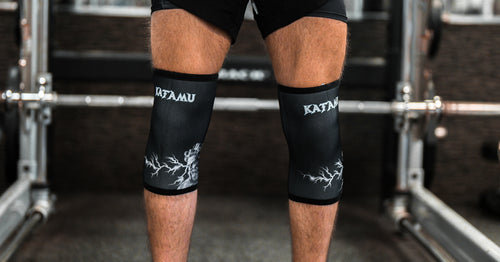
If you are comparing options, focus less on hype and more on what actually changes performance. Compression consistency, anti-slip fit, durable seams, and quality neoprene are worth your money. A shaped design that matches the bend of the knee can also make a big difference in comfort and security.
Aesthetics matter too, especially if your gear is part of how you show up in the gym. There is nothing wrong with wanting sleeves that perform hard and look sharp. Serious lifters care about both. Gear is functional, but it is also part of identity. That is one reason brands like Katamu hit differently when they pair premium performance with a stronger visual edge.
Just do not let style outrank function. The cleanest sleeve in the gym is useless if it rolls down on your second set.
How to choose without overthinking it
If your training is built around heavy squats, go with 7mm and a snug fit. If your leg days are more mixed and volume-heavy, choose 5mm. If you want one pair to handle most sessions, lean toward comfort, quality construction, and secure compression over the most aggressive feel possible.
Be honest about how you train. Not how you imagine yourself training on your most locked-in day, but how your actual weeks look. The best gear matches your real workload.
Also think long term. A strong pair of sleeves should survive regular use, repeated wash cycles, and the abuse of being stuffed into a gym bag. If a pair feels cheap in your hands, it usually performs cheap under the bar.
A good sleeve does not need to feel dramatic to be effective. Sometimes the best one is the pair you barely think about because it just works every session.
Heavy training asks a lot from your knees. Give them gear that matches the standard you bring to the rack, and every rep starts to feel a little more dialed in.
