 30-Day Money Back Guarantee


A heavy squat does not expose weak legs first. It exposes a weak position. When the bar starts folding you forward or your low back loses tension out of the hole, the question is often the same: can lifting belts improve bracing enough to keep the lift locked in? Yes, they can - but only when you know how to use one. A belt is not a substitute for trunk strength. It is a tool that gives a trained brace something solid to push against.
For serious lifters, that distinction matters. You do not put on a belt to become passive under the bar. You put it on to create more pressure, more awareness, and a more repeatable position when the load demands it.
How Lifting Belts Improve Bracing
Bracing is the act of creating stiffness through your torso before and during a lift. You breathe into your midsection, contract your trunk, and maintain that pressure while moving through the rep. The goal is not to suck your stomach in. It is to make your torso rigid enough to transfer force from the floor through your body and into the bar.
A lifting belt gives your abdomen external resistance. When you take a deep breath and expand your trunk into the belt, your abdominal wall has a firmer surface to press against. That can increase intra-abdominal pressure and make it easier to create the 360-degree brace lifters need under demanding squats, deadlifts, overhead presses, and loaded carries.
Think of it this way: the belt does not brace for you. Your trunk creates the brace. The belt gives that brace a stronger boundary.
That added feedback is often just as valuable as the physical support. Many lifters can tell the difference immediately between a loose breath in the chest and a full breath that expands the front, sides, and back of the torso. If your belt feels equally tight all the way around when you brace, you are closer to the right position. If all the pressure is pushing forward into the buckle, there is work to do.
The Belt Does Not Fix a Weak Brace
A belt can make a good bracing pattern stronger. It can also hide a poor one for a while.
If you take a shallow breath, relax at the bottom of a squat, or let your ribs flare as you pull from the floor, a belt will not turn that into clean technique. You may still move the weight, but the rep will be less stable and harder to repeat. The belt becomes useful when it reinforces a skill you are actively practicing.
This is why newer lifters do not need to wait until they are "advanced" to learn belt use, but they should not make every warm-up set dependent on it either. Build the ability to brace beltless with lighter and moderate loads. Then use the belt as intensity rises, when you want more support and consistency without changing the movement itself.
There is also a confidence effect. Feeling secure under a heavy bar can help you commit to a rep instead of hesitating halfway through it. That is useful, provided confidence is backed by sound setup, appropriate loading, and honest technique. A belt should raise your standard for execution, not give you permission to rush it.
How to Brace Into a Lifting Belt
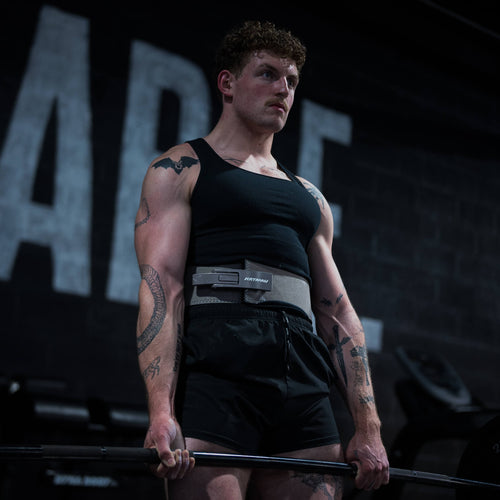
The setup starts before you touch the bar. Place the belt around your midsection, typically above the hip bones and below the ribs. The best position varies by body shape and lift. A deadlifter with a long torso may wear it slightly differently than a squatter who needs room to hit depth. The right placement is the one that lets you hinge, squat, and breathe hard without the belt digging in or shifting.
Tightness matters, but tighter is not automatically better. You should be able to get a full breath into the belt before a working set. If the belt is cranked down so aggressively that you cannot expand your abdomen, you have removed the reason for wearing it. On the other hand, if it spins around your waist or offers no resistance when you brace, it is too loose to do its job.
Before your rep, stack your ribs over your pelvis instead of flaring your chest upward. Take a deep breath low into your torso. Expand into the front, sides, and back of the belt. Then contract your abs as though you are preparing to absorb contact. Keep that pressure as you unrack, descend, or pull slack from the bar.
For a squat, many lifters take their biggest breath at the top, brace hard, and hold pressure through the most demanding portion of the rep before resetting at lockout. For a deadlift, establish your breath and brace before initiating the pull, then avoid losing position as the bar leaves the floor. Heavy reps are not the time to search for pressure. Build it before the movement begins.
Avoid Pushing Only Into the Front
The most common belt mistake is treating it like a surface for your stomach alone. A powerful brace expands all around the torso. If you only drive forward, you can lose tension through the sides and back, where you need stability just as badly.
Use the belt as a cue: fill its entire circumference. This takes practice, especially if you are used to chest breathing. Start with unloaded drills or light sets. Put your hands on the sides of the belt, breathe low, and feel your obliques press outward. Then take that same pattern to the bar.
Keep Your Technique Lift-Specific
Belts are not worn exactly the same for every movement. A position that feels perfect for low-bar squats may pinch during conventional deadlifts. An athlete with a shorter torso may need more adjustment than someone with extra space between ribs and hips.
Do not copy another lifter's belt height, notch setting, or ritual just because their total is bigger. Experiment at manageable weights. Your goal is simple: the belt should allow a full brace and stable mechanics without interfering with your range of motion.
When a Belt Is Worth Wearing
A belt earns its place when the load, exercise, and training goal call for it. On top sets, heavy volume work, and demanding compound movements, it can help you maintain pressure as fatigue builds. It is especially useful when your limiting factor is torso stability rather than leg or pulling strength.
It may be less necessary for lighter technique work, isolation exercises, or sessions where you are deliberately developing beltless control. Neither approach is morally superior. Training without a belt has value. Training with one has value. The smart move is knowing what each set is meant to develop.
For example, if you are learning to squat with a clean, controlled pattern, spend enough time beltless to understand how a proper brace feels. When you are building toward a heavy set where small positioning errors become expensive, belt up and use the extra feedback. That is not dependence. That is using equipment with intent.
Choosing a Belt That Supports Your Training
A belt should feel stable, secure, and built for repeated hard sessions. The closure needs to stay locked when you create pressure, while the belt itself should give you a consistent surface to brace against. Lever belts are a strong choice for lifters who want a fast, firm, repeatable fit from set to set. Once adjusted correctly, the lever removes the guesswork of pulling a prong tight under fatigue.
Comfort still matters. A belt that digs painfully into your ribs, slips on every setup, or distracts you from your lift is not helping your performance. Premium lifting gear should support your ritual, not become another problem to manage between sets. Find the fit that lets you approach the bar with intent, brace hard, and focus on the work.
Katamu lifters know the difference between wearing gear and using it. Your belt is not a costume for heavy days. It is part of the setup - alongside your stance, your grip, your breath, and your discipline.
Can Lifting Belts Improve Bracing for Every Lifter?
They can improve bracing for most lifters, but the size of the benefit depends on skill. A beginner may gain more from learning to breathe and control position than from cinching down a belt immediately. An experienced lifter with a well-practiced brace may notice a meaningful difference as intensity climbs.
Body proportions, mobility, and the lift itself also change the answer. Some athletes feel a dramatic improvement in squats but only a modest change in deadlifts. Others prefer a belt primarily for high-fatigue training blocks. There is no prize for using one all the time or refusing to use one at all.
Treat the belt as a force multiplier. Earn the brace first, then give it something to push against. When the bar gets heavy, that extra structure can be the difference between surviving the rep and owning it.
