
 30-Day Money Back Guarantee

Ready to unlock your full lifting potential? Discover how gym straps can transform your training and help you break through plateaus. In this complete guide, you will learn why gym straps are a must-have in every serious athlete’s gym bag for 2026.
We will cover everything you need to know, including the different types of gym straps, their key benefits, and expert strategies for safer, stronger lifts. Get ready to find the perfect pair, learn pro tips, and maximize your results with the latest innovations and proven techniques.
What Are Gym Straps? Understanding the Basics
Gym straps are essential strength training tools designed to support your grip on heavy weights. Whether you are deadlifting, rowing, or pulling up, gym straps help you hold onto the bar when your hands start to fatigue. By wrapping around both your wrist and the equipment, they transfer some of the load from your grip to your stronger forearm and back muscles, making it easier to push past your limits.
The use of gym straps dates back decades, evolving from simple cloth bands to today’s advanced, ergonomic designs. Originally used by competitive lifters, these accessories have become mainstream as more athletes recognize their benefits. Over time, materials and construction have improved to offer better comfort and security, making gym straps a staple in modern training.
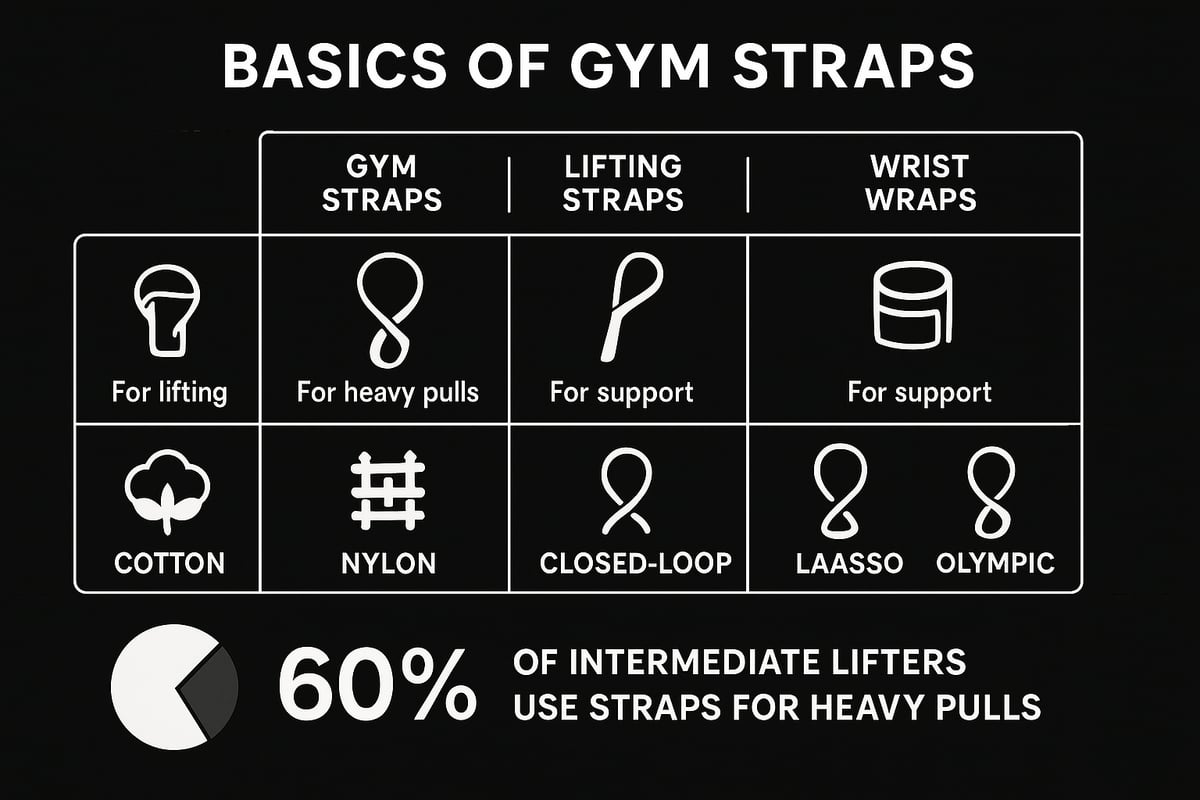
It is important to understand the difference between gym straps, lifting straps, and wrist wraps. While all three offer support, their purposes are distinct. Gym straps and lifting straps are often used interchangeably to help secure your grip on a bar, especially during pulling movements. Wrist wraps, however, are designed to stabilize the wrist joint during pressing exercises, rather than aid grip.
Here is a quick comparison:
| Gear Type | Main Purpose | Typical Use Cases |
|---|---|---|
| Gym Straps | Enhance grip, reduce fatigue | Deadlifts, rows, pull-ups |
| Lifting Straps | Secure grip on heavy lifts | Deadlifts, shrugs |
| Wrist Wraps | Stabilize wrist joint | Bench press, overhead press |
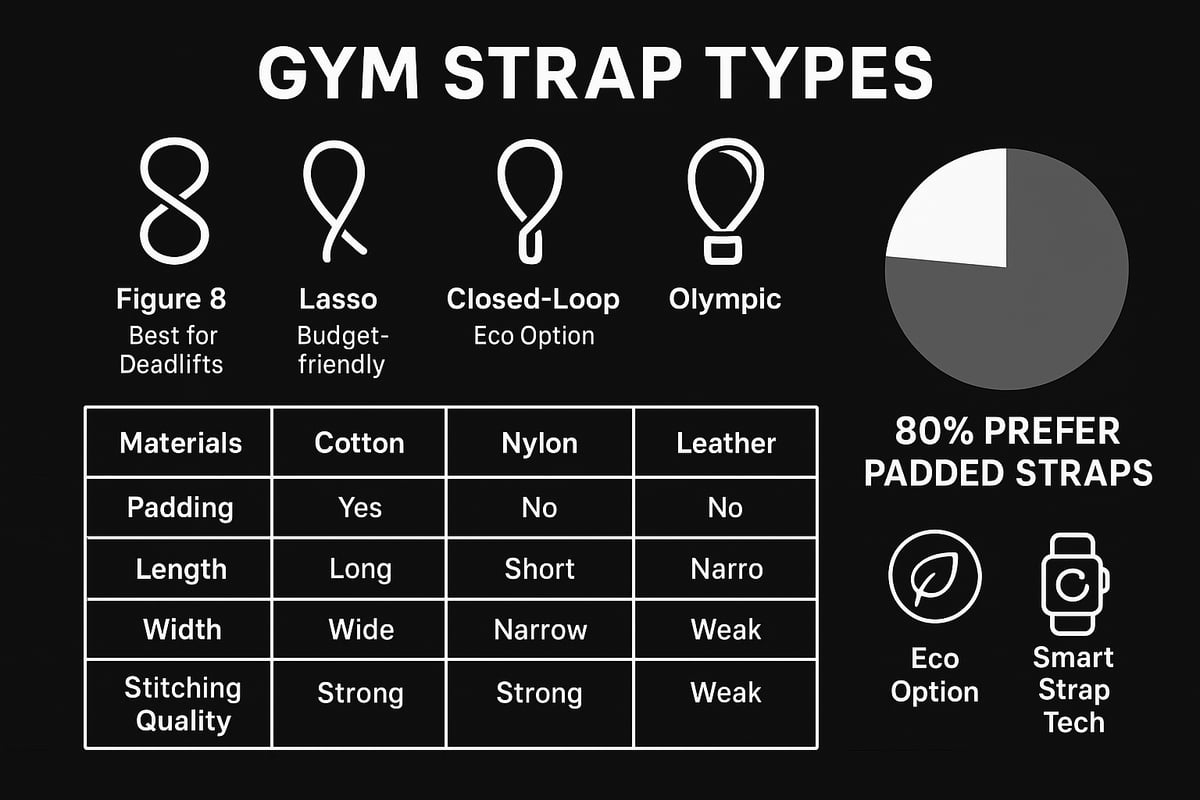
Most gym straps are made from durable materials like cotton, nylon, or leather. Cotton straps are soft and comfortable, making them ideal for beginners. Nylon offers greater strength and less stretch, perfect for heavy lifting. Leather straps are prized for their toughness and longevity. Each material brings unique benefits, allowing lifters to choose the right fit for their goals.
There are several types of gym straps, each tailored for specific lifts. Figure 8 straps offer unmatched security for deadlifts, while lasso straps provide adjustability and versatility for rows and pull-ups. Closed-loop or Olympic straps are popular in weightlifting because they allow for quick release during dynamic lifts. For a more detailed breakdown of the different types and their best uses, check out this straps for weights guide.
Today, gym straps are widely used by powerlifters, bodybuilders, and everyday gym-goers alike. Their popularity stems from the ability to lift heavier and train harder without being limited by grip strength. For example, using gym straps during deadlifts allows athletes to focus on their back and legs instead of worrying about their hands slipping. The same applies to heavy rows and challenging pull-ups where grip fatigue often sets in first.
Statistics show that over 60% of intermediate lifters rely on gym straps for heavy pulling movements, according to industry data from 2024. This highlights just how valuable these simple tools have become for anyone serious about progress in the gym.
Benefits of Using Gym Straps
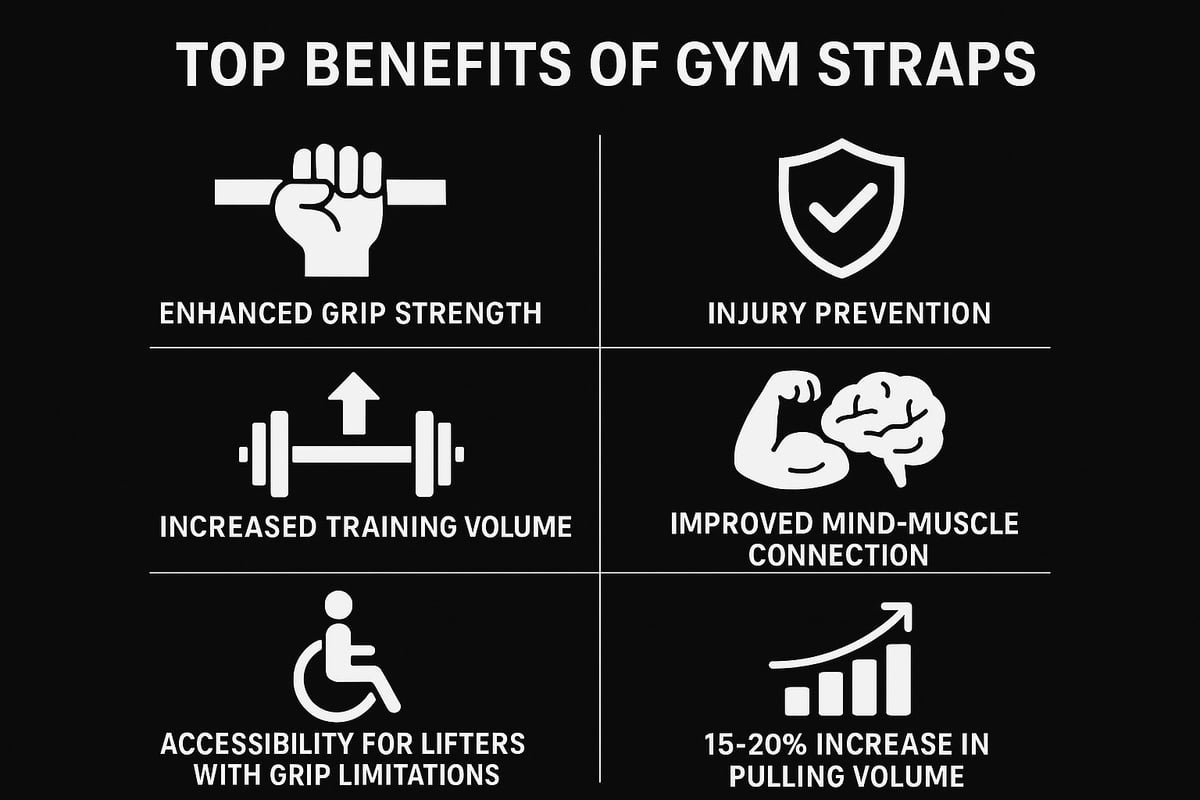
Unlocking your true strength potential often comes down to one thing: your grip. Gym straps are a secret weapon for lifters who want to push past plateaus and get more out of every training session. Let’s explore the key advantages of adding gym straps to your routine.
Enhanced Grip Strength and Performance
One of the biggest frustrations in the gym is when your grip gives out before your muscles do. Gym straps help bridge this gap by supporting your hold on the bar, letting you focus on pulling heavier weights. This is especially useful for deadlifts, rows, and pull-ups where grip fatigue can limit your progress.
Studies show that lifters using gym straps can boost their pulling volume by 15-20%. By removing grip as a limiting factor, you unlock the ability to train harder and longer.
Injury Prevention and Joint Support
Over time, heavy lifting can put a lot of strain on your wrists and forearms. Gym straps act as an extra layer of support, reducing the risk of overuse injuries and helping you maintain proper form. This makes them a valuable tool for both injury prevention and rehabilitation.
For athletes recovering from hand or wrist injuries, gym straps make it possible to continue training without putting unnecessary pressure on sensitive areas.
Increased Training Volume and Results
With gym straps, you can perform more reps and heavier sets without worrying about your grip slipping. This means you can push your muscles to true fatigue, leading to greater strength and muscle gains over time.
A recent case study showed that lifters who added gym straps to their routine increased their deadlift personal records within just a few weeks. The extra support from gym straps allowed them to safely challenge themselves with heavier weights.
Improved Mind-Muscle Connection
When you are not constantly thinking about your grip, you can focus more on the target muscle group. Gym straps help direct your attention to the muscles you want to work, making each rep more effective.
This is particularly beneficial for exercises like shrugs or lat pull-downs, where a strong mind-muscle connection translates to better results.
Versatility and Accessibility
Gym straps are not just for powerlifters or bodybuilders. They are a versatile tool for anyone looking to improve their performance. Whether you are doing deadlifts, pull-ups, or heavy shrugs, gym straps can make these movements more accessible—especially for those with grip limitations.
They also level the playing field for lifters with smaller hands or those recovering from injuries, making heavy lifts possible when grip alone would hold you back.
Addressing Common Myths
Some worry that using gym straps will make their grip weak. However, scientific research, such as the Effects of lifting straps on deadlift performance, shows that gym straps enhance performance without causing long-term grip loss if used strategically.
The key is to balance gym straps with dedicated grip work, using them for your heaviest lifts and training raw grip on lighter sets.
In summary, gym straps offer a powerful combination of safety, performance, and accessibility. By integrating them into your training, you open the door to new personal records and a more effective workout.
How to Use Gym Straps Properly: Step-by-Step Guide
Unlocking the full benefits of gym straps starts with proper technique and smart integration into your routine. This step-by-step guide will help you master safe, effective strap use to support your strength goals.
Step 1: Choosing the Right Strap for Your Exercise
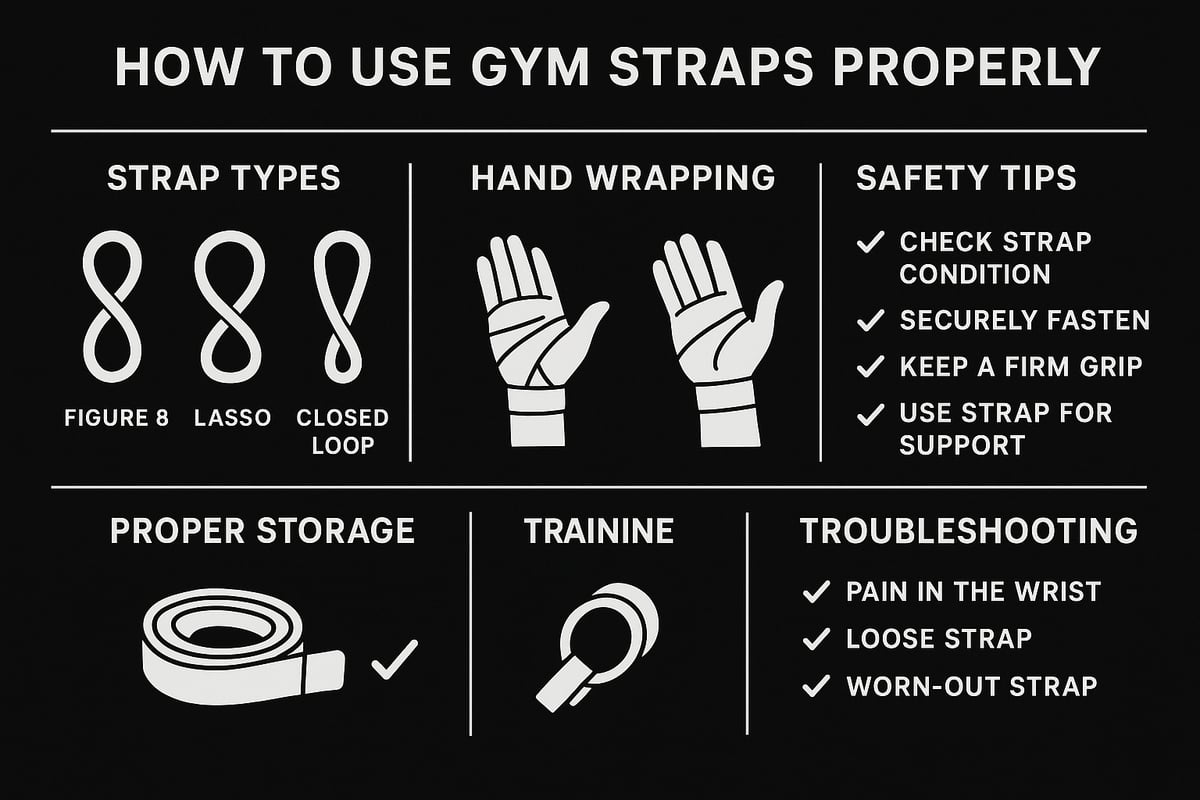
Start by matching the type of gym straps to your specific exercise. For heavy deadlifts, figure 8 straps offer excellent security and are preferred by many powerlifters. Lasso straps provide versatility and are great for rows or pull-ups, making them a popular option for general gym use.
Consider the fit and sizing. Straps should be snug but comfortable around your wrist. Material matters too: cotton is soft and absorbent, nylon is durable, and leather offers premium support.
If you want more details on choosing the right strap for deadlifts, check out this Deadlift straps on Amazon resource for specific recommendations and benefits.
Step 2: Wrapping Technique and Safety
Correct wrapping is essential for gym straps to function as intended. For lasso straps, thread the tail through the loop, place your wrist inside, and pull tight but not painfully so. Wrap the loose end around the bar, then grip firmly.
With figure 8 straps, slide your hand through one loop, wrap around the bar, and insert your hand into the second loop. Closed-loop or Olympic straps require threading your hand through, then rotating to create tension on the bar.
Avoid common mistakes like uneven tension or wrapping too tightly. Straps should never cut off circulation or cause discomfort. Always double-check your grip before lifting and ensure the straps are not frayed or compromised. This keeps your lifts safe and effective.
Step 3: Integrating Straps into Your Lifting Routine
Use gym straps strategically to support your training goals. Reserve them for heavy sets, high-rep work, or when your grip is the limiting factor, such as in deadlifts, pull-ups, or heavy rows.
Balance is key. Relying solely on gym straps can weaken your natural grip over time. Combine strap use with dedicated grip-strength exercises or perform your warm-up sets strap-free.
A sample training split might look like this:
| Day | Strap Use |
|---|---|
| Pull Day | Heavy deadlifts (straps), rows |
| Push Day | No straps |
| Accessory | Grip work without straps |
This approach lets you benefit from gym straps without sacrificing grip development.
Step 4: Removing and Storing Straps After Use
After your set, loosen gym straps by reversing the wrapping process. Avoid yanking, which can strain your wrist or damage the material.
Wipe straps down if they are sweaty, and let them air-dry after each workout. Store them in a cool, dry place, such as your gym bag or a dedicated drawer. Proper care prevents odor, mold, and material breakdown, ensuring your gym straps last longer.
Step 5: Troubleshooting Common Issues
If your gym straps slip during lifts, check for proper wrapping and ensure the bar’s knurling is compatible. Discomfort often results from incorrect tension or worn-out padding.
Premature wear can be minimized by rotating between pairs and cleaning regularly. For sweaty hands, use a bit of chalk or choose straps with moisture-wicking properties.
Replace your gym straps if you notice fraying, loss of support, or reduced grip. Maintaining strap quality keeps your workouts safe and effective, letting you focus on smashing new PRs.
Choosing the Best Gym Straps for Your Needs
Choosing the right gym straps can make a significant difference in your training results and comfort. With so many options available, it’s essential to know which features matter most for your lifting style and goals. The perfect pair of gym straps should feel like an extension of your own grip—secure, durable, and supportive.
Key Factors When Buying Gym Straps
Before making a decision, consider the following aspects to find the best gym straps for your needs:
- Material: Cotton is soft and absorbent, nylon is highly durable, leather offers maximum longevity. Each material impacts comfort and grip feel.
- Length and Width: Longer straps provide more wraps and security, while wider straps spread pressure for added comfort.
- Padding: Extra padding protects your wrists during heavy lifts, which is especially important for high-volume sessions.
- Stitching Quality: Double or reinforced stitching prevents fraying and extends lifespan.
- Closure Type: Choose between figure 8, lasso, or closed-loop designs based on your exercises and preference.
Matching Straps to Your Training Goals
Selecting gym straps tailored to your activities is crucial. Powerlifters often favor figure 8 straps for deadlifts and max pulls due to their locked-in grip. Bodybuilders and general lifters might prefer adjustable lasso straps for versatility across rows, shrugs, and pull-ups.
Olympic lifters benefit from closed-loop or Olympic straps, which allow for quick release during dynamic movements. CrossFit athletes may look for hybrid designs that balance support and speed.
| Strap Type | Best For | Pros | Cons |
|---|---|---|---|
| Figure 8 | Deadlifts, pulls | Secure, max support | Less versatile |
| Lasso | Rows, shrugs | Adjustable, user-friendly | May loosen under heavy load |
| Closed-loop | Olympic lifts | Quick release, compact | Takes practice to master |
| Hybrid | CrossFit, mixed | Balanced, innovative | Varies by brand |
Budget vs. Premium: What’s Worth the Investment?
Budget gym straps can be tempting, but premium models often offer better stitching, ergonomic padding, and longer-lasting materials. Investing in quality straps means fewer replacements and more comfort during intense workouts. Look for products with satisfaction guarantees or strong user reviews.
For an in-depth breakdown of top options, check out this Good wrist straps comparison to see how different gym straps stack up in real-world use.
What Lifters Are Saying
Lifters in 2024–2026 consistently report that padded gym straps reduce wrist fatigue and improve performance. In fact, 80% of surveyed athletes prefer padded straps, especially for high-rep or heavy-volume days. Testimonials often highlight the difference in comfort and grip security after switching to higher-quality straps.
Trends: The Future of Gym Straps
The next wave of gym straps includes eco-friendly materials like recycled nylon and organic cotton. Smart straps with built-in sensors to track usage and wear are emerging, offering new ways to monitor your gear’s lifespan.
No matter your goal, the best gym straps are those that fit your hand, match your training style, and stand up to regular use. Take time to compare features, try different types, and invest in a pair that will support your progress for years to come.
Gym Strap Maintenance & Longevity: Care Tips for 2026
Taking care of your gym straps is essential if you want them to last and perform at their best. Well-maintained gym straps can serve you reliably through years of intense training, so a little attention goes a long way.
Cleaning Methods for Different Materials
Not all gym straps are created equal, so cleaning routines depend on the material. Cotton straps are often machine washable, making them easy to clean after sweaty sessions. Nylon straps should be hand washed with mild detergent and cool water to prevent fiber breakdown. Leather gym straps require special care—wipe them gently with a damp cloth and use a leather conditioner to maintain flexibility.
| Strap Material | Cleaning Method | Frequency |
|---|---|---|
| Cotton | Machine wash, cold | After heavy use |
| Nylon | Hand wash, mild soap | Every 2-3 weeks |
| Leather | Wipe, condition | Monthly |
After washing, always air dry your gym straps. Avoid dryers or direct sunlight, as high heat can weaken fibers or crack leather. Hang them or lay them flat in a ventilated area so moisture can escape, preventing mold and odors.
Storage and Inspection
Proper storage is another key to gym straps longevity. Keep them in a cool, dry place, ideally away from gym bags filled with damp clothes. After each use, check for signs of wear like fraying, thinning, or weakened stitching. If you notice any of these, it might be time to replace your gym straps before they compromise your safety.
A quick inspection routine after workouts helps you catch small issues early. Rotate between two pairs of gym straps if you lift frequently, which can help extend their lifespan and ensure you always have a backup.
Prolonging Strap Life
A few simple habits can make your gym straps last much longer:
- Avoid overtightening during lifts, which can strain materials.
- Use gym straps only for intended exercises to minimize unnecessary wear.
- Clean off chalk and sweat after each session.
- Rotate pairs to let one set dry and recover.
- Store them flat or loosely coiled, not crumpled.
Chalk and sweat can accelerate material breakdown if left on your gym straps, so a quick wipe down after each workout is a smart move. Over time, even the best-maintained straps will show age, but proper care can extend their usability to 2-4 years or more. In fact, many athletes have reported their gym straps lasting over three years, simply by following these tips.
For those building a complete training setup, keeping your gym straps in top shape is just as important as caring for your other best accessories for the gym. A little maintenance now means more confident, safer lifts for years to come.
Pro Tips & Advanced Strategies for Maximizing Strap Benefits
Unlocking the full potential of gym straps takes more than just knowing how to wrap them around a bar. For advanced athletes, the real gains come from strategic integration, smart timing, and a balanced approach that keeps your grip strong while pushing your performance to new heights.
Integrating Gym Straps with Periodization
To maximize your results, align gym straps use with your periodization plan. During heavy phases, straps allow you to push past grip fatigue and safely increase volume on deadlifts, rows, or heavy pulls. Periodizing strap use—meaning you cycle in and out of using them—ensures you keep both your grip and target muscles progressing. For example, during a high-intensity block, use gym straps for top sets while doing warm-ups and accessories without them.
When to Avoid Using Gym Straps
There are times when gym straps should stay in your bag. Raw grip strength is crucial for overall performance and competition prep. If you always rely on straps, your natural grip may lag behind. Dedicate at least one session per week to strap-free lifting, especially if you compete in powerlifting or CrossFit, where raw grip is tested. Practicing without gym straps builds confidence and resilience for meet day.
Accessory Grip Training and Balance
Smart lifters balance gym straps use with direct grip work. Add exercises like farmer’s walks, plate pinches, or thick bar holds to your routine. These moves target the forearms and hands, making sure your grip keeps up with your pulling strength. By alternating between gym straps and grip-focused accessories, you avoid the common pitfall of grip weakness while still reaping the benefits of straps.
Combining Gym Straps with Other Gear
For maximal performance, combine gym straps with wrist wraps or lifting chalk. Wrist wraps add joint support during heavy pressing, while chalk improves friction between your hand and the bar. Together with gym straps, this combo lets you lift heavier for longer, especially during high-rep sets. According to lifting straps in strength training, this synergy helps athletes focus on form and muscle activation without worrying about slipping grip.
Mistakes to Avoid and Elite Insights
Overusing gym straps can stall grip development, and improper form increases injury risk. Avoid using straps for every set or exercise. Elite coaches recommend reserving them for your heaviest sets or when grip is the limiting factor. Always check your technique—uneven tension or loose wraps can lead to poor force transfer. Listen to experienced lifters who stress the importance of balancing gym straps with grip work.
Advanced Deadlift Protocol Example
Try this protocol: start your session with warm-ups and first working sets performed without gym straps. Use straps for the final heavy sets or high-rep finishers. This approach builds grip endurance while letting you overload your posterior chain. In fact, 70% of competitive lifters recommend periodized gym straps use to optimize both grip and pulling strength. With the right strategy, you can unlock new PRs and keep progressing for years.
Now that you know how gym straps can seriously upgrade your training—giving you better grip, more reps, and injury protection—it’s the perfect time to take action on your goals. You don’t have to settle for average gear when you can train with confidence using Katamu’s premium lifting straps and accessories. Whether you’re just starting out or pushing for new PRs, investing in quality gear is a game changer for your long-term progress. Ready to make every session count? Level up your lifts and experience the Katamu difference firsthand.
