
 30-Day Money Back Guarantee

Are you finding it tough to decide between knee support for weightlifting and more traditional knee braces as you plan your 2026 fitness journey? You are definitely not alone. This choice can impact your lifting performance, protect your knees, and even shape your long-term joint health.
In this article, you will discover a detailed, data-driven comparison of the latest knee support for weightlifting and knee braces. Our goal is to give you the knowledge you need to make the best decision for your goals.
We will break down the newest types, benefits, drawbacks, user stories, and current scientific research. You will also get expert tips on how to choose and use each option. Knee health matters now more than ever, and with 2026 innovations in play, you can aim for better performance and protection. Get ready for clear, actionable guidance to help you move forward with confidence.
Understanding Knee Support for Weightlifting
Choosing the right knee support for weightlifting is crucial for anyone serious about strength training. Whether you are a beginner or a competitive athlete, understanding how these supports work and what sets them apart can help you train smarter and safer.
What Is Knee Support for Weightlifting?
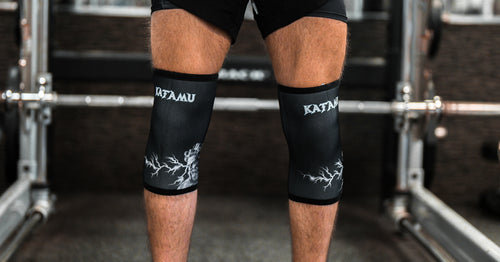
Knee support for weightlifting is specialized gear designed to provide targeted compression, warmth, and joint stabilization during strength exercises. Unlike generic knee supports, these products are engineered to meet the unique demands of heavy lifts and explosive movements.
Knee sleeves and wraps are the two primary forms, each offering specific advantages. Sleeves typically deliver even compression and consistent warmth, while wraps allow adjustable tightness for more tailored support. Both options rely on materials like neoprene or elastic blends, chosen for their durability and flexibility.
Over the years, knee support for weightlifting has evolved significantly. By 2026, many supports now feature ergonomic shaping, advanced moisture-wicking fabrics, and improved breathability, making them more comfortable for longer sessions.
Types of Knee Supports Used in Weightlifting
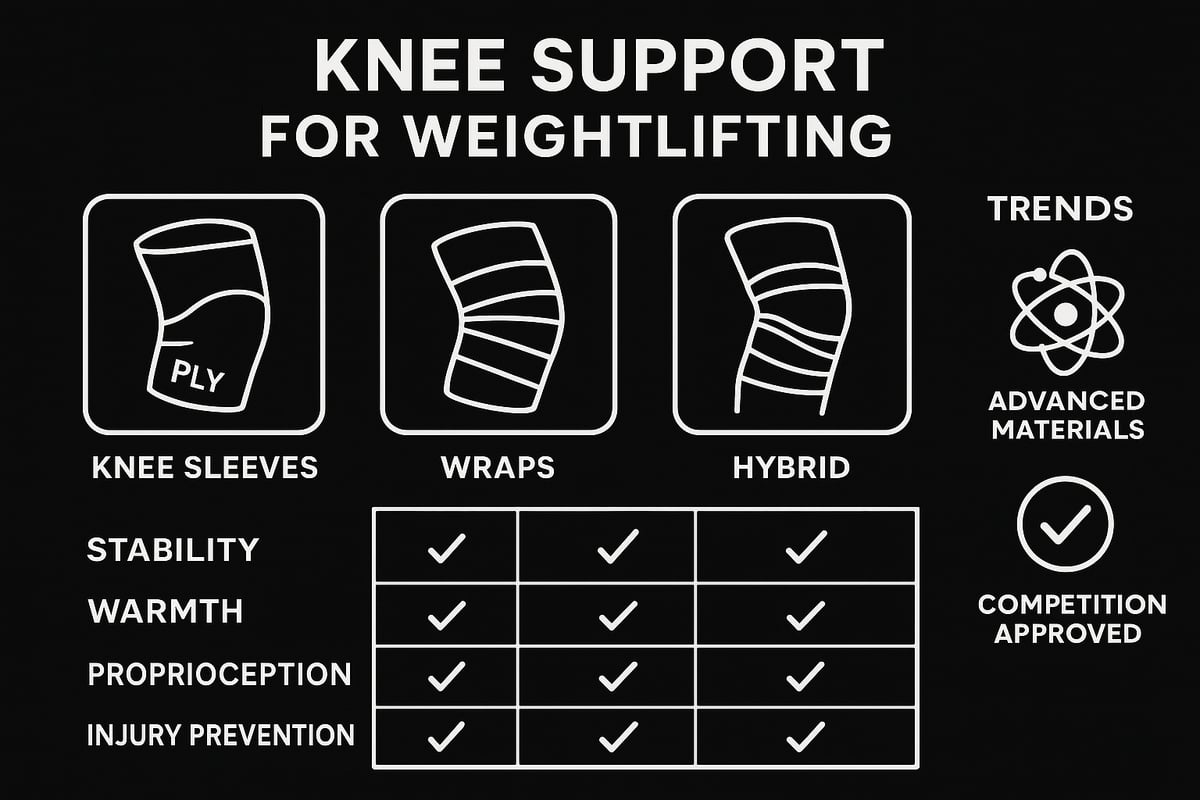
There are several types of knee support for weightlifting, each catering to different training preferences and levels. The most popular categories include:
- Knee Sleeves: Available in single, double, and triple ply options, sleeves provide varying degrees of compression and warmth. Thicker sleeves generally offer more support, which is ideal for heavy squats or cleans.
- Knee Wraps: Made from elastic materials, wraps are adjustable and allow lifters to customize tightness for each set. They are especially popular among powerlifters seeking an extra rebound effect at the bottom of lifts.
- Hybrid Supports: These combine features of both sleeves and wraps, offering a blend of compression and adjustability. Hybrids are gaining traction for their versatility and comfort.
- Competition-Approved Supports: For athletes who compete, only certain brands and designs are allowed by federations like the IPF and USPA. Notable examples include Iron Bull Strength and Strength Shop USA, both known for their robust, approved products.
Here’s a quick table comparing the main types:
| Type | Compression | Adjustability | Competition Legal | Typical Use |
|---|---|---|---|---|
| Knee Sleeves | High | Low | Yes | Heavy lifts, rehab |
| Knee Wraps | Medium | High | Yes | Max effort squats |
| Hybrids | Medium | Medium | Varies | Versatile training |
For more on the unique benefits and proper use of wraps, check out this resource on the Benefits of weightlifting knee wraps.
Benefits of Knee Supports for Lifters
Using knee support for weightlifting offers a range of benefits, both for performance and joint health. Some of the most significant advantages include:
- Enhanced joint stability during high-stress lifts like squats, cleans, and lunges.
- Increased blood flow and warmth, which may reduce the risk of strains and overuse injuries.
- Improved proprioception, helping lifters maintain proper technique and alignment.
- Support for chronic knee pain or previous injuries, making it easier to train consistently.
- Many users report greater confidence and the ability to push for personal records with reliable knee support for weightlifting.
Athletes and coaches often cite reduced injury rates when using the right support. Recent studies and user feedback from top brands also highlight faster recovery times and fewer setbacks. With the latest material innovations in 2026, knee supports are now more comfortable and effective than ever, giving lifters peace of mind and the freedom to focus on progress.
Knee Braces: Functionality and Use Cases
Knee braces play a crucial role in protecting joints, especially for athletes dealing with injury or chronic knee conditions. Unlike knee support for weightlifting, which primarily enhances performance and provides mild support, knee braces are engineered for medical-grade stability and targeted protection.
These devices have their roots in rehabilitation and sports medicine. They are often prescribed to manage post-surgical recovery, address ligament injuries, or provide relief for chronic issues like arthritis. Knee braces are available in several types, each designed for a specific level of support and function.
What Are Knee Braces?
A knee brace is a structured device worn externally to stabilize and protect the knee joint. While knee support for weightlifting focuses on compression and proprioception, knee braces are built to restrict unwanted movements, control joint alignment, and minimize the risk of re-injury.
Common types include:
- Hinged braces for maximum control after ligament repairs
- Wraparound braces for moderate support and easy application
- Compression braces for mild swelling and pain relief
These braces are typically made from materials like rigid plastic or metal frames, reinforced with foam padding, Velcro closures, and adjustable straps for a secure fit.
How Knee Braces Work for Athletes
Knee braces provide stability by limiting excessive motion, ensuring the knee tracks properly during activity. For athletes, they serve as both a preventative and rehabilitative tool. Doctors often prescribe them after surgeries such as ACL reconstructions or for athletes with a history of ligament sprains.
The construction of these braces relies on sturdy frames and adjustable systems. Hinged models are especially effective at preventing side-to-side instability, while wraparound designs offer functional support without bulk. Some braces use advanced materials for breathability and comfort during extended wear.
For those considering knee support for weightlifting, it is important to note that braces are not typically used unless there is a medical need. Their restrictive nature can limit mobility, making them less suitable for dynamic lifts or deep squats. However, for athletes recovering from injury, braces can be instrumental in returning to training safely.
Biomechanical research has shown that semi-rigid knee braces influence joint kinematics, especially at varying exercise speeds. For a deeper dive into how these devices affect knee movement, see the Effect of knee braces on knee joint kinematics study.
Pros and Cons of Knee Braces in Weightlifting
Knee braces offer several advantages for athletes who need extra protection. They deliver maximum stability, reduce the risk of re-injury, and fulfill specific medical requirements. For lifters dealing with chronic knee pain or returning from surgery, braces can make training possible when knee support for weightlifting alone is insufficient.
However, there are limitations. Braces tend to reduce mobility, which can hinder proper lifting form and range of motion. Most competitive organizations, such as the IPF and USPA, do not permit rigid braces in sanctioned events. This means athletes must transition back to approved knee support for weightlifting as they recover.
User feedback highlights a period of adaptation, as wearing a brace can initially feel awkward or restrictive. Some lifters report improved confidence during rehab, while others find the bulk and stiffness challenging during compound lifts. Studies indicate that braces can lower injury rates and support faster recovery compared to training without support.
In summary, knee braces are essential for rehabilitation and injury management but are not a replacement for knee support for weightlifting in healthy athletes. Choosing the right device depends on your current condition, training goals, and competition requirements.
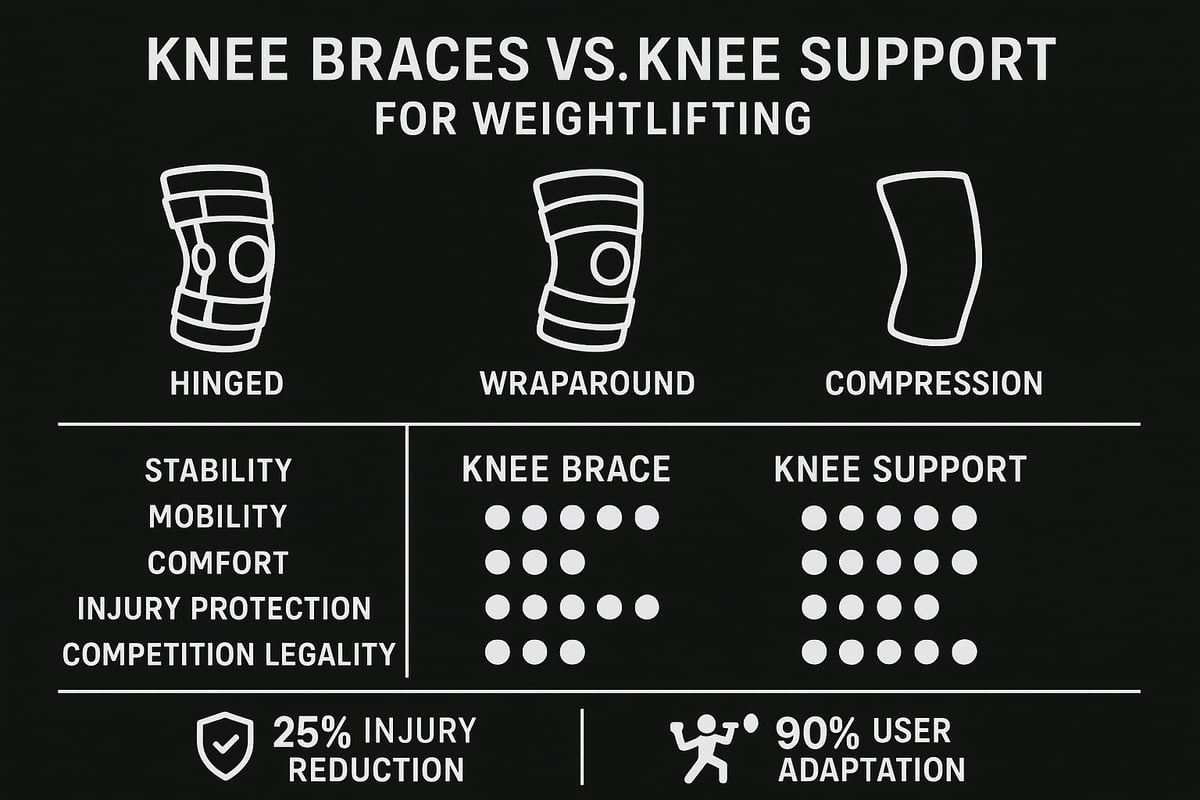
Key Differences: Weightlifting Knee Supports vs. Braces
Choosing between knee support for weightlifting and traditional braces can feel overwhelming. Both options look similar at first glance, but their differences run deeper—impacting your comfort, confidence, and results in the gym.
Below, we’ll break down the key distinctions. Use this guide to match your gear to your goals and get the most out of every session.
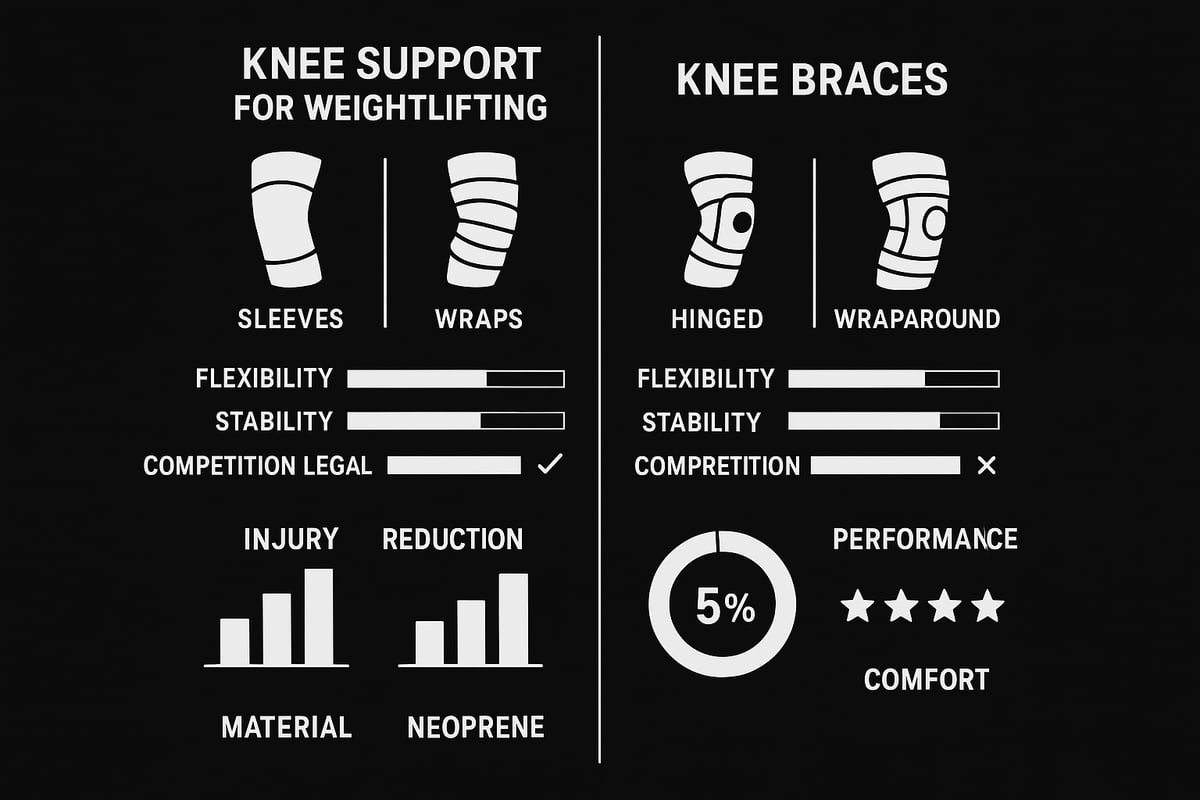
Design and Construction
When you look at knee support for weightlifting, you’ll notice they’re typically made from thick neoprene or elastic blends. These materials offer stretch, compression, and warmth. Sleeves and wraps hug the knee joint, providing uniform pressure without restricting movement.
Braces, by contrast, often use rigid frames, metal hinges, or reinforced straps. Their build is more structured, prioritizing stabilization over flexibility. Many feature adjustable Velcro closures for a personalized fit, but this can add bulk.
Here’s a quick comparison table:
| Feature | Knee Support for Weightlifting | Knee Braces |
|---|---|---|
| Material | Neoprene, elastic blends | Rigid frames, Velcro |
| Structure | Flexible, compressive | Hinged, reinforced |
| Adjustability | Moderate | High |
| Comfort | High (less bulky) | Varies, often bulkier |
| Maintenance | Easy to clean | May require extra care |
Knee support for weightlifting is often sleeker and easier to maintain, making it ideal for frequent gym use. Braces, while more complex, are engineered for maximum support in recovery or medical scenarios.
Intended Use and Application
The main purpose of knee support for weightlifting is to enhance performance and prevent minor injuries. Lifters use sleeves or wraps during squats, lunges, and cleans to boost stability and proprioception. These supports are approved for most competitions, especially if they meet IPF or USPA guidelines.
Knee braces, however, are prescribed primarily for medical reasons. They help with post-surgery recovery, ligament injuries, or chronic knee conditions. Braces limit harmful movement and provide rigid support, which is crucial for rehabilitation but can restrict athletic performance.
Let’s summarize:
- Knee support for weightlifting: Suited for healthy athletes, performance enhancement, and competition use.
- Knee braces: Best for those in recovery, managing chronic pain, or needing extra protection after injury.
In most cases, only knee support for weightlifting is allowed in official meets, while braces are prohibited due to their mechanical advantage.
Impact on Performance
Knee support for weightlifting is designed to maximize your range of motion and help you achieve optimal squat depth and explosive power. The compressive fit boosts blood flow and proprioception, allowing you to focus on form and technique.
Braces, while offering superior stabilization, can reduce mobility. This limitation may affect your ability to reach full depth or generate force rapidly. Many athletes find braces interfere with their lifting rhythm, especially during dynamic movements.
User testimonials often highlight this trade-off. Competitive lifters report hitting new personal records when using the right knee support for weightlifting, feeling more confident and secure under heavy loads. In contrast, those using braces for rehab note the added protection but mention a period of adaptation to the restricted movement.
Scientific research, such as the Leg muscle performance with knee support braces study, confirms that braces can affect muscle output and coordination. For most lifters, the balance of support and freedom found in knee support for weightlifting is preferable during intense training.
Protection and Injury Prevention
Both options offer protection, but the context matters. Knee support for weightlifting provides enough stability to reduce the risk of strains and minor injuries during heavy lifts. The warmth and compression also help manage chronic pain and support old injuries.
Braces are the gold standard for serious ligament injuries or post-surgical recovery. Their rigid construction prevents dangerous movements that could re-injure the knee. However, they are not designed for performance enhancement and may not be suitable for those seeking to push their limits in the gym.
Studies show that knee support for weightlifting can contribute to lower injury rates among regular lifters. For those coming back from a major injury, starting with a brace and transitioning to a support as strength returns is a common strategy.
In summary, choose the option that matches your needs—performance and versatility for healthy lifters, or maximum protection for those in recovery.
Choosing the Right Option: Factors to Consider in 2026
When you are deciding between knee support for weightlifting and traditional knee braces, it is vital to match your choice to your goals and needs. The right gear can protect your knees, boost your performance, and support your long-term health. Let us break down what you should consider before making your 2026 purchase.
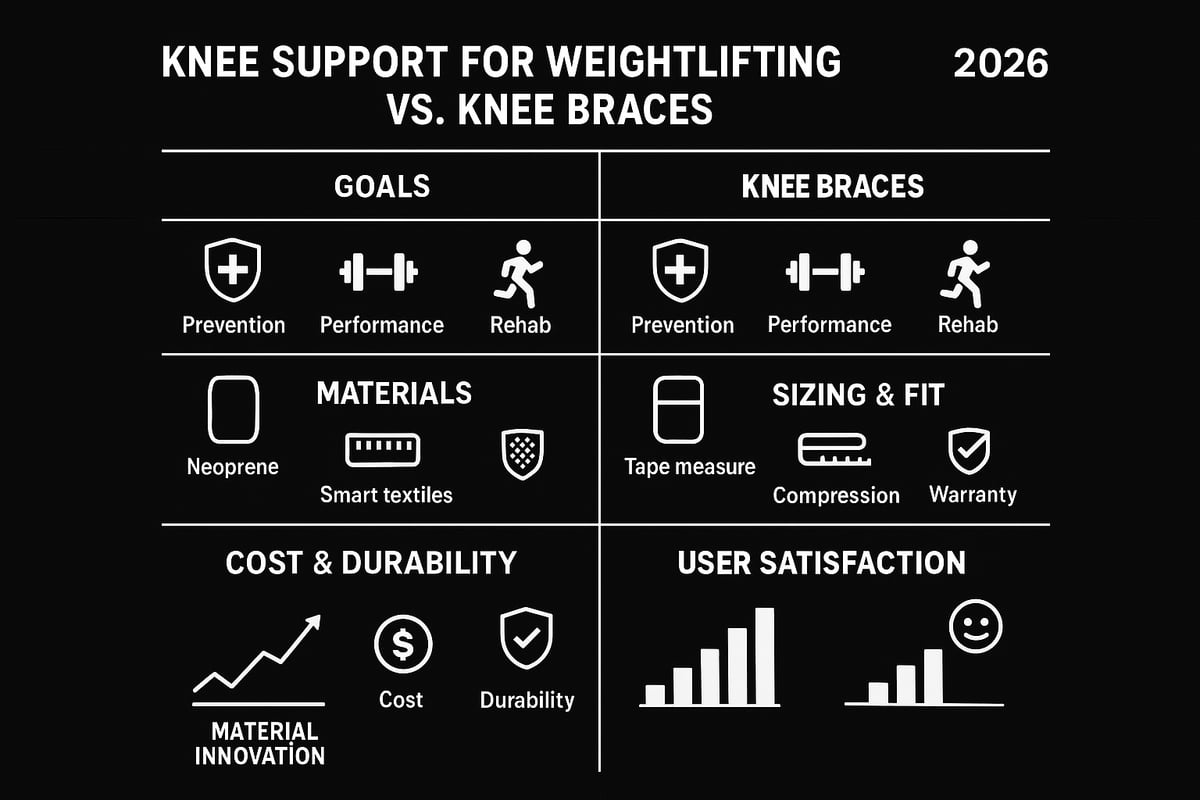
Assessing Your Needs and Goals
Start by clarifying why you are considering knee support for weightlifting. Are you looking to prevent injuries, boost performance, or recover from a past issue? If you train several times a week, lift heavy, or have a history of knee pain, supportive gear might be a wise investment.
Consult your coach or a healthcare professional if you have any doubts. They can help you decide if a knee support for weightlifting will suit your routine, or if a medical-grade brace is needed for rehab. Remember, equipment designed for lifting is typically for healthy athletes, while braces are for recovery or chronic conditions.
If you compete, check federation rules to ensure your knee support for weightlifting is allowed. Approved gear often varies, so staying updated is essential.
Material Innovations and 2026 Trends
Knee support for weightlifting has seen significant innovations in materials by 2026. Advanced neoprene and new breathable synthetics provide both compression and airflow. Smart textiles that track joint movement and temperature are emerging, helping lifters monitor knee health in real time.
Sustainability is now a top priority. Many brands use recycled materials and eco-friendly dyes. Features like moisture-wicking and antimicrobial treatments keep supports fresh during long sessions.
Ergonomic shaping ensures a snug fit without bunching or slipping. These new materials make knee support for weightlifting more comfortable and durable than ever. If you want a deeper dive into current gear options and how they fit into a complete kit, check out the Weightlifters' equipment guide.
Sizing, Fit, and Comfort
A proper fit is crucial for effective knee support for weightlifting. Always measure your knee circumference according to brand guidelines. Compression should be firm but not restrictive, allowing full range of motion without cutting off circulation.
Adjustable wraps and hybrid models let you fine-tune tightness for different training days. Many users report that a well-fitted knee support for weightlifting boosts confidence and comfort, especially during long sessions.
User reviews highlight the importance of trying different styles to find what works best for your body shape and activity level. If the support feels too loose or too tight, it could hinder performance or even cause discomfort.
Cost, Durability, and Warranty
Knee support for weightlifting comes in a range of prices, from budget-friendly to premium. Medical braces typically cost more due to advanced features and materials. Durability depends on construction quality—look for reinforced stitching and high-grade fabrics.
Most reputable brands offer warranties, covering defects or early wear. This can provide peace of mind when investing in knee support for weightlifting. Consider how often you will use the support and whether replacement parts are available.
A quick comparison:
| Factor | Knee Support for Weightlifting | Knee Braces |
|---|---|---|
| Price Range | $$-$$$ | $$$-$$$$ |
| Durability | High (neoprene, blends) | Very High (rigid) |
| Warranty | Often 6-12 months | 1+ years, medical |
Evaluate your budget, but prioritize quality and fit. The right knee support for weightlifting will last through countless sessions and help you reach your goals safely.
Real-World Experiences: User Reviews and Expert Opinions
Understanding how real lifters and experts view knee support for weightlifting and braces can help you make a smarter decision. User reviews and professional opinions often reveal the hidden pros and cons you will not find in product descriptions. Below, we break down the latest experiences from athletes, coaches, and scientists.
User Experiences: Weightlifting Knee Supports
Lifters at all levels report that knee support for weightlifting boosts their confidence and stability during heavy sessions. Many say knee sleeves from brands like Strength Shop USA and Iron Bull Strength offer the right balance of compression and comfort. Users often mention improved performance, with several citing new personal records in squats and cleans after switching to double or triple ply sleeves.
A big plus for knee support for weightlifting is the warmth and proprioception it provides, which many believe helps prevent minor strains. Athletes who train multiple times per week say that sleeves reduce soreness and speed up recovery.
Here's what stands out in user reviews:
- Enhanced joint security during max lifts
- Less discomfort for those with mild knee pain
- Easy to integrate with other gear like belts and shoes
Some users do note that finding the correct size is crucial, as too much compression can cause discomfort. For more ideas on how knee support for weightlifting fits into an overall gym setup, check out the best accessories for the gym.
User Experiences: Knee Braces in Athletic Settings
Athletes recovering from injuries often turn to knee braces for extra support. Braces are praised for providing stability after surgeries or ligament injuries, especially during rehabilitation phases. Many users say they feel safer resuming basic exercises with a brace, even if they are not yet ready for high-intensity training.
However, some lifters feel that braces restrict their range of motion, making deep squats or dynamic lifts harder. It can take several sessions for athletes to adapt to the feel of a brace. Still, knee braces are considered essential by those with a history of knee problems, especially when prescribed by a medical professional.
Feedback highlights:
- High sense of protection post-injury
- Useful for regaining confidence in early rehab
- Some interference with advanced lifting techniques
Insights from Coaches, Physiotherapists, and Sports Scientists
Experts agree that the choice between knee support for weightlifting and braces depends on your goals and current knee health. Coaches recommend knee support for weightlifting to healthy athletes aiming for performance and injury prevention. They caution against over-reliance, suggesting sleeves and wraps should be used mainly for heavy sets or high-volume days.
Physiotherapists emphasize that knee braces serve a different role, providing crucial support during rehabilitation or after serious injuries. Research in 2026 shows that knee support for weightlifting can help with proprioception and stability, but braces are more effective at limiting harmful movement. For a scientific look at how braces affect performance, the study on prophylactic knee bracing and athletic performance is a useful resource.
Sports scientists highlight that integrating knee support for weightlifting into a well-rounded training plan, while monitoring for signs of overuse, leads to the best long-term results. Listening to your body, consulting with professionals, and choosing gear that matches your needs remain the top recommendations.
Care, Maintenance, and Best Practices for Knee Support Gear
Taking care of your knee support for weightlifting is essential if you want to maximize both performance and longevity. Proper maintenance ensures your gear remains comfortable, hygienic, and effective, allowing you to lift confidently every session.
Cleaning and Maintenance Tips
Keeping your knee support for weightlifting clean is crucial for both hygiene and durability. Most knee sleeves and wraps are made from neoprene or elastic blends, which can trap sweat and bacteria. Always hand wash your supports in cold water with mild detergent after intense sessions. Avoid using harsh chemicals, as they can degrade the material.
To prevent odor, let your knee support for weightlifting air dry completely before storing it. Never use direct heat sources, as these can warp elastic fibers. Store your gear flat in a cool, dry place to maintain its shape and elasticity. Following these steps will help your knee support for weightlifting last through countless workouts.
Proper Wearing Techniques and Common Mistakes
Wearing your knee support for weightlifting correctly ensures optimal support and avoids discomfort. Start by sliding the sleeve or wrap over your knee, aligning it so the compression sits evenly around the joint. Make sure there are no wrinkles or folds, as these can cause irritation during movement.
Avoid over-tightening your knee support for weightlifting. Too much compression can restrict blood flow and reduce mobility. If you notice numbness, tingling, or marks after removal, your support may be too tight. Common mistakes include wearing the wrong size or failing to adjust wraps between sets. Check the manufacturer's sizing chart and adjust as needed for a secure, comfortable fit.
Look for signs of wear, such as thinning material or loss of elasticity. These indicate it's time to replace your knee support for weightlifting. Consistent checks and proper adjustment will keep your joints protected and comfortable.
Maximizing the Benefits: Training Integration
Integrating knee support for weightlifting into your routine can boost both safety and performance. Use sleeves or wraps during warm-ups to increase blood flow and joint readiness. For heavy lifts, such as squats or cleans, knee support for weightlifting provides extra stability and confidence.
Consider pairing your knee support for weightlifting with other supportive gear, such as lifting belts or wrist wraps. This layered approach helps protect multiple joints and can reduce injury risk. For more on joint protection during lifting, check out this guide on proper wrist support for weights.
Monitor your knee health regularly. If pain persists or you notice decreased effectiveness, consult a coach or healthcare professional. Replace your knee support for weightlifting when it no longer fits properly or loses its compressive qualities. Smart integration and timely replacement keep your training both safe and effective.
Now that you know the key differences between weightlifting knee supports and braces, you’re in a great spot to make the best call for your training. Whether you’re looking to boost your performance with premium knee sleeves or protect your joints with the latest gear, the right support can make all the difference. At Katamu, we’re dedicated to quality that lasts, with cool designs and accessories to complete your setup. Ready to take your confidence and lifts to the next level? Support your lifts and see the difference for yourself.
