 30-Day Money Back Guarantee

A heavy squat does not care whether your gear looks serious. It cares whether you can create tension, hold position, and stay locked in when the bar starts bending. Lever belts are built for that moment: the rep where a soft, shifting belt becomes a distraction and a secure, consistent fit becomes part of your setup.
For lifters chasing bigger squats, deadlifts, presses, and loaded carries, a lever belt is not a shortcut. It is a piece of equipment that gives your brace something solid to push against. Used well, it can make your setup more repeatable, your training feel more deliberate, and heavy work less chaotic.
What Makes Lever Belts Different?
The lever buckle is the defining feature. Instead of pulling a prong through holes every session, you set the lever belt to your preferred tightness, close the buckle, and train. When the set is over, the lever releases quickly. That sounds simple, but under a loaded bar, simple matters.
A prong belt can be an excellent choice, especially for lifters whose bodyweight fluctuates or who prefer small adjustments between exercises. But a lever offers a firm, repeatable closure. Once it is set correctly, you know exactly where the belt will sit and how much pressure it will create each time you lock it down.
That consistency is why lever belts have earned a place in powerlifting circles and serious commercial gyms alike. They feel planted. They look sharp. More importantly, they remove one variable from your setup when the weight gets real.
How a Lever Belt Supports Your Brace
A belt does not do the work for you, and it is not a force field for your lower back. The purpose is to give your trunk a firm surface to brace into. When you take a deep breath, expand through your abdomen and sides, and create pressure around your midsection, the belt provides feedback and resistance.
Think of it as a target for a complete 360-degree brace. You should not only push your stomach forward. Your obliques and lower back need to stay involved too. A strong brace, paired with controlled technique, helps you maintain a more stable torso under load.
This is why wearing a belt too loosely misses the point. If you can close it without feeling any meaningful pressure, there is little to brace against. Wearing it painfully tight is not the answer either. You still need room to take a full breath and create pressure. The right fit feels secure and demanding, not suffocating.
Choosing the Right Lever Belt Thickness
Thickness is where personal preference, training style, and experience level start to matter. The most common choices are 10mm and 13mm leather belts. Neither is automatically better. They create different training experiences.
10mm Lever Belts: Strong Support With More Flex
A 10mm belt is often the better all-around option. It provides substantial support while breaking in faster and feeling less restrictive around the ribs and hips. For bodybuilding training, general strength work, Olympic-lifting variations, or lifters who want one belt for several movements, 10mm can be the sweet spot.
It is also a smart choice if you are buying your first serious belt. You get the stability of a premium lever closure without committing to the stiffness of a thicker belt before you know what you prefer.
13mm Lever Belts: Maximum Structure for Heavy Work
A 13mm belt is firmer, stiffer, and more demanding. It is built for lifters who want maximum structure during heavy squat and deadlift training, particularly in powerlifting-focused programs. When it is new, it may feel aggressive. That is part of the trade-off.
The extra thickness can create a very solid brace, but it may dig into your hips or ribs depending on your torso length and lifting position. Shorter lifters and athletes with compact torsos sometimes find a 13mm belt harder to position comfortably. If you regularly train near maximal loads and prefer a locked-in feel, it can be worth it. If comfort across a wider range of movements matters more, 10mm may serve you better.
Width, Material, and Construction Matter
Most serious lever belts use a four-inch width, which gives broad coverage around the torso and aligns with what many strength athletes expect from a lifting belt. A uniform width is especially useful for squats and deadlifts because it provides consistent contact around your core.
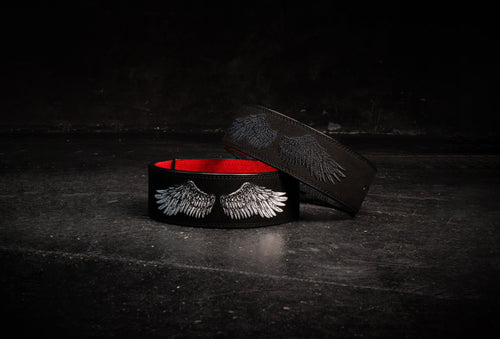
Quality leather makes a difference over time. A belt should hold its shape, keep its structure, and withstand repeated tension from hard training. Cheap belts often soften too quickly, crack at stress points, or use hardware that feels unreliable when you need it most. A premium belt is not just about looking better in the mirror. It is about having gear that performs after months of heavy sessions.
The buckle matters just as much. A secure lever should close decisively and release without a fight. Because the buckle carries tension every time you brace, durable hardware is not a cosmetic detail. It is a core performance feature.
How to Size and Set Up Lever Belts
Measure your waist where you actually plan to wear the belt, not where your jeans sit. For most lifters, that is around the navel or slightly above it. Use a flexible tape measure, take the measurement relaxed, and compare it with the brand's sizing chart.
Avoid guessing based on pant size. Jeans sizing varies wildly, and belt placement changes from person to person. If you fall between sizes, consider how you train. A lifter in a bulk phase or someone who prefers a looser off-season fit may benefit from more room. Someone who wants a tight competition-style setup may prefer the smaller option, provided the adjustment range is still practical.
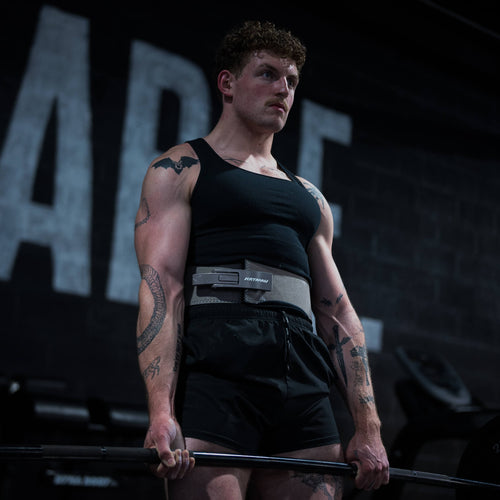
Once your belt arrives, set the lever so it closes with firm pressure while you are standing relaxed. Then test it with a deep breath. You should be able to fill your torso and brace hard against the leather. If you cannot inhale properly, move the lever one setting looser. If the belt shifts easily or offers no resistance during bracing, take it in.
The first few sessions may require adjustment. That is normal. Your ideal squat setting may not be your ideal deadlift setting, especially if you use a more bent-over pulling position. Lever belts are less convenient than prong belts for frequent micro-adjustments, but they reward lifters who value a repeatable setup.
When to Wear a Lever Belt
You do not need to belt every warm-up set or every machine exercise. Build your natural bracing skill first, then use the belt strategically when the demand rises. Many lifters put it on for their top working sets, heavy back-off sets, and movements where torso stability is a major limiter.
Squats, deadlifts, overhead presses, front squats, strongman-style carries, and heavy rows are common belt movements. The exact threshold depends on your experience, exercise selection, and programming. Some athletes belt up at roughly 75 percent of their working capacity. Others wait until the last few hard sets. The better question is whether the belt helps you brace with more intent and execute cleaner reps.
Do not use a belt to ignore pain, rush technique, or turn every session into a max-out. If something feels wrong, assess your form, fatigue, load selection, and recovery. Great gear supports disciplined training. It cannot replace it.
Getting the Most From Your Belt
Your belt should become part of a consistent ritual. Set your stance, place the belt at the same height, take your breath, brace in all directions, and own the rep. That routine creates confidence because it is repeatable.
Store the belt flat or loosely rolled in a dry place. Do not leave it crushed in the bottom of a damp gym bag after training. Wipe off chalk and sweat as needed, and inspect the lever hardware occasionally for loosening. Good equipment lasts longer when it is treated like equipment, not an afterthought.
A premium lever belt also carries presence. It is the piece you reach for when the playlist gets louder, the warm-up weight stops feeling like a warm-up, and the next set asks for more. Katamu lever belts are made for lifters who want that level of support without sacrificing the look and identity they bring to the platform or gym floor.
Choose the belt that fits your body, your training, and the kind of pressure you are ready to handle. Then close the lever, build your brace, and make the set count.
