

 30-Day Money Back Guarantee

If your legs turn to concrete in the final miles, the issue might not be your engine. It might be your strength. Strength training for endurance performance is one of the fastest ways to build a body that holds form longer, wastes less energy, and still has power when the race starts asking hard questions.
A lot of endurance athletes still treat the weight room like a side quest. Something to do in the offseason, or a box to check with some light goblet squats and band work. That approach leaves a lot on the table. The goal is not to become a powerlifter who happens to run or ride. The goal is to become harder to break down under fatigue.
Why strength training for endurance performance works
Endurance is not just about heart and lungs. It is also about force production, movement quality, and how efficiently you repeat the same pattern for a long time. Every stride, pedal stroke, and climb asks your body to create force and absorb force. If your tissues cannot handle that demand, your form fades, your pace drops, and small inefficiencies turn into major losses.
Stronger athletes usually move better under fatigue. They can keep posture when the torso wants to collapse. They can stabilize the knee when the hips get tired. They can put force into the ground or the pedals without bleeding energy through weak links. That is where strength work changes the game. It raises your ceiling, but more importantly, it raises your floor.
There is also the durability factor. Higher tissue capacity means better tolerance to training volume. That matters whether you are building for a marathon, a long gravel race, Hyrox, a triathlon, or hard conditioning blocks that mix running with heavy gym work. You are not just training to go fast on fresh legs. You are training to stay dangerous when everything starts to fade.
What endurance athletes get wrong in the gym
The most common mistake is going too light for too many reps and calling it functional. That can build a burn, but it does not always build the kind of strength that transfers. Real force production usually comes from controlled, progressive loading. Heavy work done well teaches the nervous system to recruit more muscle and do more with less wasted effort.
The second mistake is doing too much. If your lifting crushes the key run, ride, or conditioning session you have scheduled for the next day, the plan is off. Strength work should support your sport, not hijack it. There is always a trade-off. More lifting volume can mean more soreness, more fatigue, and less quality in endurance sessions. The sweet spot is enough to create adaptation without burying recovery.
The third mistake is random exercise selection. You do not need a circus program. You need lifts that build strong hips, legs, trunk stiffness, and upper-body support where relevant. Most athletes need fewer exercises, better execution, and a clear progression model.
The lifts that matter most
For most endurance athletes, lower-body compound lifts are the foundation. Squats, deadlift variations, split squats, step-ups, and lunges train the patterns that matter most. They build force through the glutes, quads, hamstrings, and adductors while teaching control through the pelvis and trunk.
Single-leg work earns its place because endurance sports happen one side at a time. Split squats and step-ups can expose imbalances, improve stability, and build usable strength without always needing maximal barbell loading. That makes them especially valuable during high-volume race prep when recovery bandwidth gets tight.
The posterior chain deserves extra attention. Romanian deadlifts, hip hinges, and glute-focused accessory work help athletes maintain hip extension power and resist the collapse that shows up late in races. If your stride gets shorter or your pedal stroke loses snap when tired, this area usually needs work.
Core training matters too, but not in the endless-crunches sense. Endurance athletes need trunk stiffness and positional control. Carries, anti-rotation work, planks with intent, and heavy compound lifts do more here than chasing ab soreness. A stable trunk helps transfer force and keeps movement cleaner when fatigue builds.
Upper body work depends on the sport, but it should not be ignored. Runners need arm carriage and posture. Cyclists need support through the shoulders and torso to hold position. Hybrid athletes need even more. Rows, presses, pull-ups, and loaded carries can all fit, as long as they do not steal from the priority sessions.
How to program strength without wrecking your endurance
Two sessions per week is enough for most people. That is the move for athletes who want real strength gains while keeping the main thing the main thing. One session can maintain progress during hard race-specific blocks, but two tends to work better for building.
Keep the main lifts heavy enough to matter, usually in lower rep ranges. Sets of 3 to 6 reps often make more sense than sets of 15 to 20. Accessories can sit a little higher, but the point is still quality, not chaos. Rest long enough to actually produce force.
Timing matters. If possible, lift after an easier endurance day or on the same day as a harder session, so your recovery days stay protected. Stacking stress is often smarter than spreading fatigue across the whole week. If you run hard Tuesday, lifting later that day can work better than lifting Wednesday and carrying soreness into Thursday.
As competition gets closer, reduce volume before you reduce intensity. That means fewer total sets, not necessarily baby weights. Keeping some intensity in the program helps preserve strength. The closer you get to race day, the less your lifting should feel like a separate training block.
Strength training for endurance performance is not bodybuilding
This matters because the goal changes the method. Bodybuilding chases muscular size and local fatigue. Endurance support training chases force, coordination, and resilience. You do not need to annihilate a muscle group to get useful adaptation.
That does not mean muscle is bad. Some athletes absolutely benefit from adding lean mass, especially if they are underpowered, injury-prone, or new to resistance training. But more muscle is not automatically better. Extra mass can be helpful in cycling, mixed-modal competition, and short-course work, yet less ideal if you are trying to maximize running economy for long-distance racing. It depends on the event and the athlete.
The best programs respect that difference. They build enough muscle to protect joints and improve force production, while staying specific enough to the demands of the sport.
Gear, execution, and training like it counts
Good lifting starts with control, range, and progression. But once loads get serious, your setup matters too. Stable footwear, reliable support where needed, and gear that holds up under repeated heavy sessions can make training more consistent. For athletes who are building real strength in parallel with serious conditioning, the little details stop being little.
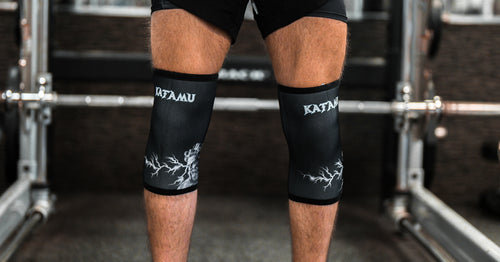
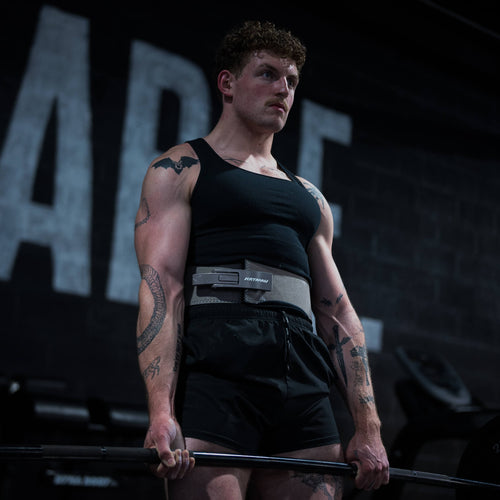
That is especially true during phases where you are juggling fatigue from multiple directions. A belt for top sets, sleeves for comfort under volume, and wraps or straps in the right context are not shortcuts. They are tools. Used well, they can help you train harder with better position and more confidence. Katamu is built for exactly that kind of athlete - the one who wants gear that performs as hard as they do.
Still, gear does not fix bad programming. If your lifts are always rushed, your technique falls apart, or your lower back handles every movement your hips should own, no accessory will solve the problem. Use support to sharpen good training, not excuse sloppy training.
When results start showing up
The first change is usually not a dramatic PR in your sport. It is how stable you feel. Hills stop feeling as punishing. Your form lasts longer. You recover from hard sessions with less breakdown. Then the performance indicators start moving. Better economy. More pop late in sessions. Fewer aches that used to feel normal.
This takes consistency. Not one heroic offseason block followed by eight months away from the rack. The athletes who get the biggest return usually keep strength work in rotation all year, shifting the dose as their season changes.
If endurance is your sport, the weight room is not extra. It is part of the build. Train your engine, absolutely. But also train the chassis, the structure, and the force behind every repeat effort. When race day gets heavy, strength is what helps your fitness survive contact.
Build it with intent, keep it specific, and let your endurance carry more power than it used to.
