 30-Day Money Back Guarantee

A belt should make a heavy squat or deadlift feel locked in, not leave you counting down the reps because your ribs, hips, or stomach are getting crushed. If you are asking why belts pinch, the answer is rarely that belts are supposed to hurt. More often, the issue is fit, placement, bracing, or a belt that has not yet matched your body and training style.
Some pressure is part of lifting with a belt. You are creating a firm surface to brace your trunk against before moving serious weight. Pinching, sharp discomfort, numbness, bruising, or pain that changes how you move is different. Fixing it can make your belt feel like performance equipment again instead of something you tolerate for a top set.
Why belts pinch during lifts
A lifting belt does not work by squeezing your waist as hard as possible. It works by giving your core something solid to press into while you brace 360 degrees around your midsection. When that pressure is uneven, or when the belt is sitting in the wrong place, the edges can dig into soft tissue, catch against your ribs, or jam into the top of your hips.
The biggest mistake is treating every belt position the same. Your best deadlift placement may not be your best squat placement. Your stance, torso length, rib cage shape, and how much you hinge all affect where the belt lands under load.
Your belt is too tight before you brace
A belt should be snug enough to stay in place, but not so tight that you cannot take a full breath into your stomach, sides, and lower back. If you need to force the buckle closed while relaxed, the belt is probably already too tight.
That leaves no room for a powerful brace. As you inhale and expand, the belt has nowhere to go except inward at its edges. The result is often a pinching sensation around the lower ribs or abdomen, especially on the descent of a squat or the setup for a deadlift.
Try loosening the belt by one setting. Then take a deep breath and brace hard. You should feel firm contact all the way around your trunk without losing the ability to expand into the belt. A slightly looser belt that lets you brace aggressively will outperform an over-tight belt that folds you in half.
The belt is sitting between your ribs and hips
This is a common issue for lifters with shorter torsos, but it can happen to anyone. A wider belt can run into the bottom of your rib cage at the top and your iliac crest, the top edge of your pelvis, at the bottom. Once you bend to squat or pull, there is no space left. The belt gets trapped and pinches.
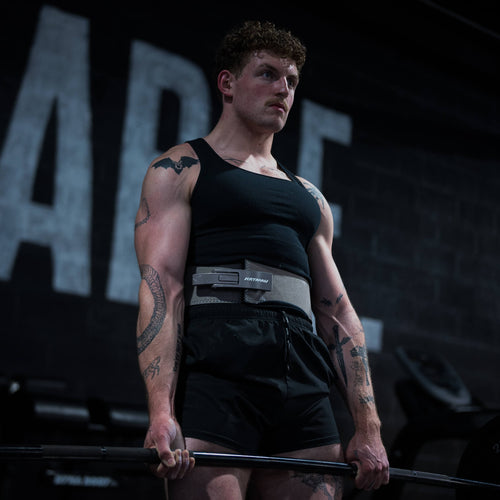
Move it up or down in small increments, then test the position in your actual lifting stance. For many athletes, the belt sits a little higher for a deadlift to make room for the hips during the start position. Others prefer it slightly lower for squats, where it can stay centered against the torso through the bottom range.
There is no mandatory belt height. The right position is the one that gives you room to brace hard without the belt crushing your ribs or catching your hip bones. Test positions with an empty bar or warm-up weight before deciding a belt does not work for you.
Your belt shape does not match your build or lift
A 4-inch belt is a classic choice because it gives a consistent surface around the entire torso. It is also not the perfect answer for every athlete. If the same-width belt digs into your ribs and hips no matter where you place it, a tapered belt or a narrower option may fit your frame better.
This is not about choosing less support. It is about choosing support you can actually use. A belt that stays stable and allows a strong brace will beat a wider belt that forces you into an awkward setup. For general strength training, bodybuilding work, or dynamic lifts where you need more freedom to bend, a tapered design can be a smart trade-off.
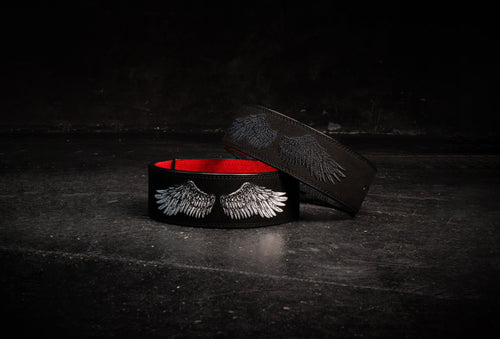
The material matters too. Thick leather provides a rigid, locked-in feel that many powerlifters want under maximal loads. But a stiff new leather belt can feel unforgiving, especially when it presses into your body at an angle. A quality belt needs time under tension before it molds to you.
How to stop a lifting belt from pinching
Start with the simplest adjustment: change one variable at a time. Do not loosen the belt, change its height, and alter your bracing all in the same set. You will not know which fix made the difference.
Find your real working tightness
Set the belt while standing tall and relaxed. It should be secure, but you should still be able to get your fingers between the belt and your body with some effort. Then practice a full breath into your belly, obliques, and lower back.
When you brace, your torso should push outward evenly. If the belt only feels tight at the front, you are likely breathing only into your stomach. If it only bites at the sides, you may be overextending your ribs or setting the belt too high. Think of expanding your entire midsection, not pushing your abdomen forward alone.
A lever belt can make repeated setups fast and consistent, but it also makes it easy to lock yourself into a setting that is too aggressive. If your bodyweight fluctuates, or if you are bloated after a meal, the same lever setting may feel completely different. Adjust it when needed. Consistency matters, but comfort under a hard brace matters more.
Match placement to the movement
For squats, set the belt where it stays in contact through the bottom position without folding into your hips. This may be around the natural waist for some lifters and lower for others. Test it with the stance and bar position you actually use, not a casual bodyweight squat with your feet close together.
For conventional deadlifts, many lifters need the belt slightly higher to avoid getting trapped against their thighs and hips at the start. Sumo pullers may prefer a different height because the torso angle and hip position change. For rows, lunges, and accessory work, you may not need a belt at all. Do not wear it by default just because it is part of your gym bag.
Break in stiff belts with training, not abuse
A new belt should soften and conform over time, but it does not need to be destroyed to get there. Wear it for controlled warm-up sets and moderately heavy work before expecting it to feel perfect during max-effort attempts. The heat and movement from normal training help the belt take the shape of your torso.
Avoid soaking leather, aggressively twisting it, or using shortcuts that can damage the structure. You want the belt to become more natural around your body while keeping the rigidity that makes it useful under load. A premium lifting belt should earn its shape through sessions, not fall apart during the process.
Check what is underneath the belt
A belt directly against bare skin can catch, roll, and create friction when you sweat. A thin compression shirt or fitted tee creates a smoother surface and can reduce irritation without changing how the belt performs. Avoid bulky layers that bunch beneath the belt, especially thick hoodies with seams or pockets at the waist.
Your waistband matters as well. Drawstrings, thick elastic, folded fabric, and a shirt tucked into uneven shorts can create a pressure point that feels like the belt itself is pinching. Before you blame the gear, flatten the layers underneath it.
When pinching is a sign to stop and reassess
Normal belt pressure disappears when the set is over. Pain that lingers, causes bruising, makes breathing difficult, or sends a sharp sensation into your back is not a toughness test. Take the belt off and assess the setup. If discomfort continues without the belt, or you have abdominal pain, a possible hernia, rib pain, or a recent injury, speak with a qualified medical professional before loading up again.
It is also worth asking whether you are using a belt to cover a bracing problem. A belt can amplify a strong brace, but it cannot replace one. Practice breathing and creating tension without the belt during lighter work. Then add the belt for your heavier sets and use that same skill against a firm surface.
The right belt setup feels powerful, not punishing. Give yourself permission to adjust the height, buckle setting, and belt style until it fits your build and your lifts. When the pressure is even and your brace is dialed in, the belt stops pinching and starts doing what it was built to do: help you attack the weight with confidence.
