 30-Day Money Back Guarantee

Are your wrists the weakest link in your lifts? Many lifters struggle with wrist pain or instability during heavy sets. Wrist lifting wraps can be the game-changer you need to push past plateaus and protect your joints.
In this ultimate guide, you’ll learn everything about wrist lifting wraps. Discover why they matter, how to choose the perfect pair, and the best ways to use them for better strength and safety.
Whether you’re a beginner or a seasoned athlete, explore new wrap technologies, expert tips, step-by-step instructions, and the top-rated wraps for 2026.
Understanding Wrist Lifting Wraps: What They Are and Why They Matter
Wrist lifting wraps are more than just simple gym gear. They are engineered tools designed to protect, stabilize, and empower your wrists through every heavy lift. Whether you are a beginner or a seasoned athlete, understanding the ins and outs of these wraps can help you unlock new strength and safeguard your joints for years to come.
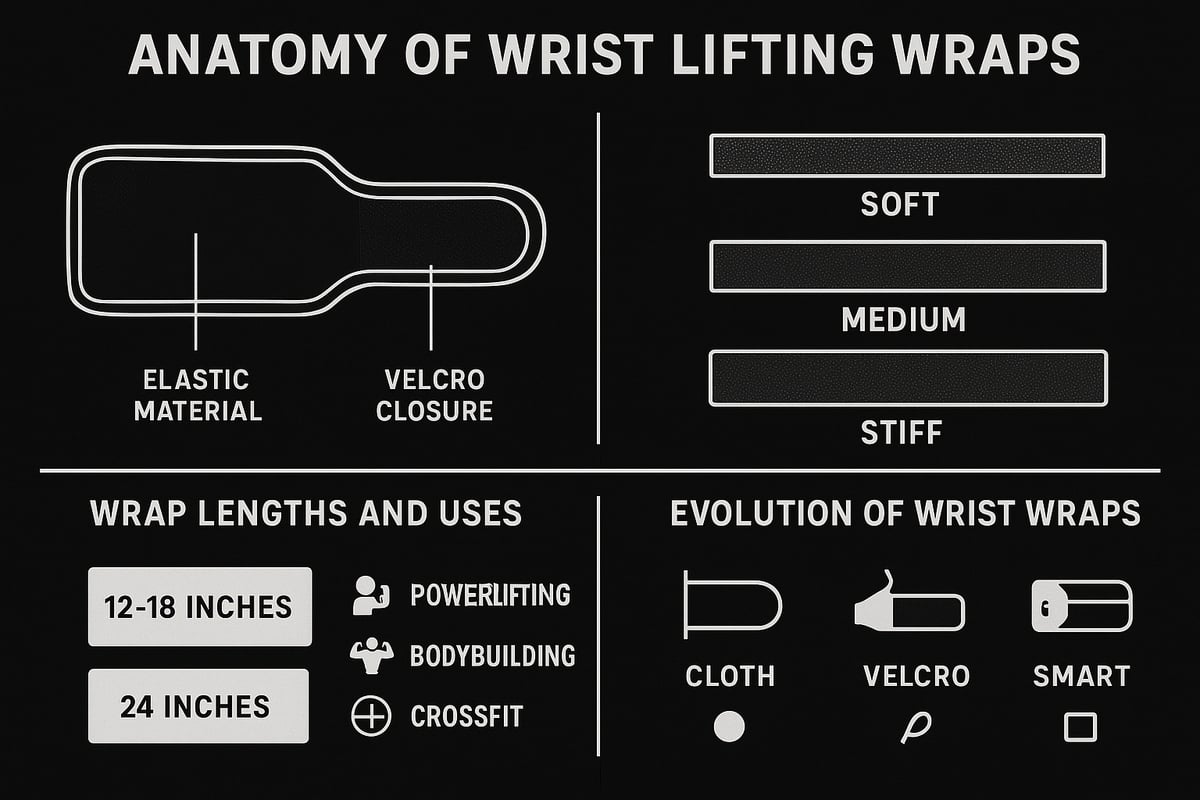
The Anatomy of Wrist Lifting Wraps
Wrist lifting wraps are built from elastic materials that provide both flexibility and support. Most wraps feature a Velcro or loop closure system, which makes them easy to secure and adjust mid-workout. The length of the wrap, ranging from 30cm to 60cm, affects how much wrist coverage and tension you get.
There are several styles available, including classic wraps, thumb loop designs, and powerlifting-specific wraps. For example, a 30cm medium-stiff wrap is ideal for quick support, while a 60cm super-stiff wrap delivers maximum stability for heavy presses. Material choices like cotton blends or synthetics impact comfort and durability. If you are competing, always check for IPF or USPA approval to ensure your wraps meet official standards.
The Science Behind Wrist Support
The wrist plays a crucial biomechanical role in pressing and overhead movements. When you use wrist lifting wraps, they help stabilize the joint, keeping it in a safe, neutral position. This reduces the risk of overextension and strain on tendons and ligaments.
Scientific studies, like the Effect of Wrist Wraps on Handgrip Strength in CrossFit Athletes, show that wraps can increase stability and confidence, allowing lifters to handle heavier loads. For example, many lifters report hitting new personal bests on the bench press when using wraps, compared to lifting raw.
Who Needs Wrist Lifting Wraps?
Wrist lifting wraps are valuable for a wide range of athletes. Powerlifters, bodybuilders, CrossFit participants, and recreational gym-goers all benefit from the added support these wraps provide. Common wrist issues include overextension, tendon strain, and recurring pain from high-volume training.
Beginners can use wrist lifting wraps to learn proper wrist alignment, while advanced lifters often rely on them for protection during heavy or high-rep sessions. Wraps are essential during max effort lifts or when recovering from minor injuries but may be optional for lighter training days. For instance, using wraps during a high-volume cycle can help prevent overuse injuries and keep you training consistently.
The Evolution of Wrist Wraps: Trends Leading up to 2026
Wrist lifting wraps have come a long way since the days of basic cloth strips. Modern wraps now feature advanced elastic fibers, improved Velcro, and ergonomic thumb loops for better fit and function. Innovations in recent years have led to stiffer materials, more reliable closures, and even sustainable packaging.
Market data shows a growing demand for wrist wraps, with athletes seeking more customization and tech integration. Feedback from users drives product evolution, with brands responding to requests for longer lengths and unique colorways. Looking ahead to 2026, expect to see smart wraps with activity tracking, eco-friendly materials, and fully customizable options for every lifter.
How to Choose the Best Wrist Lifting Wraps in 2026
Choosing the right wrist lifting wraps can feel overwhelming with so many options on the market. Whether you are new to strength training or a seasoned competitor, understanding what to look for ensures you get the support and comfort you need. Let’s break down the essentials step by step.
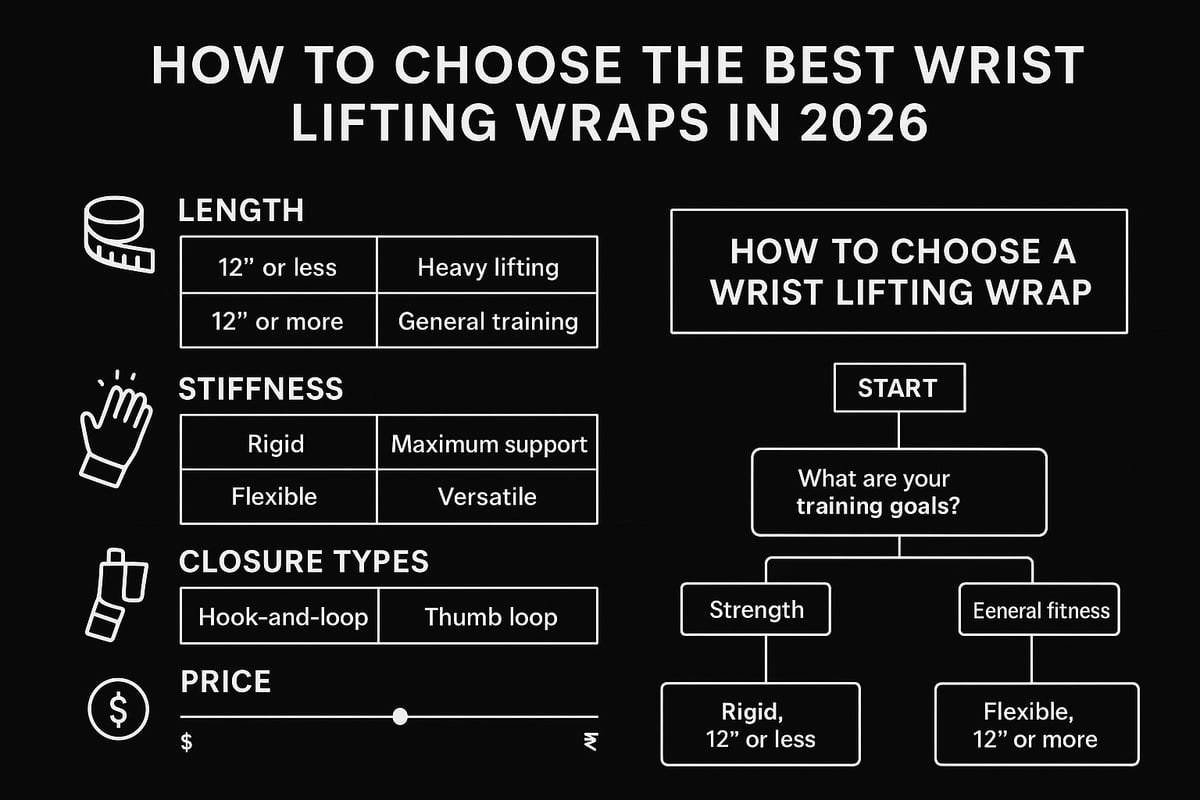
Key Factors to Consider
When selecting wrist lifting wraps, focus on four main factors: length, stiffness, closure type, and material. Wraps come in lengths like 12, 18, 24, or even 36 inches, each offering a different level of wrist support. Stiffness can range from soft to super stiff, impacting flexibility and stabilization.
Closure systems include thumb loops and Velcro, with some lifters preferring slip-on designs for quick changes. Material choice affects durability and breathability—cotton blends offer comfort, while synthetics tend to last longer. Checking customer reviews and brand reputation is key, and browsing a Wrist wraps collection can help you see what’s trending in 2026 before making a decision.
Matching Wraps to Your Training Goals
Your training style determines which wrist lifting wraps are best. Powerlifters often need super-stiff, longer wraps for maximum support during heavy presses. Bodybuilders benefit from medium-stiffness wraps that offer both support and flexibility for higher-rep sets.
CrossFit athletes and general fitness enthusiasts usually prefer shorter, more flexible wraps for quick transitions between exercises. Always check if the wraps are approved for your sport’s competitions, such as IPF or USPA standards. For example, a strongman may select a 36-inch super-stiff wrap, while a CrossFitter might choose a 12-inch wrap for speed and comfort.
Sizing and Fit: How to Measure Your Wrist
To get the right fit, start by measuring your wrist circumference with a soft tape measure, just below the wrist bone. Use this measurement to guide your wrap length selection. For wrists under 6 inches, a 12–18 inch wrap is usually enough, while larger wrists or heavy lifters may want 24–36 inch wraps.
| Wrist Size | Recommended Wrap Length |
|---|---|
| < 6 inches | 12–18 inches |
| 6–7.5 inches | 18–24 inches |
| > 7.5 inches | 24–36 inches |
Avoid sizing mistakes by consulting brand-specific charts and making sure your wraps are snug but not restrictive. The right wrist lifting wraps should feel supportive without cutting off circulation.
Price vs. Performance: Finding Value in 2026
Wrist lifting wraps range from $10 to $50 or more. Entry-level wraps are great for beginners, but advanced lifters may appreciate the durability, warranty, and features of premium models. Look for details like reinforced stitching, extra-wide Velcro, and flexible return policies.
Compare features, not just price. Some brands bundle wrist wraps with other support gear for extra value. Always weigh the benefits of a higher price against your training needs. A solid warranty can indicate long-term value, ensuring your investment in wrist lifting wraps pays off for years.
Step-by-Step Guide: How to Use Wrist Lifting Wraps Properly
Unlocking the full benefits of wrist lifting wraps begins with proper use. Whether you are new to strength training or a seasoned competitor, mastering each step ensures lasting support and injury prevention. Follow this guide to get the most from your wraps every session.
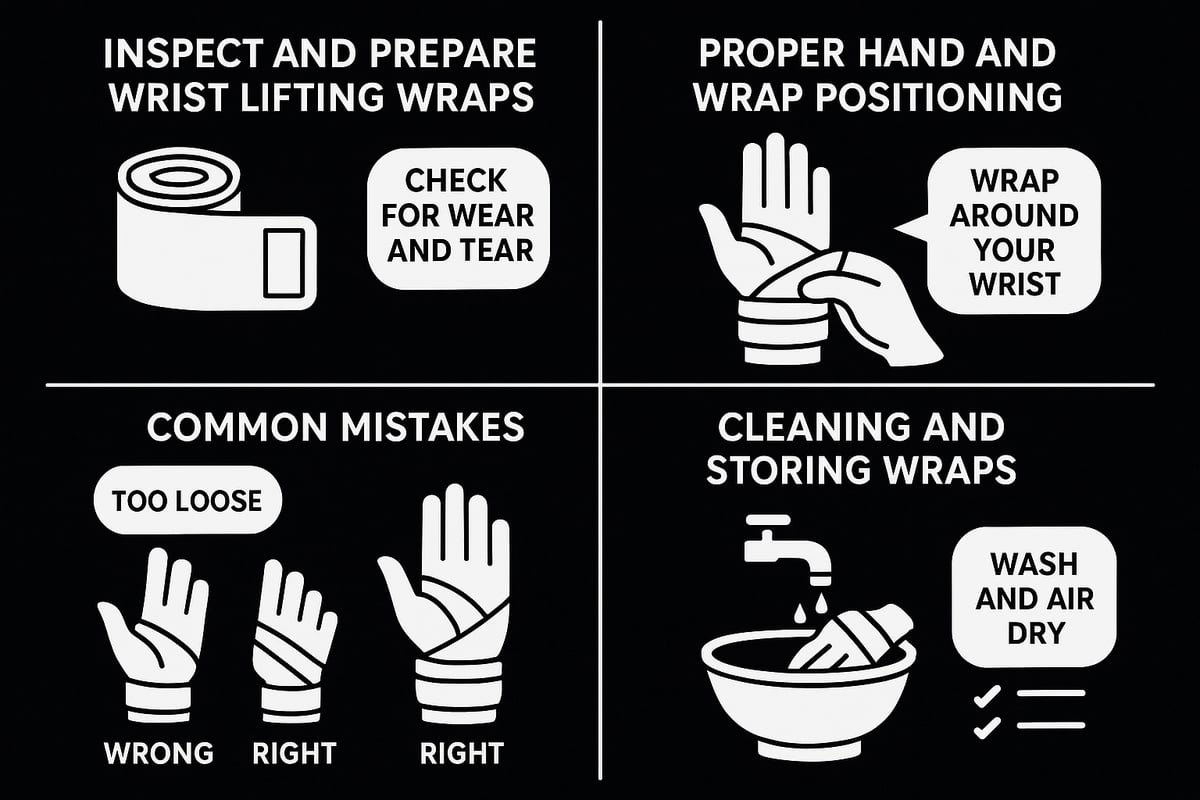
Preparing for Your Workout
Before reaching for your wrist lifting wraps, set yourself up for success. Start by checking your wraps for any fraying, worn Velcro, or stretched fabric. Clean wraps offer better grip and last longer.
Warm up your wrists with gentle stretches and light movements. This prepares your joints and muscles for added support. Only apply wraps right before your working sets or heavy attempts, not during warm-up sets.
A simple pre-wrap routine includes:
- Inspecting wraps for damage
- Ensuring cleanliness
- Completing wrist mobility drills
With these steps, you create a safe foundation for every lift.
Wrapping Technique: Chronological Steps
Getting the technique right is crucial for wrist lifting wraps to do their job. Begin by sliding your thumb through the loop, aligning the wrap just below your palm.
Wrap around your wrist in a circular motion, maintaining moderate tension. Too tight, and you risk numbness; too loose, and support is lost. Secure the Velcro closure, making sure the wrap covers the wrist joint evenly.
Key steps to follow:
- Position thumb loop and start wrap below palm
- Wrap in direction that supports your wrist’s natural alignment
- Adjust tightness for firm support without discomfort
- Fasten Velcro for a snug, secure fit
Check your hand mobility and grip after wrapping to ensure proper placement.
Common Mistakes and How to Avoid Them
Many lifters misuse wrist lifting wraps, reducing their effectiveness. Over-tightening can cause tingling or loss of movement, while too loose a wrap fails to stabilize the joint.
Watch for these common errors:
- Wrapping above or below the joint instead of over it
- Failing to replace worn-out wraps
- Using wraps for every set, which can limit wrist strength development
If you notice discomfort or reduced performance, review your technique. Correcting these mistakes leads to better results and safer training.
Maintenance and Longevity Tips
Proper care extends the life of your wrist lifting wraps and keeps them performing at their best. Wash wraps regularly in cold water and air dry to maintain elasticity. Store them flat or rolled up, away from direct sunlight.
Look for signs like fraying edges, weak Velcro, or loss of stretch—these mean it’s time for a replacement. For those seeking reliable gear, consider wrist support gear bundles that offer wraps alongside other essentials.
With good maintenance, your wraps can last years, supporting your journey through countless lifts.
The Top Wrist Lifting Wraps of 2026: Brands and Models Reviewed
Choosing the right wrist lifting wraps can make or break your performance in the gym. With so many brands and models on the market in 2026, it pays to know which wraps stand out for quality, support, and innovation.
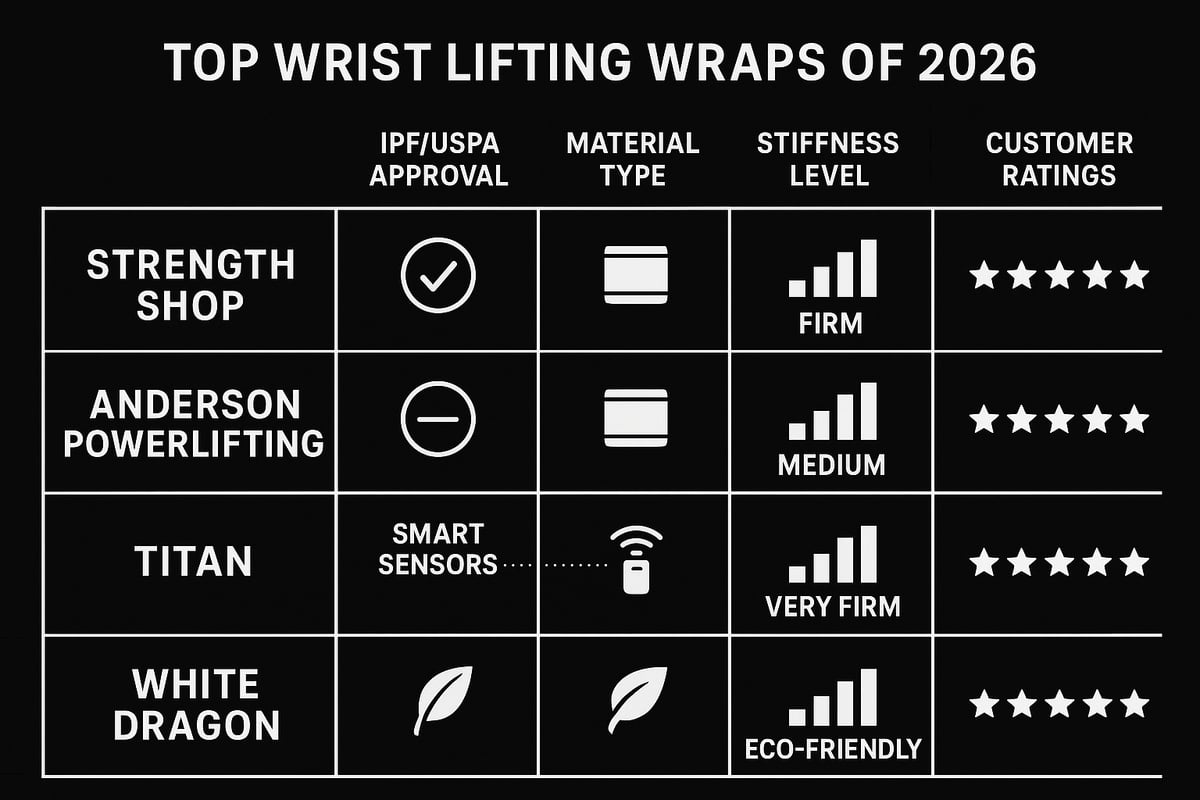
Leading Brands and Their Best-Selling Wraps
The wrist lifting wraps market in 2026 features several brands trusted by lifters worldwide. Strength Shop leads with wraps that balance comfort and maximum support, earning an average 4.9-star rating. Anderson Powerlifting remains a favorite for competition-approved wraps with robust Velcro and long-lasting elasticity. Titan continues to innovate with extra-stiff wraps preferred by powerlifters.
White Dragon has gained attention for its unique materials and superior wrist stability. If you want a closer look at a top-rated model, check out this White Dragon wrist wraps review for detailed specs and real-user feedback.
| Brand | IPF/USPA Approved | Stiffness Options | Standout Feature | Avg. Rating |
|---|---|---|---|---|
| Strength Shop | Yes | Medium, Stiff | Extra-long Velcro | 4.9 |
| Anderson | Yes | Stiff, Super-stiff | Competition-proven | 4.8 |
| Titan | Yes | Super-stiff | Heavy-duty elastic | 4.7 |
| White Dragon | Yes | Medium, Stiff | Breathable cotton | 4.8 |
These brands set the standard for wrist lifting wraps in 2026.
Best Wraps for Powerlifting, Bodybuilding, and Functional Fitness
Different training styles require different wrist lifting wraps. Powerlifters often choose super-stiff, long wraps for the ultimate support during heavy bench presses and squats. Anderson and Titan are popular picks for competition due to their rigid construction and compliance with federation rules.
Bodybuilders benefit from medium-stiff wraps that offer both flexibility and joint protection during high-rep sessions. Strength Shop’s medium option is a go-to for many. For functional fitness or CrossFit, athletes prefer wraps that are flexible, easy to apply, and allow quick transitions between movements. White Dragon’s shorter, more breathable wraps fit this niche perfectly.
No matter your sport, matching your wrist lifting wraps to your goals helps prevent injury and boost confidence during lifts.
Innovations and New Releases in 2026
The landscape of wrist lifting wraps has evolved rapidly entering 2026. Smart wraps, featuring integrated sensors, now allow athletes to monitor wrist angles and pressure in real time. Eco-friendly wraps made from recycled materials and sustainable packaging are gaining traction among environmentally conscious lifters.
Customization is another trend, with brands offering adjustable stiffness, various lengths, and a wide range of colors. Special edition wraps, designed in collaboration with top athletes, are also popular. These innovations make it easier than ever to find wrist lifting wraps that meet your unique needs and style.
Expect even more high-tech and sustainable options to hit the market as brands respond to athlete feedback.
How to Compare and Shop for Wraps Online
Shopping for wrist lifting wraps online can be overwhelming, but a few strategies make it easier. Start by using sizing guides and customer reviews to ensure a proper fit. Look for sites offering clear return policies and warranty coverage, which is especially important when investing in premium wraps.
Bundles and kits often provide better value, letting you try multiple styles or pair wraps with other lifting gear. Many retailers now offer product filters for stiffness, length, and federation approval, simplifying your search. Always check for verified reviews and avoid suspiciously cheap options to steer clear of counterfeits.
With the right approach, finding the best wrist lifting wraps online is a straightforward process.
Maximizing Performance and Preventing Injury with Wrist Lifting Wraps
Unlocking your true strength potential starts with the right support. Let’s break down how wrist lifting wraps help you push harder, stay safer, and get the most out of every rep.
The Role of Wraps in Injury Prevention
Wrist lifting wraps are a lifter’s first line of defense against common gym injuries. Sprains, strains, and tendonitis often occur when wrists are overextended during heavy pressing or overhead lifts. By providing targeted compression and stability, wraps limit risky joint angles and help keep tendons aligned.
Biomechanical research supports the effectiveness of wrist support. According to a Biomechanical Analysis of Wrist Loading During Lifting Tasks, proper wrist positioning and load distribution reduce strain on the joint. This means wrist lifting wraps not only lower the risk of acute injuries but also help prevent chronic pain from repetitive stress.
Athletes report fewer setbacks and faster recovery when using wraps during high-intensity cycles. For many, wraps are the difference between a long, productive training streak and a frustrating injury.
Enhancing Strength and Technique
Wrist lifting wraps do more than protect—they empower performance. With added joint support, lifters can press heavier loads and maintain better form during challenging lifts. This support boosts confidence, letting you focus on explosive drive instead of worrying about wrist stability.
For pressing movements like the bench press and overhead press, wraps keep wrists in a strong, neutral position. This alignment is crucial for efficient force transfer and safe technique. Many lifters find they can break through plateaus and set new personal records when using wrist lifting wraps regularly.
Proper wrap use also helps reinforce good habits. By preventing unwanted movement, wraps encourage consistent bar path and wrist stacking, which translates into safer, stronger lifts over time.
When NOT to Use Wrist Wraps
While wrist lifting wraps offer clear benefits, it’s important not to rely on them for every set. Building raw wrist strength is essential for long-term joint health and balanced muscle development. Overusing wraps can cause support muscles to weaken, making you more vulnerable when lifting without them.
Periodization is key. Reserve wraps for your heaviest sets or during periods of high volume, and train without them during lighter sessions. This approach helps your wrists adapt and grow stronger naturally. Think of wrist lifting wraps as a tool—not a crutch—to maximize gains while still prioritizing resilience.
Some lifters cycle wrap use, focusing on raw lifts for several weeks before reintroducing support for peak performance phases.
Integrating Wrist Wraps with Other Lifting Gear
Optimizing your training setup means pairing wrist lifting wraps with other supportive equipment. Common combinations include lifting belts for core stability, knee sleeves for squats, and wrist straps for grip-intensive pulls. Creating a comprehensive support system can help you tackle challenging workouts with confidence.
Here’s a quick gear pairing guide:
| Gear Combo | Primary Use | Benefit |
|---|---|---|
| Wraps + Belt | Bench, squat | Joint and core stability |
| Wraps + Straps | Deadlift, pulls | Wrist support + grip assistance |
| Wraps + Knee Sleeves | Squat, clean | Full-body protection |
For more on how straps complement wraps, see the Benefits of wrist lifting straps. Always check your gear for wear and store everything in a ventilated bag to maintain performance and hygiene. With the right setup, wrist lifting wraps become a seamless part of your lifting arsenal.
Frequently Asked Questions About Wrist Lifting Wraps
Whether you are new to lifting or a seasoned competitor, questions about wrist lifting wraps come up all the time. Below, we answer the most common ones to help you train smarter and safer.
How Long Do Wrist Lifting Wraps Last?
The average lifespan of wrist lifting wraps is between one and three years. This depends on how often you train, how well you care for them, and the quality of the materials. Top brands often offer warranties, sometimes up to a year, which highlights product durability.
You should check your wraps for signs of wear, such as fraying, loss of elasticity, or weakened Velcro. If your wraps lose their support or start to slip during lifts, it is time for a replacement. The demand for high-quality wraps is growing, as detailed in the Wrist Braces Market Size and Growth Forecast, showing lifters are investing more in gear that lasts.
A quick comparison table:
| Wrap Quality | Expected Lifespan | Warranty |
|---|---|---|
| Entry-level | 6–12 months | None/6 months |
| Mid-range | 1–2 years | 1 year |
| Premium | 2–3 years | 1+ years |
Are Wrist Wraps Allowed in Competitions?
Most powerlifting federations, including the IPF and USPA, allow wrist lifting wraps in competition. However, there are strict rules on wrap length, width, and construction. Typically, wraps up to 1 meter in length and 8 centimeters in width are approved. Always check the current rulebook of your federation before meet day.
Before competition, have your wrist lifting wraps inspected for compliance. Only wraps with approved features, like specific Velcro and material types, are permitted. Rule changes can occur, so keep up-to-date as 2026 approaches to avoid surprises at your next event.
Can Beginners Benefit from Wrist Wraps?
Absolutely. Beginners often experience wrist discomfort when learning proper form on lifts like the bench press and overhead press. Wrist lifting wraps can provide extra confidence and stability, making it easier to focus on technique.
It is best to start using wraps when you notice wrist strain or during heavier sets. However, do not rely solely on them—building wrist strength is just as important. A typical progression: start with raw lifts, add wraps as you increase intensity, and alternate between wrapped and unwrapped sessions for balanced development.
How to Wash and Maintain Wrist Wraps?
Proper care will extend the life of your wrist lifting wraps. Wash wraps by hand or on a gentle machine cycle using mild detergent. Avoid bleach and fabric softener. After washing, air dry your wraps flat to prevent shrinking and preserve elasticity.
Store wraps in a cool, dry place out of direct sunlight. Do not twist or leave them bunched up, as this can weaken the fibers. Many top athletes recommend a monthly cleaning routine to keep wraps fresh and bacteria-free. Well-maintained wraps deliver better support and last much longer.
Now that you know how the right wrist lifting wraps can boost your strength, prevent injuries, and give you the confidence to push past your limits, why not experience the difference for yourself Whether you’re training for a PR or just want to keep your wrists feeling great through every set, having premium gear you can trust really matters At Katamu, we’ve got wrist wraps and all the lifting accessories you need—built to last and designed to help you enjoy your workouts even more Ready to take your training up a notch Level up your lifts
